




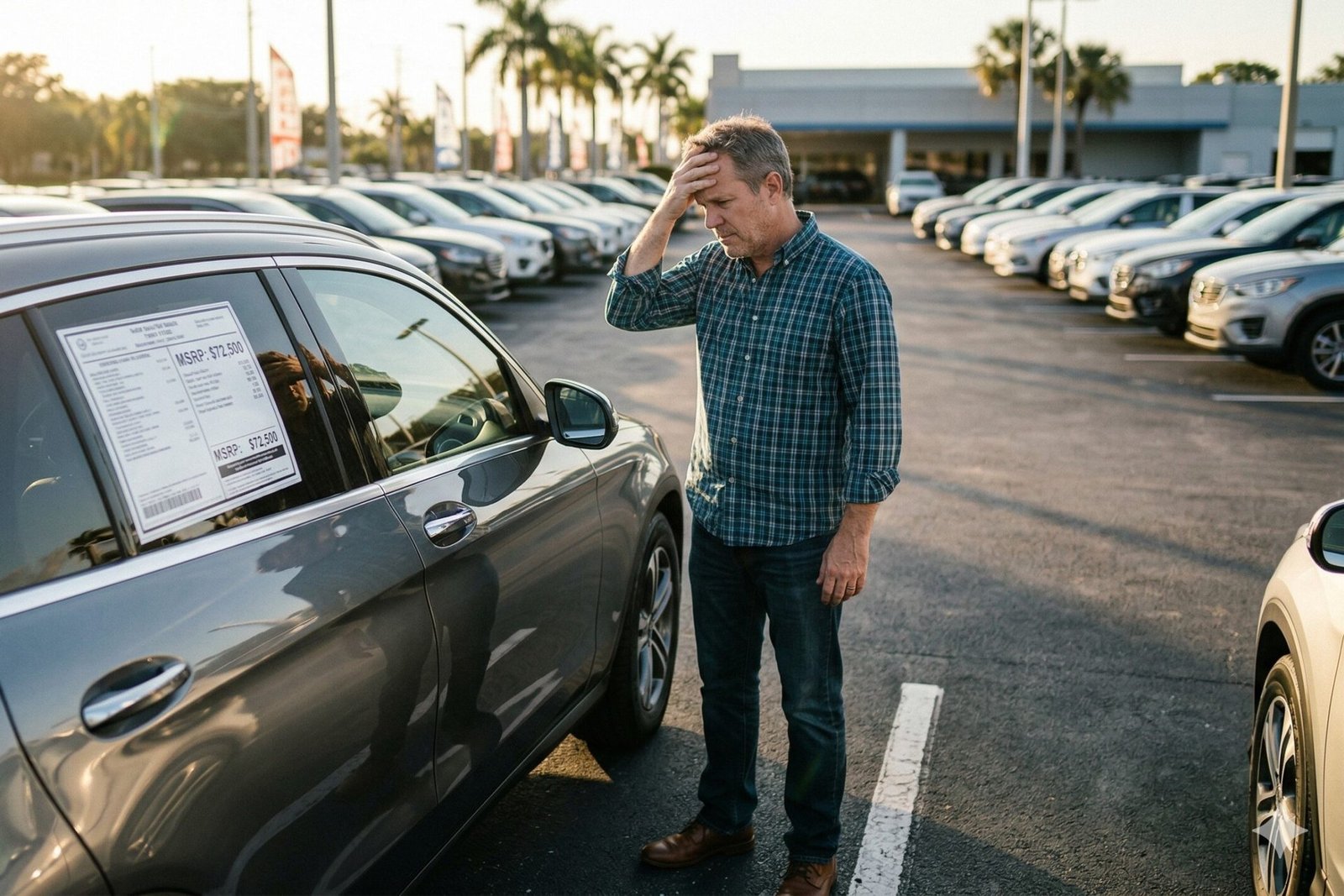

The new car you sign for tomorrow could cost you $50,000 in lost value before your loan is even paid off. That isn’t a worst-case scenario. For some of America’s most popular brands, it’s the average outcome.
The average new vehicle now loses about 41.8% of its value over five years, according to a 2026 iSeeCars analysis of more than 950,000 used car sales. But certain brands blow that number out of the water — bleeding owners tens of thousands of dollars in invisible losses while dealers happily move on to the next sale.
Here’s the thing dealers don’t want you to think about. Depreciation is the single biggest cost of owning a car. Bigger than gas. Bigger than insurance. Bigger than maintenance. And it’s the one expense most buyers never bother to calculate before signing.
So before you fall for that “great deal” on the lot, here are the five brands that punishing buyers the hardest — followed by three brands you should be looking at instead.
1. Tesla
Tesla doesn’t just have a depreciation problem. It has a depreciation crisis. According to CarEdge’s 2026 analysis, Tesla occupies four of the top five spots on the fastest-depreciation list in America, with the Model X losing over 63% of its value in five years.
iSeeCars puts the Model X at 61.2% depreciation — translating to over $61,000 in evaporated equity, more than three times the segment average in dollar terms.
Why so brutal? Tesla constantly slashes new-car prices and changes specs without warning, which torches the resale value of every car already on the road.
The maintenance savings are real — CarEdge cites Consumer Reports data putting Tesla service costs around $5,050 over 10 years, the lowest of any brand. But saving on oil changes doesn’t matter when you’re losing $50,000 on the back end.
2. Land Rover
Land Rover sells you the dream of British luxury and rugged capability. What it actually delivers is the most expensive ownership experience in America. The brand averages roughly $17,450 in maintenance costs over 10 years, per CarEdge data — by far the highest of any major automaker.
Pair those repair bills with steep depreciation on Range Rover models — which start at over $107,000 for a modern model — and you’re looking at a financial sinkhole disguised as a status symbol. That isn’t a luxury purchase. It’s a slow-motion mugging.
3. Jaguar
Jaguars are gorgeous. They’re also famous in the industry for falling off a financial cliff the moment you drive them home. U.S. News & World Report flatly notes that Jaguar is “known for fast depreciation, even relative to other luxury cars.”
The discontinued I-Pace electric SUV is the poster child here, but the problem extends across the lineup. With Jaguar restructuring its entire brand, resale values look even shakier going forward. If you absolutely must have one, buy it used — let someone else absorb the first 60% of the loss.
4. Cadillac
Cadillac wants you to believe it’s a serious luxury contender. The resale market disagrees, hard.
Per SlashGear’s 2026 brand-by-brand depreciation breakdown, the all-electric Cadillac Lyriq drops a staggering 88% in value, the XT5 falls 66%, and the Escalade lands around 67%. The Escalade ESV bleeds 62.9% of its value over five years according to a separate iSeeCars analysis.
That’s the trade-off nobody mentions in the showroom. You’re paying luxury-tier sticker prices for a brand the used market treats like a clearance rack. The badge feels great. The trade-in offer won’t.
5. Jeep (Grand Wagoneer specifically)
Jeep as a whole has some bright spots — the Wrangler holds value beautifully. But the Grand Wagoneer is a financial disaster Stellantis is desperately trying to unload.
CarEdge data shows the Grand Wagoneer sitting at over 428 days of market supply as of early 2026. A healthy supply is 60 days.
Dealers are slashing $25,000 or more off MSRP just to move them, which tells you exactly what the truck is actually worth versus what the sticker claims. Anyone who paid full price last year is already deep underwater.
3 brands you should buy instead
Now for the good news. These three brands consistently dominate the value-retention rankings, meaning your money actually stays in the car instead of evaporating into the dealer’s pocket.
1. Toyota
Toyota is the king of resale value, full stop. The brand holds 10 of the top 25 spots on iSeeCars’ 2026 list of vehicles that retain value best. The RAV4 and RAV4 Hybrid average just 25% loss in value after five years — barely half the industry average. The Tacoma and Tundra trucks are practically appreciating assets at this point.
Add in Toyota’s reliability reputation, and you’re getting a vehicle that runs forever and actually has worth when you sell it.
2. Honda
Honda is Toyota’s equally smart cousin. The CR-V and HR-V both lose just 28% of their value over five years, per iSeeCars. The Civic was named the most reliable new car for the money in 2026, with a predicted 13.5-year lifespan and a price-per-year of just $2,058 — less than half the industry average of $4,251.
If you want a car that’s cheap to buy, cheap to run, and worth real money when you’re done with it, Honda is hard to beat.
3. Subaru
Subaru is the dark horse most buyers overlook. The Forester loses just 33% of its value over five years, the Crosstrek only 29%. CarEdge says Subaru has the lowest overall cost of ownership of any mainstream brand in America, beating even Toyota and Honda on that single metric.
It’s not just the data, either. Consumer Reports named Subaru one of the most reliable automakers in America last year. Live anywhere with snow, hills, or weather? Subaru’s standard all-wheel drive is genuinely useful, not a marketing gimmick.
The bottom line
The car you buy isn’t just transportation. It’s a financial decision that can either preserve your wealth or quietly destroy it. Pick the wrong brand and you’ll lose more money to depreciation than you’ll spend on gas, insurance, and repairs combined.
Pick a Toyota, Honda, or Subaru, and you’ll lose far less. It’s that simple.
For more on vehicles to avoid, see “25 Cars That Lose Most of Their Resale Value in Just 5 Years.”
Read the full article here