






On the seventh morning of a $135 “respiratory cleanse,” I stood in my Atlanta kitchen staring at five bottles of pills and raw vegetables.
The plan required I take pills six times a day for 21 days and eat only raw food. I lasted a week until a friend invited me out, and the thought of ordering salad and water felt more exhausting than my congestion.
I quit that day. Then, I was back to the drawing board again. I felt guilty knowing I’d spent nearly my whole paycheck on organic produce, only to watch it rot in the fridge.
This was one of the many ways I’d been trying to throw money at any solution that might help me manage the symptoms of my chronic illness and seasonal allergies for years.
I’ve tested $40 tinctures and $50 probiotics. I cycled through raw vegan, vegan, keto, carnivore-focused, and low-carb diets. Sometimes I wanted to lose weight. Other times, I hoped food would stop my body from overreacting to my environment.
Unfortunately for me, the kind of fresh, organic-heavy eating I was chasing in Atlanta often meant choosing between expensive produce and enough groceries for the week. It was hard to consistently stick with it, especially as an entrepreneur with a sometimes unpredictable paycheck.
Eventually, I realized I was searching for the “right fix” in the wrong places.
After moving to the Caribbean over a decade ago, my perspective on my health shifted
In my quest for remedies, I came across an internet rabbit hole that led me to people who said their health improved after moving to warmer climates.
Their stories were not medical evidence, but I kept scrolling and filed them away in my mind.
Later, when the man who became my husband asked whether I wanted to stay in Atlanta or move with him to Trinidad, I did not need much convincing. It seemed worth a shot for me (and us).
That was 11 years ago. I’m so glad I said yes.
Within weeks of moving to the hot and humid island, I noticed a big difference in my breathing, especially at night, when I used to struggle the most.
I could step outside, take a deep breath, and actually feel the difference. I don’t know exactly what changed — and hot, humid weather can worsen symptoms for some people with asthma or allergies — but I suspect some of the plants or environmental allergens I was sensitive to back home may be less prevalent where I live now.
After moving, fresh food became a bigger part of my day-to-day life, too, and my diet improved.
In part because of the warm climate, a lot of fresh produce grows here — it feels easier to access and more affordable. It’s become woven into my daily life in ways I never experienced before.
I remember shopping at organic stores in Atlanta, where I could afford only one or two pieces of fruit at a time.
Now, some of the foods that once felt expensive and out of reach are growing right outside my door. In my neighborhood, fruit trees are literally within my grasp.
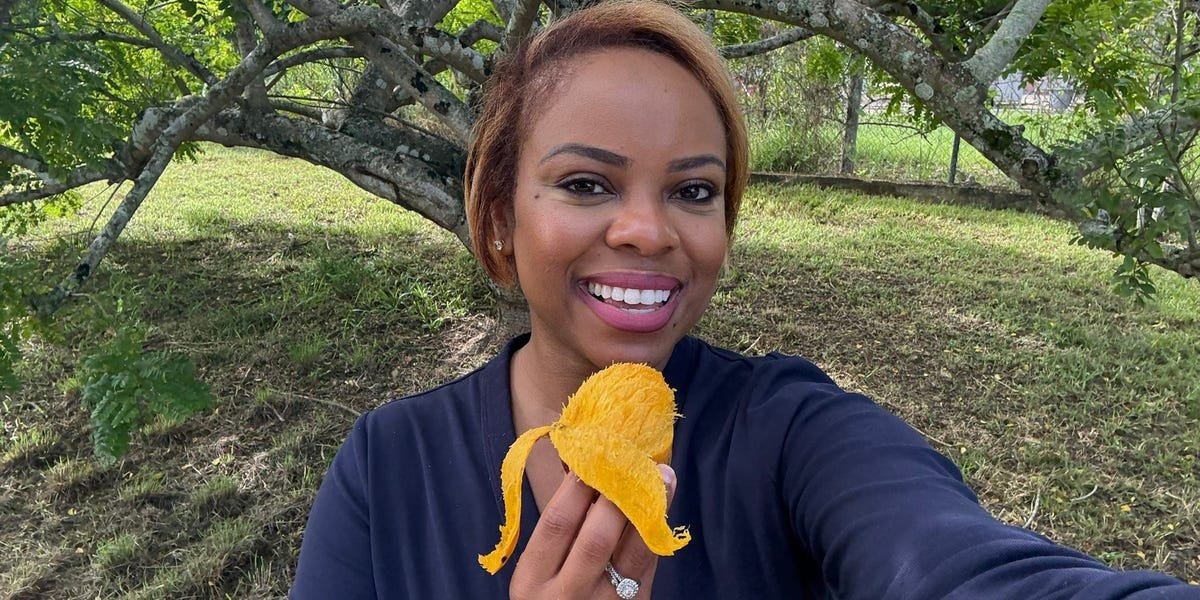
I regularly work out beneath the mango trees in my backyard. When mangoes fall, I rinse one and eat it between planks and pull-ups. It beats anything I once ordered in a plastic tub.
My children and I make juice from a neighbor’s limes and smoothies with dragon fruit from our yard. It feels like a simple luxury.
Papaya has become a regular breakfast because it fills me without weighing me down, and it’s not very pricey here since it’s a local staple.
I’ve also fallen for local favorites like caraille (bitter melon) and chadon beni, an herb somewhat similar to cilantro — I drink its juice because it helps soothe my throat.
I don’t feel the need to rely on much frozen produce anymore, either. All in all, it’s been nice having so many fresh options within my budget that make me feel good.
Here, health no longer feels like a luxury product
To be completely clear: Moving to the Caribbean has not been a cure-all for my health concerns.
My health is not perfect. I still live with asthma. I still get tired. I still buy medicine. I would never tell anyone to replace prescribed medication with fruit, herbs, or sunshine.
However, I now know firsthand how sometimes a change of scenery can have a huge impact. The biggest shift from this move has been in how I think about my health — and in my ability to access more of what helps me feel good every day.
In Atlanta, I hated feeling as though my bank account was deciding what I could put into my body. Now, with a lower cost of living and fresh food more accessible, that calculation has changed.
I choose foods that help me feel good every day instead of spending money on expensive wellness products only after something goes wrong.
These days, my environment feels more supportive, and food is not another “health expense” to me. It is part of how I take care of myself in the first place.
Read the full article here