






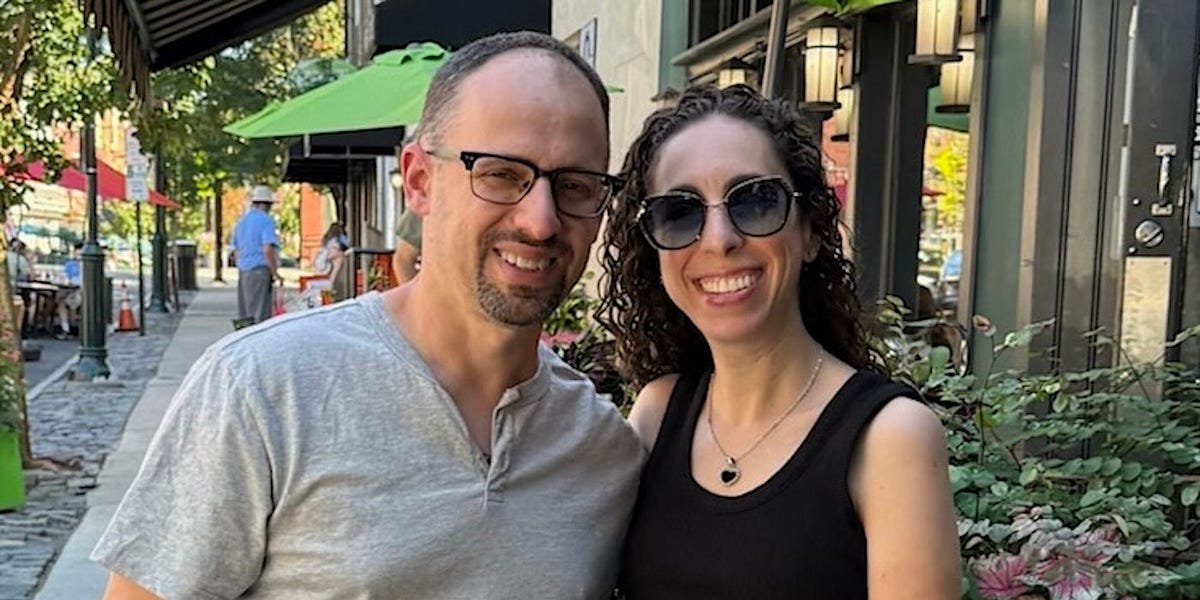

When my husband, a doctor, went in for his first routine colonoscopy at 45 years old, he said nonchalantly, “I’ll be done by noon. Then we can grab lunch.” He recommends that his patients be screened on time, so he was simply following his own advice.
He had no symptoms suggesting anything was wrong, so when they found a few polyps — the largest one measuring 55 millimeters — we were caught off guard. A second procedure was necessary to remove the larger polyp, and when the biopsy came back showing cancer, our lives crumbled in an instant.
The right portion of his colon was removed, and three weeks later, our whirlwind nightmare began to settle. Luckily, having his screening on time saved his life. Now, we’re focused on preventive care.
We’re changing our diets, and what our kids eat, too
An average person has about a 4% to 5% lifetime chance of developing colorectal cancer — but having one affected parent raises that risk to roughly 5% to 15%. Someone with a first-degree relative who had colon cancer should have their first screening at 40 or 10 years younger than their family member was diagnosed, whichever comes sooner — for our kids, that means being screened at 35.
With double to triple the risk, I want to be as proactive as I can for my children — now ages 15 and 11 — and that means altering their diet (and ours!) to limit foods that may increase risk. We’ve read through current research and determined which changes are worth making.
We don’t plan to restrict them completely from all foods associated with higher risk because we realize that’s unrealistic (and we want them to enjoy eating), but we’ll teach them to savor these foods in moderation.
We’re limiting how often we eat some foods
First, processed meats will largely be eliminated from their diet. Our bacon-loving sons have only enjoyed this delicacy as a treat during vacations, and that plan will continue. They’ll only indulge in other processed meats like hot dogs or ham when served at a barbecue or other social gathering. And cold cuts have been eliminated from our home, except for sliced turkey from our local market, which they prepare in-house without additives like sodium nitrites or nitrates.
Secondly, our kids love a medium-rare steak, and we don’t plan to take that from them. But we will limit red meat to once a week or less, filling our other dinner menus with healthier protein like salmon, chicken, or turkey.
In our home, sugary drinks have never been a staple. We don’t keep soda in the house, and that’s not going to change. Aside from Gatorade during workouts or sporting events, we’ll continue focusing on increasing water intake for hydration.
Fast food and other ultra-processed foods have no place in our home. Will my children have McDonald’s once or twice a year? Perhaps they will, because my husband is easily persuaded by their happiness! But luckily, I have the time and ability to prepare home-cooked dinners most nights, and I don’t plan to stop.
Finally, we’ve talked with our kids about the dangers of alcohol since they were little, but that conversation will now include the fact that alcohol intake is a risk factor for several types of cancer, colorectal cancer included.
We’re also increasing how much we eat other things
We’re limiting consumption of some things but increasing how often we eat others. There are certain foods that promote colon health, and we’ll make sure they know which ones do. We’ll aim for a diet including calcium-rich dairy products, whole grains, fish, and fruits and vegetables.
While our kids may not be receptive to every healthy option now (we struggle with vegetable intake just like many parents!), my hope is that the more we offer these foods and talk about a healthy diet with them, the likelier they are to adopt these eating habits as they grow.
Our kids aren’t thrilled that some of the foods they love are being limited — and they likely won’t follow every suggestion when they’re older — but it’s our job to guide them down a healthy path and provide them with the necessary information, especially given their increased risk. Thankfully, my husband’s story had a happy ending, and we were given the chance to change the trajectory for our kids.
This article is not a substitute for professional medical advice, diagnosis, or treatment. Always consult your qualified physician or healthcare provider.
Read the full article here