






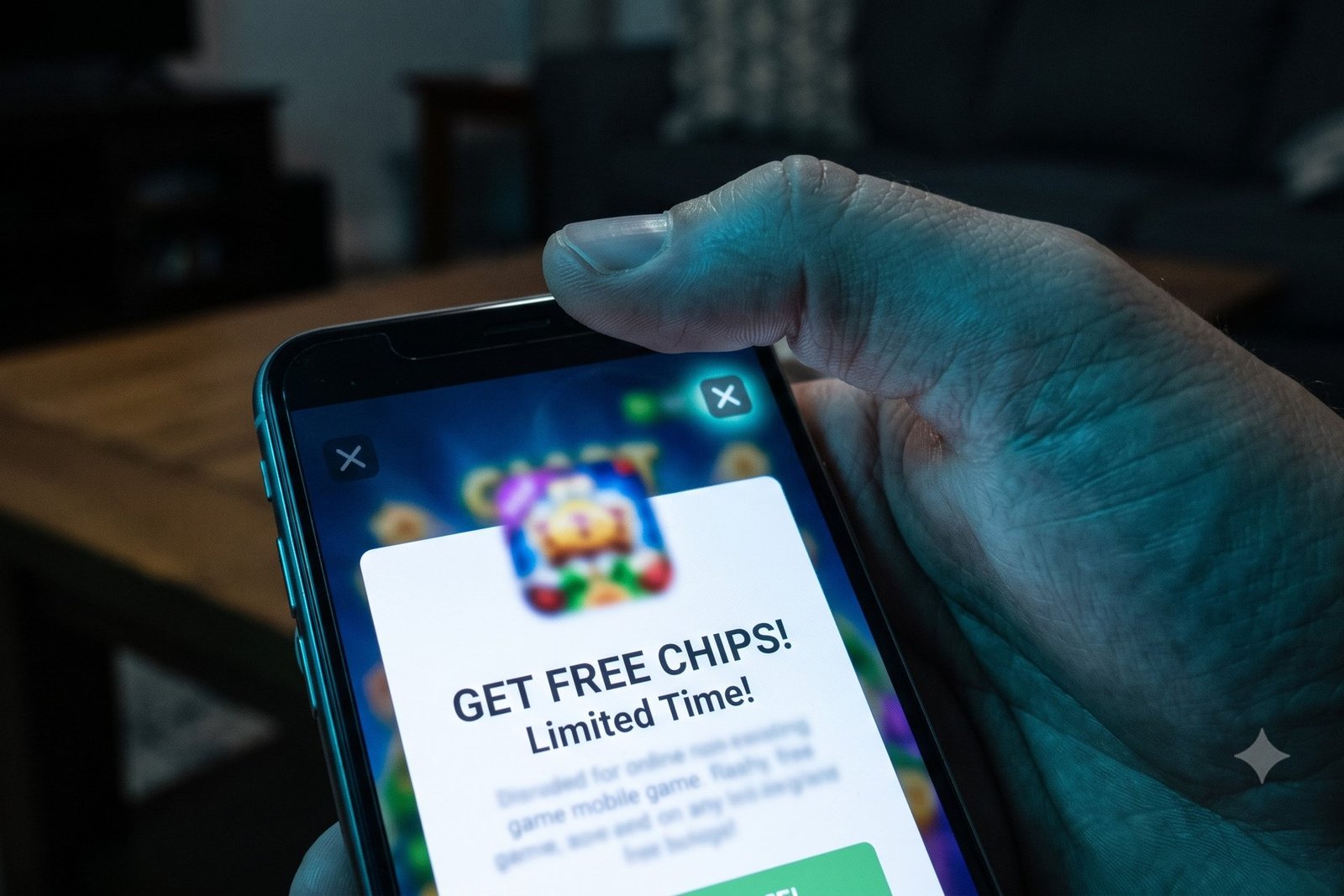

You’re reading something on your phone when the screen suddenly goes dark. An ad has swallowed the whole page. You hunt for the little “X” to close it — and there isn’t one. Not yet, anyway.
So you wait. Five seconds. Ten. Finally the close button shows up, usually tucked in some corner where your thumb has to go searching.
These tricks even have a name. The people who build websites call them “dark patterns” — screens engineered to nudge you into doing something you never meant to do. Click here, subscribe there, hand over a few more dollars before you catch on.
And they work. In September 2025, the Federal Trade Commission landed a $2.5 billion settlement with Amazon over exactly this kind of thing. More on that in a minute.
I’ve spent decades watching companies find clever ways to separate people from their cash. Here’s the good news: Once you can spot these traps, they lose most of their teeth. Here are six to watch for.
1. The vanishing close button
This is the one you already know. The ad covers your screen, and the “X” simply isn’t there. You sit and count to 10 like a kid in time-out, waiting for it to appear.
Why the delay? Because every extra second you stare at the pitch is a second they’re hoping you’ll cave and click.
The sneakiest versions show you two X’s — one in each corner. Guess wrong, and instead of closing the ad, you’ve launched straight into whatever it was selling.
Don’t tap anything until the real close button appears. If a page hijacks your screen and won’t let go, back out entirely. No article is worth a surprise download.
2. The guilt-trip decline button
Designers have a nickname for this one too: “confirmshaming.” You go to say no, and the only “no” option is written to make you feel like a fool. Stuff like “No thanks, I don’t like saving money.”
Amazon ran a version of this for years. To skip a Prime membership at checkout, you had to click past a button that said something close to “No, I don’t want free shipping.” Who clicks that?
That wording was part of the FTC case. Under the settlement, Amazon can’t use buttons like it anymore.
Read the button before you tap. If declining an offer requires admitting you “don’t want to save,” that’s your signal someone’s playing games. Say no anyway.
3. The box that’s already checked
You’re signing up for one thing. Buried near the bottom sits a tiny pre-checked box — a warranty, a membership, a donation, a newsletter that sells your email. You didn’t check it. They did.
Leave it alone, and you’ve agreed to something you never wanted.
Before you hit submit on any form, scan for checkboxes. Uncheck anything you didn’t deliberately turn on. It takes five seconds and can save you real money.
Quick aside — most internet financial advice comes from people who weren’t alive during the last recession. I’ve been writing about money for more than 35 years. Want rock-solid advice? Sign up for the free Money Talks Newsletter. Takes 10 seconds. No fluff. No spam.
4. The cancellation maze
Signing up takes one click. Canceling takes an act of Congress. This trick has a name in the industry — the “roach motel.” Easy to check in, nearly impossible to check out.
Amazon is the poster child. The FTC said the company tricked millions into Prime memberships, then buried the exit behind a cancellation process so long that Amazon staff reportedly nicknamed it “Iliad,” after Homer’s endless epic.
The price tag for all that? That $2.5 billion settlement — a $1 billion penalty plus $1.5 billion in refunds to roughly 35 million customers, some getting up to $51 back.
Before you ever subscribe, find the cancel button. If you can’t figure out how to quit before you join, don’t join. The same logic applies to every recurring charge already on your statement, which is why it pays to cancel the subscriptions you’re not using before they stack up.
5. The fees that show up at the finish line
You see one price for most of your shopping trip. The hotel room is $99. The concert ticket is $40. Then you reach checkout and the number balloons — “resort fee,” “service fee,” “processing fee.” This is called “drip pricing,” and it banks on you being too far in to bail.
It’s the same game behind the resort fee that magically appears on your hotel bill after the advertised rate reeled you in.
Don’t trust the first number you see. Push all the way to the final total before you decide, and compare that total against a competitor. The sticker price is bait. The checkout price is the truth.
6. The free trial that quietly becomes a bill
“Try it free for 30 days!” What they don’t say out loud is that you’ve handed over your card, and on day 31 the charges start — often without a peep. Miss the cancellation window, and you’re paying for something you forgot you signed up for.
It got harder to fight this one recently. A federal appeals court threw out the FTC’s click-to-cancel rule in July 2025, the regulation meant to make quitting a subscription as simple as starting one. For now, companies can make leaving as painful as they like.
The second you start a free trial, set a phone reminder for two days before it ends. Better yet, use a virtual card number if your bank offers one, so you control the shutoff valve, not them.
Here’s the bottom line. None of this is illegal in most cases — it’s just companies getting desperate for your dollars and your attention. The fix isn’t being smarter than everyone else. It’s slowing down. Read the button. Find the exit. Check the box. Do that, and the whole bag of tricks stops working on you.
Read the full article here