





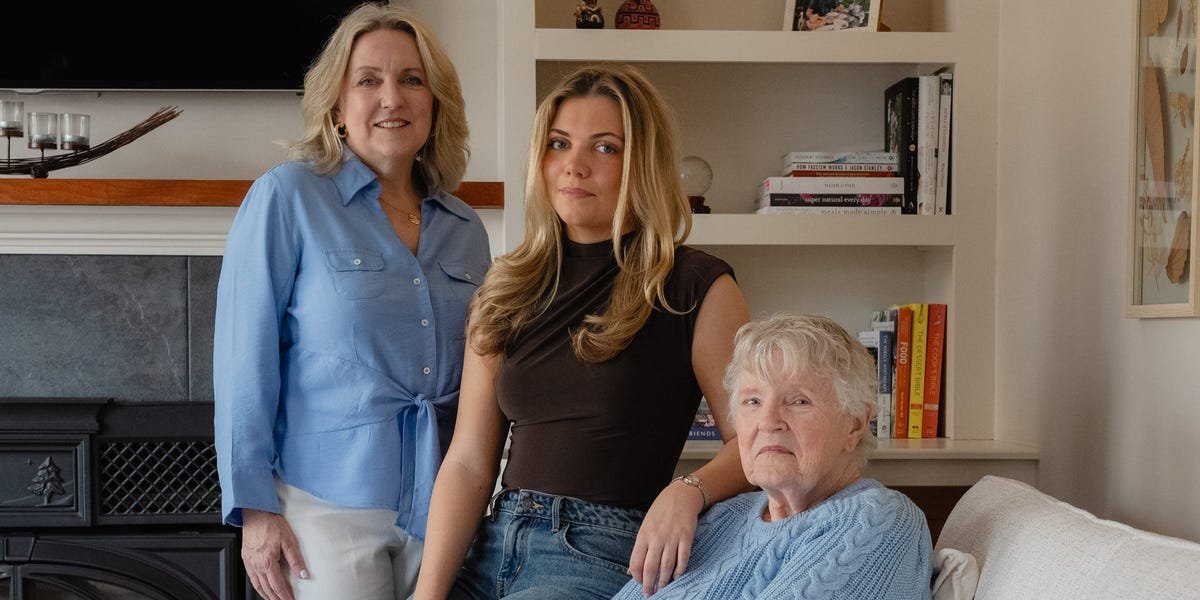

This ‘as-told-to’ essay is based on a conversation with Juli Ford, a 57-year-old real estate agent and certified senior advisor based in Massachusetts. It has been edited for length and clarity.
When my children were young, we saw my parents all the time.
We lived very close to each other in South Plymouth, Massachusetts, and my parents always helped with the kids. From the time they were born, Wednesdays were Grammy and Grampy Day.
My dad got sick in 2005. When we learned in the summer of 2011 that he probably didn’t have much time left, we talked about what life would be like after he was gone, including where my mom would live.
When he passed in December 2011, my mom was not ready to live with us. At 68, she had never lived on her own. She’d been with my dad since she was 15.
Then, in April 2015, a house in Pembroke, Massachusetts, about 30 minutes from South Plymouth, came on the market. The second I saw it online, I thought, “Oh, this is perfect.”
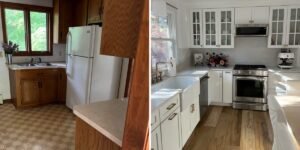
The house had a beautiful in-law apartment
The house is 4,300 square feet, and the basement is about 800 square feet. Upstairs, there are three bedrooms and 3.5 bathrooms.
My mom fell in love with the home’s basement apartment. It’s full of beautiful natural light. It’s one bedroom with a den, a full kitchen, a fireplace, its own laundry, 1.5 baths, its own outdoor patio, and two entrances.
We made an offer within two days. We bought the house in April 2015 for $630,000.
My mom had no interest in ownership. Instead, she made a financial contribution toward the down payment equal to what she would have paid in rent for the next five years.
She also gave us money every year for utilities. Last year, she started making a bigger monthly contribution to help cover household expenses. She essentially has not had to pay rent for 10 years, and as the house gets older, the cost of maintaining it grows.
It was a dream when we first moved in
My mom helped me a lot with my kids, especially with their schooling. My kids were 10 and 11 when she moved in, and they were homeschooled. We drove around a lot because we were going to museums and other activities in Boston. She sometimes helped with driving, and she became their English teacher because her first career was teaching English.
Grammy Wednesdays continued when we moved into the house, and my kids, who are 20 and 22 now, would go down and visit her on their own.
My mom has exceptionally good boundaries. I’m sure we did things differently than she would have done with our kids, but she’s always been very good at keeping her opinions to herself.
My mom is still independent, but needs our help now
At 82, she’s a bit less independent than she was 10 years ago because of health issues. Still, she has privacy: I don’t know everything that she does all the time, and we can go days without seeing each other. Other times, we see each other a lot more often.
We have had a few medical emergencies with my mom, so I got in the habit of keeping my phone next to my bed. There have been a few times that she’s had to call me.
I cannot imagine how much harder it would be to be a daughter of an aging mom if we weren’t in the same house. I would be so much more concerned about her being alone and getting lonelier. It would be more time-consuming for me if I had to go somewhere else to support her.
The house gave us other financial benefits
In the beginning, the only financial benefit I really thought about of combining households was that we could get a nicer house than my husband and I could afford on our own.
Around the time we got this house, my brother’s family went through a foreclosure after his wife had been hit by a drunken driver and had a traumatic brain injury. They had a lot of housing instability during that time because she was unable to work and had massive medical bills. They were not sure where they were going to live.
Because we combined households with my mom, we were able to tap into the equity in this house to help them. We took out a home equity loan and bought a small, lovely house, and rented it to them. We weren’t really making any money on it, but the rent was paying the bills.
Within two years, they recovered their credit enough that they purchased the house from us. They were able to rebuild their financial well-being in that house.
We used the proceeds from the sale to buy a vacation property in Vermont, which we turned into an Airbnb for four years. When we sold it, we paid off our kids’ student loans.
We were all able to build wealth because we combined households with my mom. We feel so proud and grateful. It’s not something I saw coming 11 years ago.
I see multigenerational living as one of the most compelling solutions to our elder care and affordable housing crises. Bringing families together around this is really an underutilized solution.
Read the full article here