







Top YouTubers are throwing their support behind a new school to train the next generation of creators.
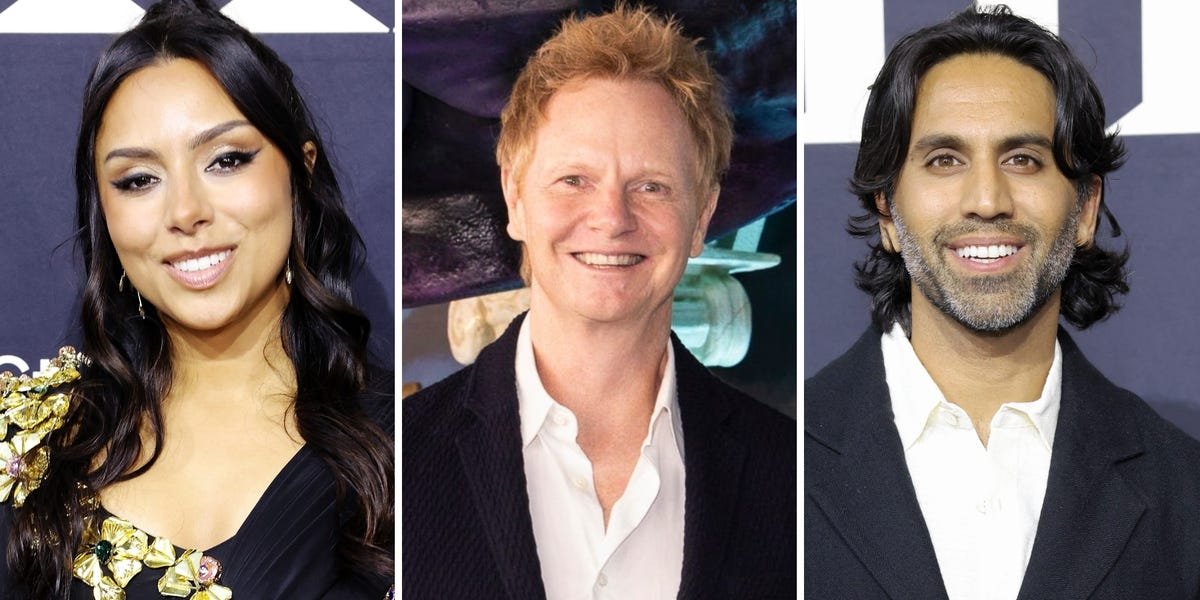
Jordan Matter, Michelle Khare, and Samir Chaudry are among the advisors for Bedford, which bills itself as an AI-enabled learning platform built on mentoring and mastery of skills, Business Insider exclusively learned.
Bedford was cofounded by educational entrepreneur Ben Newton and investment firm Strand Equity, whose cofounder, Seth Rodsky, launched Hello Sunshine with Reese Witherspoon in 2016. Heights is the lead investor. Bedford is targeting people at all professional levels and influence, and companies that want to make their teams more digitally visible.
Its name comes from the word for river crossing, as Bedford sees itself as helping people surmount the challenges of creatordom.
“Creator economy skills, like public speaking, is something that is very hard to get started,” said Newton, who’s also the school’s CEO. “And so we see an opportunity to help students cross that river or those rapids and develop a sustainable practice.”
Students won’t actually get personally mentored by the likes of Grant or Khare. Instead, instruction will be done by professional coaches. For an annual tuition of $3,750, they’ll take a six-week course where they’ll spend two to four hours a week learning to build a content plan, evaluate metrics, and translate engagement into revenue.
Bedford, which is unaccredited, aims to enroll 100 students when the school opens widely in July, with a goal of growing to 200 by the fall.
Also advising Bedford are Adam Grant, an organizational psychologist and popular author; Jay Hunter, CEO of Sprinter, Kylie Jenner’s beverage company; Harvard professor Sunil Gupta; Rich Paul, founder of Klutch Sports Group; Katherine Rundell, a former partner at Andreessen Horowitz; and Will Houghteling, director of AI Product at Google.
Bedford wants to help creators find their niche
As much as the influencer economy has grown, Jordan Matter said social media has become oversaturated with “copycat content” and a “deficit of authenticity among influencers.” Matter and his son, Hudson, a creator, were involved early on in Bedford as founding advisors. With that in mind, the school aims to help solo creators develop their voices and guide them in making content.
“It doesn’t mean that we’re setting you up to be the next MrBeast,” said Newton, who worked at the private school network Avenues before cofounding Vivvi, an early childhood company. “It’s about finding your influence in an audience.”
Students will also learn to manage their workload to avoid burnout and how to deal with online backlash. After the six-week course ends, they’ll have access to ongoing services, including a speaker series, peer reviews, and coaching. Newton said this part was also crucial to creator success.
“It’s very lonely, and you need a lot of ongoing support,” he said.
Dr. Sonia Batra, a Santa Monica, California-based dermatologist with over 34,000 Instagram followers, is in an early-access group taking the course.
She’s not new to media, having cohosted the TV talk show “The Doctors,” but wanted to sharpen her presence on social media, since many people seek out medical advice there.
“It’s a field that really needs more credible, authoritative voices,” Batra said of dermatology. “I want to learn how to be succinct to learn what kind of content resonates with people in a digital format or online. That may be different than people who used to watch daytime TV or who might come see me in the office.”
Megan Lightcap, a partner at Slow Ventures, co-leads its Creator Fund that backs individual entrepreneurs. Lightcap, who isn’t involved in Bedford, stressed the importance of listening to what the audience is saying and not just who they are.
“I talk to a lot of creators and ask, ‘Who loves you?'” she said. “They rattle off demographic info, and it doesn’t tell you much.”
Creator programs are on the rise
The ad giant WPP estimated that creators earned $185 billion in 2025, up 20% from 2024, and that the figure would double to more than $376 billion by 2030. A 2025 IAB report estimated that the total amount of creator work in the US was equivalent to about 1.5 million full-time jobs.
Other education programs have popped up to serve the exploding creator economy. A growing number of schools, like the University of Texas at San Antonio and Syracuse University, have introduced creator economy programs.
At the industry level, G&B Digital Management, a creator talent management firm, launched the College of Influence, a training program aimed at professionalizing the industry.
There have been some efforts to set industry standards, as well. A nonprofit, with ad industry support, is looking to certify creators — or create a stamp of approval — to ensure they follow some best practices.
Newton said the launch of Bedford shows how the creator economy is spilling over into the workplace more broadly.
“Many of our students are not trying to become professional creators, per se, full time, but they view creator economy skills as the appropriate way to get their credibility into the world, to generate opportunity,” he said.
Read the full article here