







You want to protect your home, and the pitch is incredibly seductive. A salesman stands in your driveway and promises that if you write a check for $3,000 today, you will never have to climb a ladder again.
They tell you their patented helmet or reverse-curve system uses liquid adhesion to guide water into the trough while leaves fall to the ground. It sounds like the perfect solution to an awkward, messy chore.
But many honest roofers will tell you a different story.
The physics problem with surface tension
The most expensive gutter guards typically use a solid cap that curves over the gutter edge. The physics concept here is surface tension. Water clings to the metal curve and flows into the gutter, while gravity pulls leaves off the edge.
In a showroom demonstration with a pitcher of water and some dry maple leaves, it looks flawless. In the real world, it rarely works that smoothly.
Heavy thunderstorms often overwhelm the surface tension, causing water to shoot right over the gutter like a ski jump. This dumps gallons of water directly onto your foundation — the very thing gutters are designed to prevent.
Worse, the self-cleaning claim fails for small debris. Pine needles, shingle grit, and pollen sludge have a tendency to follow the water curve right into the opening.
When protection becomes a trap
The real danger isn’t just that guard rails clog; it is how they clog.
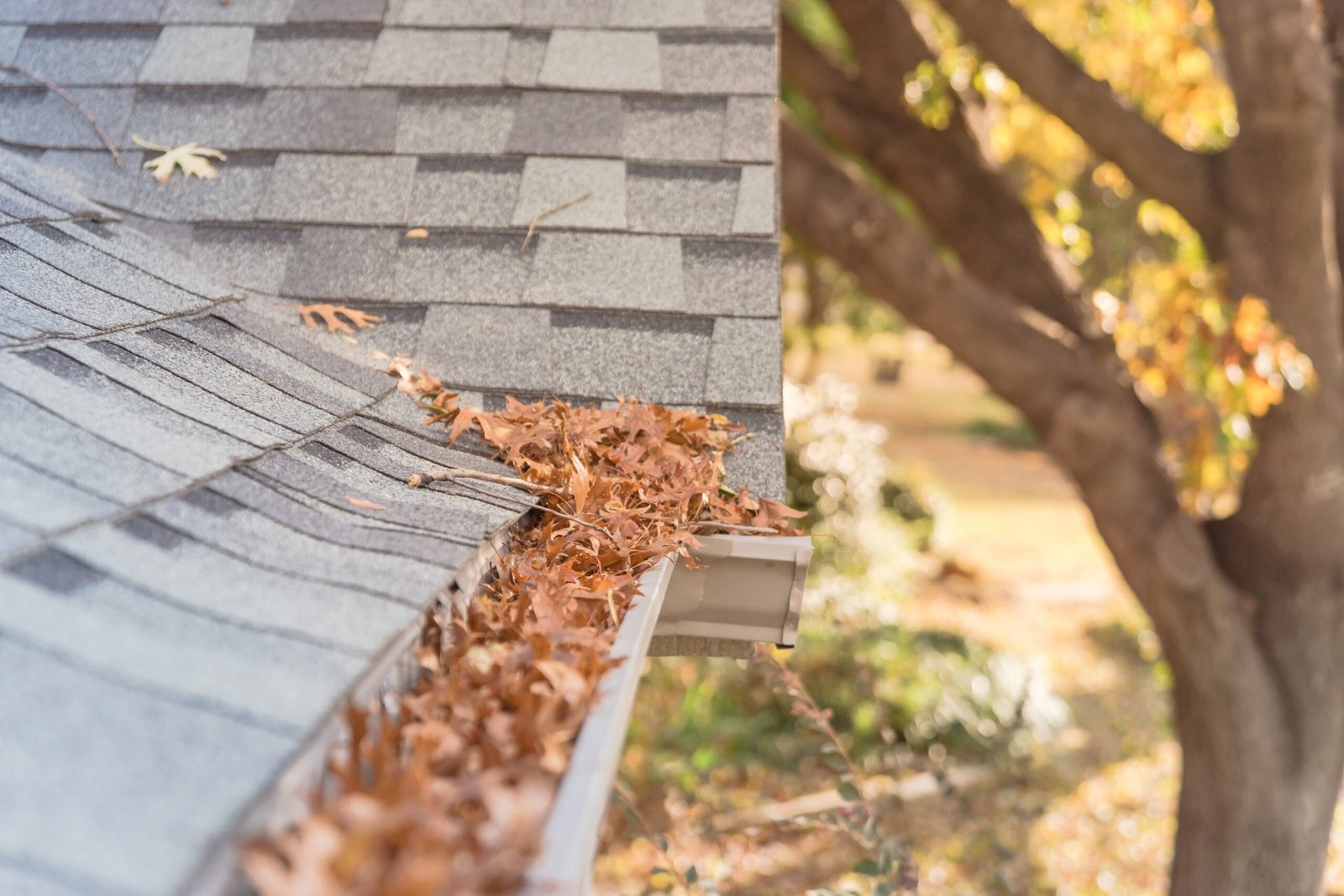
Because these guards are difficult to remove, you cannot see what is happening inside the trough. Sludge builds up unseen. Eventually, the gutter fills with a compost-like muck that blocks water flow.
When winter hits, that wet muck freezes. Or, during a heavy spring rain, the water has nowhere to go. Since the top is capped, the water doesn’t spill over the front. Instead, it backs up.
It creeps up under your shingles and behind the gutter itself. This saturates the fascia board — the wooden board your gutter is mounted to. Over time, this trapped moisture causes the wood to rot. By the time you notice peeling paint or a sagging gutter, the structural damage is already done. Ignoring these small signs is a classic mistake that leads to expensive home repairs later.
The mathematics of maintenance
The average cost for professionally installed helmet-style gutter guards ranges from $15 to $30 per linear foot, though some premium brands charge even more. For a typical home with 200 feet of gutters, the upfront cost ranges from $3,000 to $6,000.
Contrast that with hiring a local handyman. According to Angi, the average cost of a professional gutter cleaning ranges from $120 to $235.
You could hire a professional to clean your gutters twice a year for 15 years before you spend as much as the upfront cost of the fancy guards. And that doesn’t account for the investment value of keeping that $3,000 in your own account.
If you are looking for other ways to reduce maintenance costs, check out our guide on saving on home repairs.
A simpler solution is usually better
You do not need an over-engineered system to keep leaves out. If you have dense tree cover, simple solutions often work best because they are easy to monitor and inexpensive to replace.
- Steel mesh screens: These cost pennies on the dollar compared to helmet systems. They keep big leaves out but let water in. If they get clogged, you can see it immediately and brush them off.
- Bottle brush inserts: These resemble large pipe cleaners and sit inside the gutter. They are inexpensive and easy for a homeowner to install.
- The handyman strategy: If you are physically unable to clean gutters, do not buy a $4,000 product. Set a recurring calendar reminder to hire a pro every November and June.
Protecting the structural integrity
The goal of a roof drainage system is to move water away from your house as fast as possible. Any device that slows that water down or creates a barrier is a potential failure point.
Be skeptical of lifetime warranties that require you to have the dealer clean the system if it clogs. If you have to call the dealer to clean the device that was supposed to end cleaning, you haven’t bought a solution. You have just prepaid for a service contract you didn’t need. Keep your gutters simple. Your fascia boards — and your bank account — will thank you.
If you value regular maintenance, you probably know that good home insurance is one of the best ways to protect your biggest asset. However, that doesn’t mean you should overpay for it. Farmers Home Insurance lets you review your policy, explore potential savings and make sure your coverage still matches your needs.
Read the full article here