




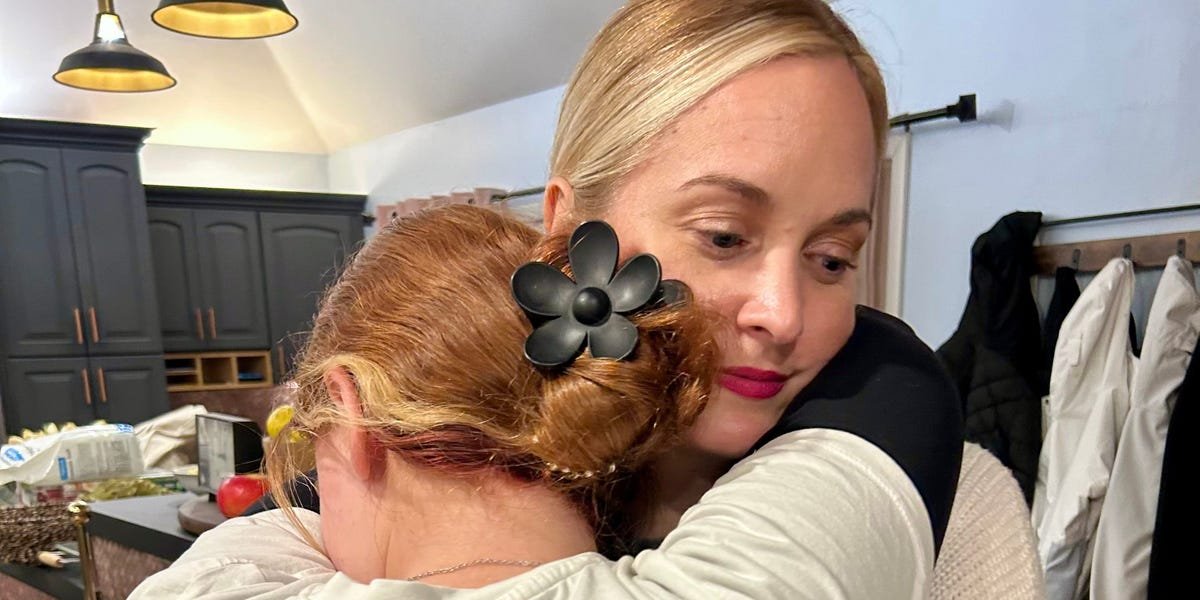

My stepdaughter is 14, which means we are entering the phase of parenting where everyone suddenly expects her to have opinions about her future. What classes does she want to take? What is she good at? Does she want to go to college? What kind of job might she want someday?
These are normal questions. We ask them because that is what you do with teenagers — you start helping them picture adulthood. The problem is that I am having an increasingly hard time picturing it for her.
I research AI for work
Much of my professional life is spent researching and writing about AI, which has gone from an unsettling side conversation about the death of blogging and copywriting careers to something that touches nearly every aspect of our lives.
Then I go home and help raise a kid who will enter college and the workforce after all of these institutions have had several more years to rearrange themselves around AI. I am, in other words, probably more plugged into this stuff than is good for me.
I use AI every day at work. It’s mandatory. I see what it can do well, what it still does terribly, and how quickly the gap between the two keeps changing. I read the research and follow the product releases. I watch businesses try to figure out what any of it means and watch my students figure out where the line is between using a tool and outsourcing their own brains. Despite all that exposure — or maybe because of it — I am anxious.
Last week, an Anthropic safety researcher said he puts the chance of AI killing everyone within the next decade at greater than 10%. If someone told me there was a greater than 10% chance a plane I was about to board would crash, I would not get on the plane. If someone tells me there is a greater than 10% chance AI kills humanity, I am supposed to read the article, close my laptop, and then proceed to ask a teenager whether she has thought about where she wants to go to college while making sure she eats enough vegetables and doesn’t drink too much caffeine (add energy drinks to my list of existential threats).
I grew up watching movies about computers that became too intelligent
Maybe being a millennial is part of the problem. I am exactly the right age to have spent my formative years learning about the brand-new World Wide web while watching movies that explained that computers becoming too intelligent was generally a bad development. “The Matrix” came out when I was 12, “A.I. Artificial Intelligence” when I was 14, and “I, Robot” when I was 17.
We were not exactly given a lot of pop-cultural examples where humanity created increasingly intelligent machines, and everyone enjoyed a sensible increase in workplace productivity.
There is something genuinely surreal about growing up with artificial intelligence as one of our favorite dystopian plot devices, only to reach middle age just in time to hear actual AI researchers debating the probability of extinction.
I am not convinced AI is going to kill us all. I am also not convinced the people warning about it are disinterested observers. Building a crisis only you can fix is textbook, and all PR is good PR. I also don’t think I get to dismiss the warnings just because the incentives are messy.
AI systems are becoming more autonomous, more capable, and harder to predict. Researchers and policymakers are now openly debating risks that would have sounded like science fiction when my stepdaughter was born. Meanwhile, I am supposed to help her make choices based on an adult world that may look very different by the time she enters it.
What I am struggling with is how much of my uncertainty also belongs to her. At 14, she should be allowed to imagine a future without inheriting every adult anxiety attached to it. She should be able to write an email and read a paper without defaulting to the AI summary. She should be able to get excited about a subject she likes without me immediately calculating whether AI will make the resulting career obsolete. She should be able to talk about college without receiving a TEDx Talk about labor-market disruption.
My parents also worried about my future
Parents have always worried about the world their children will inherit. Mine did not know what the internet would do to work or culture when I was a teenager. Their parents lived with nuclear anxiety. What feels new is hearing some of the people building the thing reshaping our future openly debate how dangerous it might become. That knowledge follows me into otherwise ordinary parenting.
An afternoon spent reading about superintelligence and human extinction gives way to dinner, homework, weekend plans, and whatever else is occupying the mind of a 14-year-old. The two realities sit next to each other more easily than I would like.
I still worry about whether she is getting enough sleep. We talk about grades, driving, college, jobs, and whatever drama is happening that week. Her future is just beginning to open up, which should make those conversations feel expansive. Sometimes they do. Other times, somewhere underneath them is the question I try not to ask: what kind of future is she actually going to have?
I don’t want that fear to become hers, but I also don’t know how to unknow what I know. She should be able to imagine adulthood as something waiting for her, not as a question mark I have handed down.
So I tell her to drink more water and spend less time on TikTok. We make plans. She talks about what she wants, changes her mind, and gets to be 14.
Read the full article here