






US households have spent much of this year waiting for the other shoe to drop.
After the US and Israel’s war with Iran sent the oil market reeling, starting in late February, it seemed that grocery bills would not be too far behind. Transportation costs have risen for many businesses, and some supplies, such as the fertilizer farmers need to grow produce, have been disrupted.
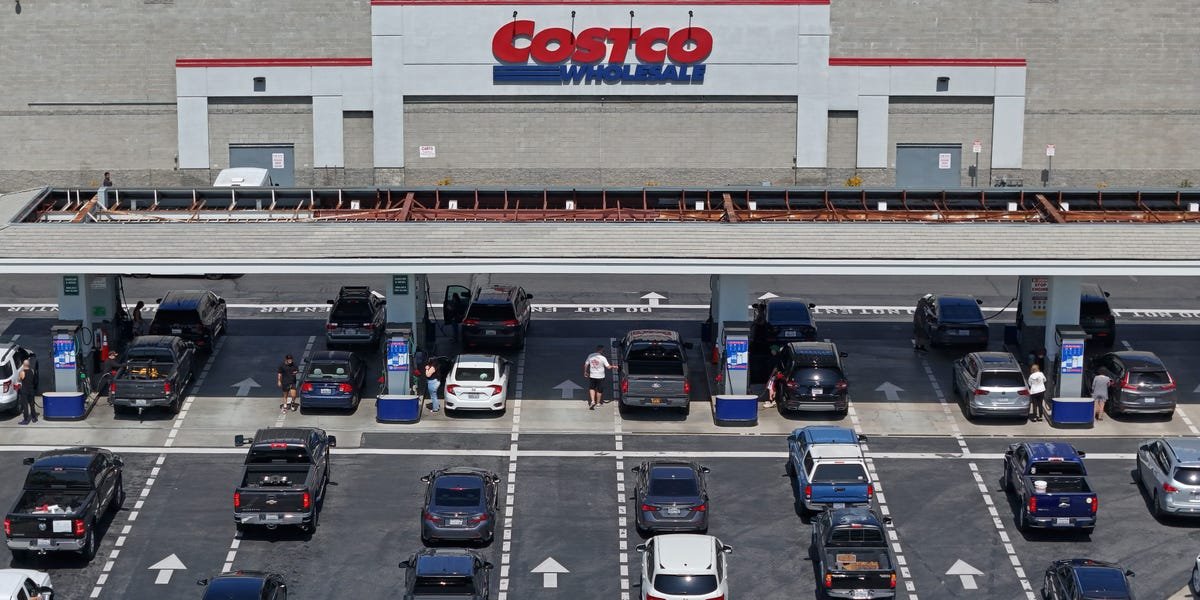
But while gas prices have slammed drivers’ wallets in the last few months, the cost of many staples at Costco has hardly budged since January.
I’ve been visiting a warehouse in Wisconsin every few weeks this year to document the on-shelf prices of 45 commonly purchased items across several categories.
I chose the warehouse club because it’s known for adding minimal markup to its goods. I’d expect any significant cost changes to be more evident there than at a retailer that cushions prices more.
The retailer also runs most of its own supply chain operations, so it doesn’t have the same third-party transportation expenses. That puts a bigger spotlight on fuel costs.
Some up, some down, mostly flat so far
Of the 45 items, seven had price increases from January to May and five had price reductions. The overall change was effectively flat.
Costco did not respond to a request for comment on this story.
The most significant changes I saw were in coffee beans and beef, both of which are facing significant supply pressures that have relatively less to do with fuel prices.
The price of a two-pound bag of Starbucks coffee beans jumped from $16.80 in January to $19.99 in April, a 19% increase.
Meanwhile, the four-pound packs of organic ground beef that sold in March for $25.99 disappeared from the shelves of my local Costco, replaced in May with similar packs of conventional beef costing $24.99. That’s not a price hike per se, but a notable value substitution.
Bacon also ticked up gradually from February to May, with each three-pound pack costing about $0.50 more a month, rising a total of $1.50.
Surprisingly, motor oil, which has made headlines over impending shortages, was in stock and consistently priced throughout my visits.
Fresh produce prices fluctuated a bit, with berries coming down in price as they came into season.
I’ve had trouble squaring what I was seeing in the numbers with what was happening in the oil market: From crude oil to jet fuel to diesel, companies around the globe have been paying top dollar to keep their businesses moving.
On top of that, everything feels more expensive now, thanks in part to the very real impact that gas prices alone have on household budgets, not to mention that flights and package shipments are costing more. Energy prices also drove an unsettling uptick in inflation measures, and US consumer sentiment has hit all-time lows.
The big question: Are these fuel prices temporary?
Then, on Thursday, Walmart said it had absorbed about $175 million in fuel costs rather than immediately passing them along to shoppers, but warned it would likely have to raise prices if things don’t change.
That made everything make a lot more sense, since Costco and Walmart share a lot of DNA when it comes to their pricing approaches.
“We’re confident this was the right approach to reinforce customer trust and support share gains over the long term,” financial chief John David Rainey said on the company’s earnings call.
Costco doesn’t report its financials until Thursday, so we’ll all have to wait and see what it has to say.
What’s clear from the past week, however, is that some retailers may have been willing to take a temporary hit to keep shoppers happy, but they aren’t likely to keep covering the high cost of fuel indefinitely.
Wherever things go from here, I’ll continue keeping a close eye on how it all plays out on the shelf.
Have a tip? Contact this reporter via email at dreuter@businessinsider.com or text/call/Signal at 646-768-4750. Use a personal email address, a nonwork WiFi network, and a nonwork device; here’s our guide to sharing information securely.
Read the full article here