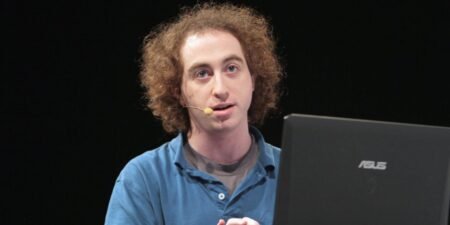






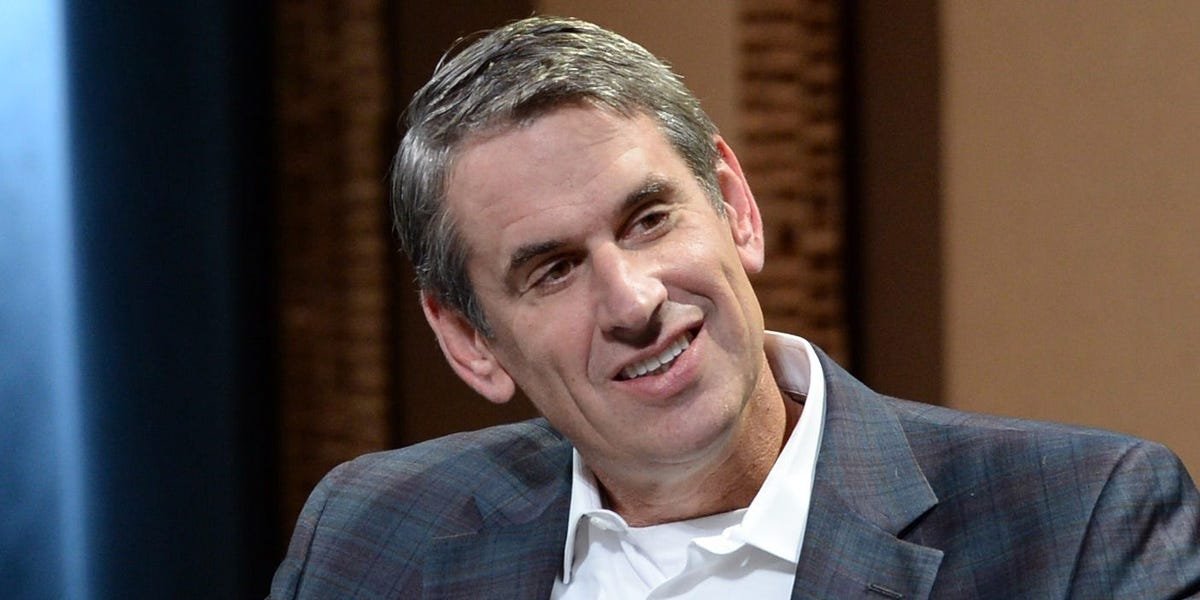

Venture capitalist Bill Gurley says he’s come up with a scarier theory than the idea that Anthropic wants to stifle its competition.
“The more I dig, I’ve met people who I dare say think it’s their responsibility and they’re excited about building a species that’s superior to humans,” Gurley said during a recent episode of the “All-In Podcast.”
Gurley, who said he spent a month reading everything he could about Anthropic, said he came away convinced that one of the leading AI startups wants to create a God-like system to rule humanity.
“I don’t think they think they’re writing software. I think they’re midwifing a deity here,” Gurley said. “And I don’t know which one I’m more afraid of, the regulatory capture or the second theory, I call the Dr. Frankenstein theory.”
Gurley said his “Dr. Frankenstein theory” is “more scary to me” than the often-repeated criticism that Anthropic’s push for AI safety requirements is a veiled strategy to lock out its competitors.
One of the impetuses for this theory, Gurley said, was Amodei’s October 2024 essay titled “Machines of Loving Grace,” which takes its name from a 1960s poem by Richard Brautigan that imagines a world in which intelligent machines watch over a humanity freed from the tasks of daily life.
In the essay, Amodei hypothesized several ways the economy will change once “powerful AI” is achieved, ranging from a universal basic income to a “capitalist economy of AI systems.”
“He says, ‘It could be a capitalist economy of AI systems which then give out resources to humans based on some secondary economy of what the AI systems think makes sense to reward in humans.’ So that’s envisioning a deity of sorts that’s going to break ties and decide what humans do,” Gurley said, quoting from the essay.
Gurley’s theory is based on his views of how Amodei and other key Anthropic officials have described artificial general intelligence (AGI) or a similar theoretical moment when AI surpasses human capabilities. The exact definition of AGI is hotly debated.
Anthropic has not explicitly said it plans to build an AI deity like the one Gurley described. A representative for Anthropic told Business Insider it did not have a comment at this time.
Anthropic cofounder Chris Olah, whom Gurley referenced, recently joined Pope Leo XIV at the presentation of Leo’s encyclical, a formal declaration of Church Doctrine that focused on AI and humanity. Leo warned against those who seek a transhuman or posthuman existence, extolling the virtues of being human.
“The machinery that makes this possible is the work of math and programming and science,” Olah said at a presentation of the encyclical in Vatican City. “But what character we choose, how it interacts with the world, how it ought to interact with the world — these are more clearly questions for the humanities, for religion, for philosophy, for society at large.”
Gurley remains at Benchmark Capital, though he scaled back his ties to the firm in 2020. He publicly defended Benchmark’s $75 million investment in Manus, an AI startup founded in China, which Meta later acquired for $2 billion in December 2025.
The cohosts of “The All-In Podcast,” some of whom have publicly clashed with Anthropic, echoed Gurley’s concerns about Anthropic’s ultimate aims.
“They believe that they’re so powerful, these individuals, that they can create God and that by creating God, they are like this Prometheus kind of species,” cohost Jason Calacanis said.
David Sacks, who served as President Donald Trump’s AI and crypto czar, said that it’s easy to draw a line from Anthropic pursuing a powerful enough AI that requires safety regulations to advocating an agenda that amounts to regulatory capture.
“If you brand yourself as the safe AI company and then try to characterize everybody else as a reckless player and reckless AI needs to be stopped, you can see how this would basically further your monopolistic control over this industry,” Sacks said.
In the past, Anthropic CEO Dario Amodei has said that he has pushed for stronger regulations because he is “deeply uncomfortable” about AI companies policing themselves since that would leave enormous power in the hands of a few individuals.
“This is one reason why I’ve always advocated for responsible and thoughtful regulation of the technology,” Amodei told “60 Minutes” in November 2025.
Amodei has also said that if people doubt Anthropic’s sincerity, they should look to its past when safety concerns led the startup to hold back on the public release of Claude before OpenAI released ChatGPT in November 2022.
“We probably ceded the lead on consumer AI because of that,” Amodei told billionaire and investor Nikhil Kamath during an interview on Kamath’s podcast in February.
More recently, Anthropic said it held back on the public release of Claude Mythos due to concerns that it could expose widespread cybersecurity vulnerabilities. Last week, Anthropic said Mythos-level models will be available to customers “in the coming weeks.”
On Monday, Anthropic announced that it had confidentially filed an S-1 draft with the U.S. Securities and Exchange Commission, a major step toward what could become the largest initial public offering in history.
Read the full article here