






Ukrainian soldiers are teaching their Western trainers how they use war robots on the battlefield.
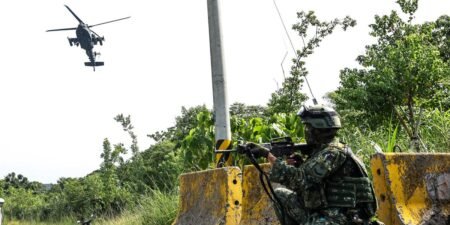
Ukrainian troops are receiving training on NATO soil in a Norway-led multinational effort called Operation Legio. Western military trainers share their best warfighting practices, and in the process, the Ukrainians also share their battle-tested tactics.
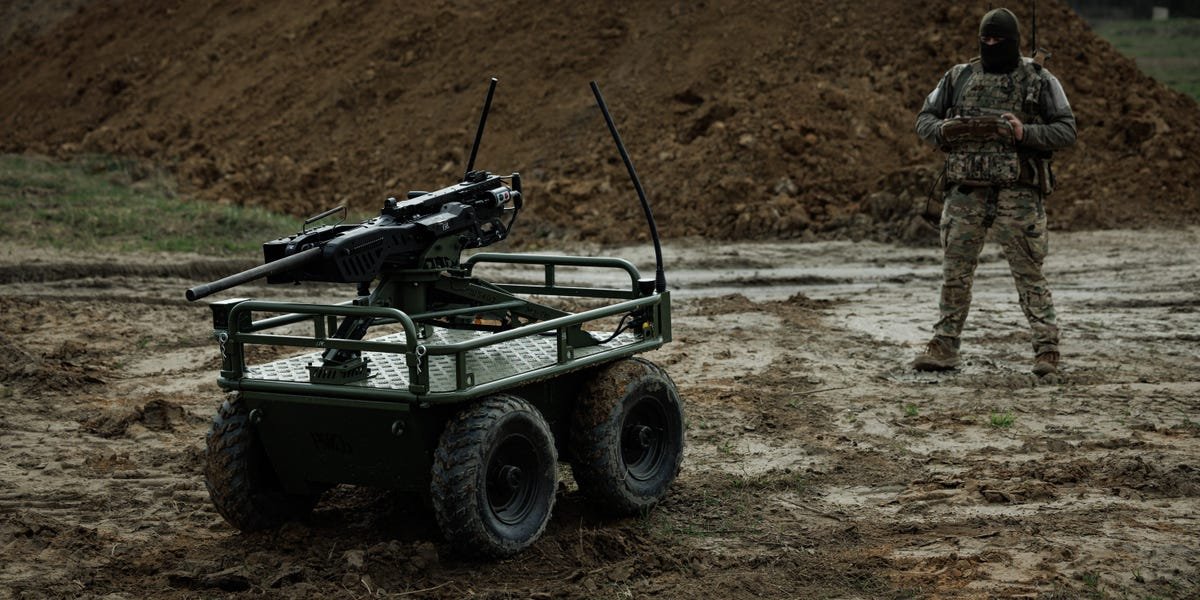
Such tactics include how Ukrainian troops use ground robots. Ukraine operates a growing fleet of uncrewed ground vehicles (UGVs) that attack Russian positions, evacuate wounded soldiers, carry heavy gear, and mine positions. It’s an area where Ukraine is building rapidly, and partner nations are paying attention.
The Operation Legio training is conducted at a purpose-built site in Poland called Camp Jomsborg, which Business Insider visited in June. The training there is very much a two-way street.
Brigadier Atle Molde, the Norwegian commander overseeing Task Force Legio, told BI that instead of Western trainers teaching the Ukrainians how to use ground robots, it is the Ukrainians who “are teaching us.”
Training leaders want the instruction to be as realistic as possible, resembling actual battlefield conditions as closely as possible. That means incorporating the robots that are becoming increasingly important as part of Ukraine’s operations.
When the robots become “an important part of how they operate, then we have to start using those in training as well,” Molde said.
How Ukraine uses robots in battle is integrated into the training. At the same time, those lessons are imparted to the participating Western militaries. Molde described Camp Jomsborg as one of the most important sensors for identifying what Norwegian forces need to learn about modern warfare.
He said information about ground-robot use and tactics is “absolutely” being passed from Camp Jomsborg to Norway’s military.
He said that with ground robots, “we have been looking into that for quite some time.” Norway, like other militaries, has also been extensively testing ground robots.
Molde said working with Ukraine means Norway and the other partners involved get “updated knowledge of how to actually do it, how to integrate it, what they can be used for.”
Among the experiences being shared is the understanding that ground robots sometimes “have severe limitations when it comes to terrain,” he said.
These uncrewed vehicles hug the ground, affecting situational awareness and leaving them vulnerable to physical obstacles in ways that aerial drones are not. A Ukrainian soldier who oversees robotic systems for his unit previously told Business Insider that the cameras can be limited by tall grass, restricting intelligence gathering.
From exchanges with the Ukrainians, Norway is figuring out when UGVs are useful and when they are not. The goal is to take back “the correct or the relevant lessons learned from the Ukraine war,” rather than assuming Norway would be right to fight exactly as Ukraine does, Molde explained.
Northern Norway, for example, experiences a lot of snowfall, and Molde said that kind of factor would need to be considered before it invests in certain types of robots.
Molde said that Camp Jomsborg offers a “valuable” opportunity to learn from Ukrainian experts. Ukraine’s experience and expertise are central to the training; it decides what it wants the camp to focus on, and Ukrainian instructors work alongside Western trainers.
Norway’s Land Warfare Center, among other bodies, is evaluating lessons learned from the Ukrainians to determine which ones actually apply to its forces. Molde said that a potential conflict between NATO and Russia would likely be “completely different,” in part because NATO has much stronger air forces than Ukraine. The point, he said, is “not preparing for the last war.”
He said that some of Ukraine’s tech and tactics are born from deliberate choices that prove successful and innovative, while others are adopted “because it’s the last option.”
“It’s the last choice they have,” Molde said.
Partners need to be able to distinguish between those. It’s a warning that other Western leaders and analysts have given, especially on drones. Among the reasons Ukraine has embraced them is munitions shortages, for example.
Maj. John, the S3 Operations Officer in charge of synchronizing the overall training operation, told Business Insider that “we can’t take everything that Ukrainians are doing and just apply it to our context. Then we will miss.”
“We have to be very, very specific on what are they doing that we should implement and what are they doing that is due to their context that we should not implement into our militaries,” he said, asking to be identified by his first name for security reasons.
Partner nations are testing and investing in ground robots, with many of them citing Ukraine’s battlefield wins as motivation.
Ukraine’s use of ground robots is growing rapidly as the expanding front-line kill zone creates greater demand for uncrewed solutions to problems in the area. The defense ministry said in late July that Ukraine had contracted more than 22,000 ground robots since the start of the year, double the number for all of last year.
Ukraine uses uncrewed technology like robots because they allow human soldiers to stay further from danger and can help Ukraine confront a much larger military.
Robots are important for Ukraine because their supply lines are under constant threat from drones, they take a lot of casualties when evacuating soldiers from the front, and they lose soldiers when they resupply front-line positions.
“So that’s, of course, two very important roles of the UGVs, is to save lives, really, to spare lives,” Molde said. That’s an ability Western militaries want as well.
Read the full article here