





Supplies are tight, prices are climbing, and US shoppers are flocking to Costco to get a good deal.
No, we’re not talking about gas — this time.
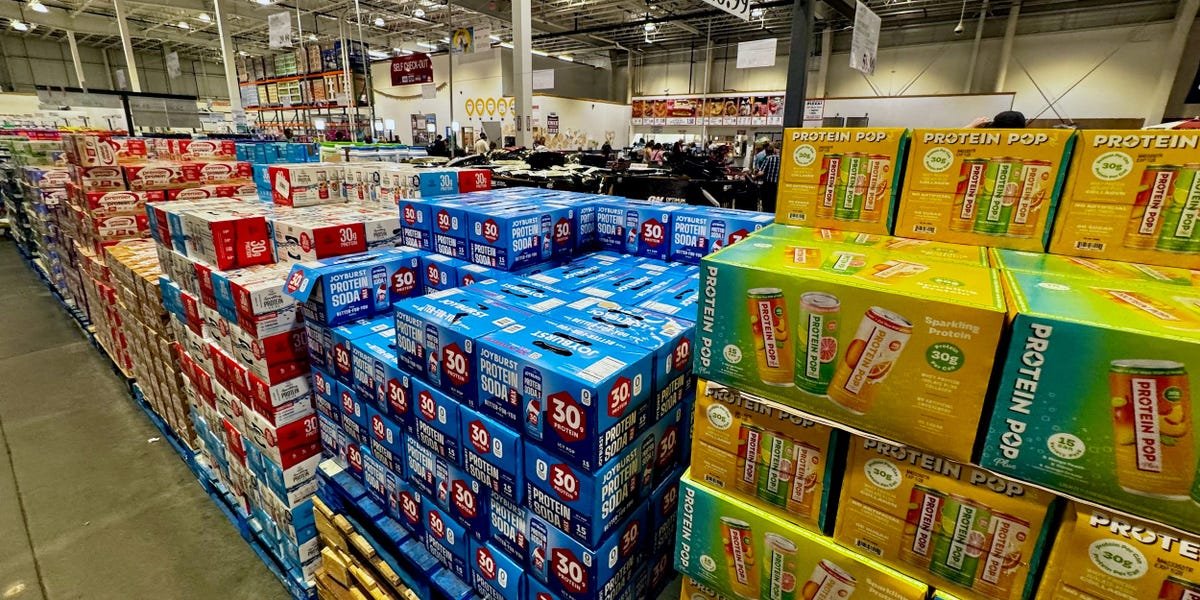
The wholesale club has been broadening its selection of protein-packed foods and drinks, and the products are proving to be a huge hit.
“Anything protein right now is doing extremely well,” Costco’s chief financial officer, Gary Millerchip, said during the company’s quarterly earnings call on Thursday. “We’re really leaning into those items, because of what we’re seeing with our members and the value and quality they’re looking for.”
Indeed, go into any warehouse in the US, and you’ll likely find pallets of powders, bars, shakes, and sodas stacked in the prime spot near the cash registers.
Go further through the warehouse, and you’ll see protein featured in a host of other snacks and drinks.
Costco’s Kirkland Signature brand launched an ultra-filtered protein milk that CEO Ron Vachris said has “taken off extremely, extremely strong,” citing the popularity of GLP-1 weight-loss drugs.
“Our buyers are right on top of the halo effect of GLPs and the needs of the members,” he said on the call. “I’m quite impressed with what I’m seeing from the CPGs [consumer packaged goods companies], the rather big ones, and how they’re pivoting to the future potential opportunities there.”
Vachris said the drugs were also driving member interest in nutrients like magnesium and fiber.
The boom in protein demand is also being felt all across the economy as ingredient prices spiral higher.
The US Department of Agriculture said last week that prices for whey protein concentrate — the stuff that adds nutrition to otherwise ordinary food — are getting higher thanks to high demand and low supply.
“Production remains limited, and inventories are extremely tight,” the agency said.
That’s causing problems for some smaller brands trying to compete with giants like Starbucks and Mars for enough powder to make their recipes, Bloomberg reported.
Still, Costco members might not see the price impact for a while yet. Scott Dicker, senior director and head of research and insights at market research company Spins, told Bloomberg it takes around 12 to 18 months for protein costs to show up in shelf prices.
Read the full article here