



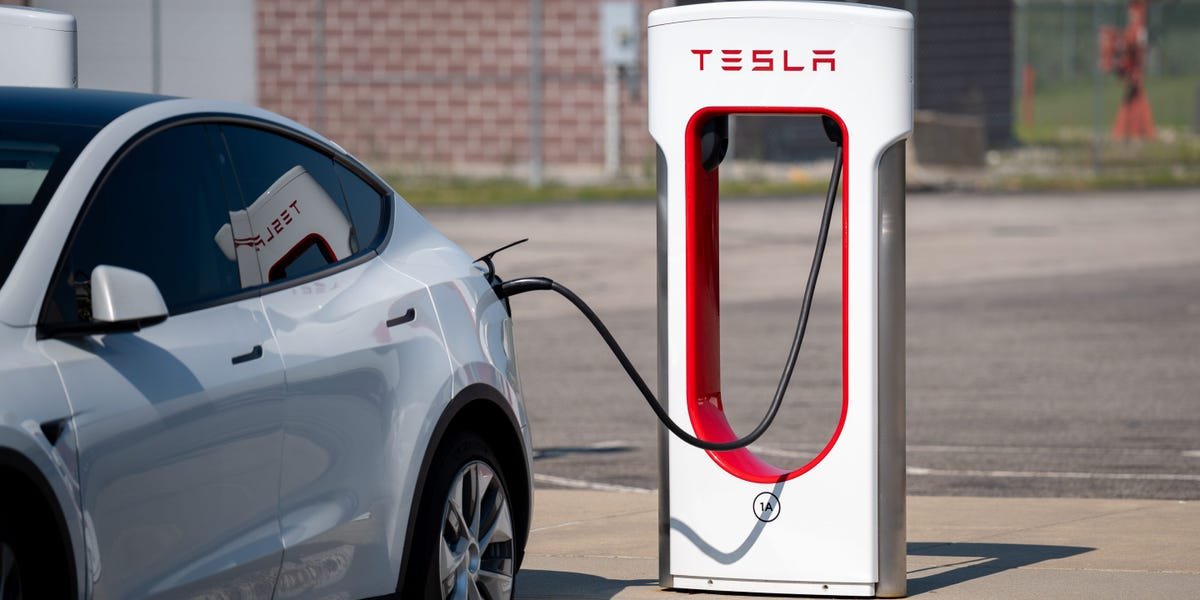

Tesla is making a major bet on demand from urban EV owners by planning an unusually large charging hub in San Francisco.
Plans filed with the city show that Tesla is planning for 124 V4 Supercharger stalls at 75 Waterloo Street, a triangular vehicle storage lot near the intersection of Alemany Boulevard and Bayshore Boulevard, alongside Highway 101.
The proposed station would be among Tesla’s largest globally, and a rare project of that scale inside a major city. By comparison, Tesla’s planned V4 Supercharger at 25 Mason Street, near Market Street in the city, would have 35 stalls. That permit application was submitted on May 18.
Tesla’s biggest charging hubs are typically built along heavily traveled interstate corridors, where land is cheaper and demand surges during road-trip season. The hub sits at the crucial location where the 101 meets Interstate 280, which leads to the Peninsula, Silicon Valley, and San Francisco International Airport. It’s also not far from Bernal Heights and the Bayview, which have significant residential populations.
Some of Tesla’s largest charging locations include a 200-stall station in Yeehaw Junction, Florida, and a 164-stall station in Kern County, California. While the latter became fully operational in November 2025, the largest hub in Florida has yet to open.
Based on maps submitted to the city, the 124 stalls would use a conventional parking configuration rather than the pull-through stalls Tesla has introduced at some newer locations.
The plans indicate the station would operate around the clock and include a roughly 416-square-foot “micro-amenity” building. Sketches show that the building contains two gender-neutral, accessible restrooms with diaper-changing stations, water fountains, and vending machines, as well as space for storage, cleaning equipment, and the site’s security and IT systems. The vending area would offer coffee, hot drinks, and snacks.
The plans do not appear to include solar canopies or Tesla Megapack batteries, features used at some of the company’s other large charging hubs. Solar canopies are typically used to lower peak-demand costs and keep chargers operating during some outages.
The latest version of the application was submitted on July 29, but the project still needs to go through the city’s permitting process. No construction or opening date has been announced.
Tesla did not respond to a request for comment.
Read the full article here