






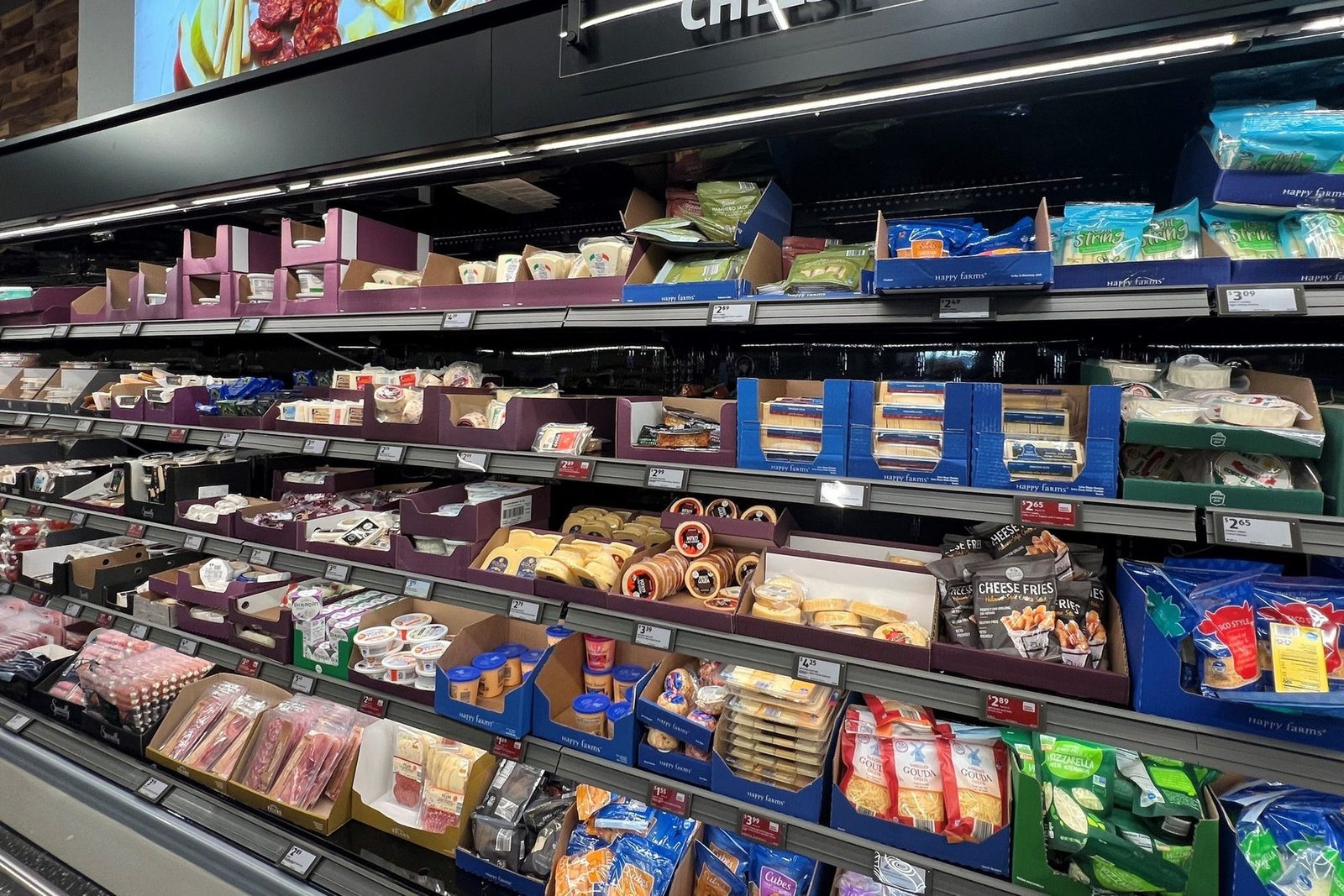

Shoppers who noticed their grocery runs were taking a larger bite out of their budget last month were proved correct by Labor Department data released this week showing food-at-home costs rose 0.7% in April, marking the largest monthly increase since 2022.
Over the year, grocery costs are up 2.9%, and right now, pressure on food prices is converging from several directions at once, said David Ortega, a food economist and professor at Michigan State University. Those price increases in combination with skyrocketing gas costs, which are up 28.4% over the year, are putting financial strain on Americans.
Higher Food Prices Cause Some to Cut in Other Areas
Ed Moore, 79, of Louisville, Kentucky said prices have gone up considerably at his local grocery store over the last year. His latest trip cost him $95 for a week’s worth of food for one person. Retired and living on a fixed income, he said he doesn’t have much cash to cover an emergency, and the rising cost of essentials is making it more difficult to save in case one comes.
In response, he has stopped buying new clothes, with the exception of a pair of Skechers he paid for using credit card rewards. He shops for deals, avoids buying name-brand products, and earns points by shopping at Kroger that are redeemable for discounts on gas.
“But with gas prices so high, I’m not sure how much the discount is going to help there,” Moore said, adding he went from filling up his tank twice a month to just once, driving less since the Iran war began.
Increases Coming in Different Parts of Supply Chain
Energy costs from the war are starting to show up in food prices through what’s called the cold-chain, or the supply chain for perishable foods and goods, Ortega told USA TODAY.
“Refrigerated trucking runs on diesel, and diesel is up sharply,” he said. “Categories that depend most on that cold chain, like fresh produce, dairy and prepared salads, saw some of the sharpest monthly increases. Prepared salads, for example, jumped about 3% in a single month.”
Layered on top of that are category-specific issues that were already in place, including record-high beef prices, Ortega said. “The cattle herd is at its smallest level in decades, and beef demand has remained unusually strong, partly because of the broader high-protein trend that has reshaped how consumers think about their diets.”
Additionally, tomato supply has been hit by weather problems in Mexico and Florida and Mexican imports also carry a tariff. Coffee prices are also reflecting constraints from prior harvests, along with lingering effects from last year’s tariffs on coffee imports, he said.
“The takeaway is that consumers aren’t facing one shock, they’re facing several simultaneously, and the energy-related impacts from the Middle East conflict are likely to build over the coming months,” said Ortega.
Further food cost increases could be impacted by higher fertilizer prices due to the Iran conflict, but they may not be fully felt until next year, Ortega said.
“And with price increases now outpacing wage growth, affordability is front and center for many households, which have less buffer to absorb these shocks than they did a few years ago,” he said.
Even some high-income earners are changing their behavior in response to rising prices. Koji Hosokawa, 65, of Norwalk, Connecticut, said although he takes home about $10,000 each month, he’s pulled back his spending and is shifting his investments toward dividend-generating stocks to increase his cash flow as he supports his wife and his son, who was recently laid off.
“The price of commodities such as groceries and gas are something that I cannot control,” Hosokawa said. “Those are a given. Therefore, the thing that I can control is my income.”
Choosing Alternatives Can Help Save Money
The April spike in food-at-home costs was driven by a 1.8% increase in the cost of fruits and vegetables, as well as a 1.3% rise in the department’s meat, poultry, fish, and eggs index, as beef prices rose 2.7% over the month.
The choices you make for your meat protein purchases can affect your overall grocery tab, said Michael Swanson, chief agricultural economist at the Wells Fargo Agri-Food Institute.
“Do you want beef on the table when it comes to protein?… It’s what you buy that makes a big impact on your checkout price,” Swanson said. Meanwhile, the price of pork has remained flat while the price of poultry and eggs are down, he said.
Similarly, in the produce section, where there are some products that have gone up in price and several that have stayed steady since last year, Swanson said shoppers can potentially make some adjustments.
“If you want to leave the tomatoes alone for the next month or so until we get the next crop in, you can make that number disappear from your budget,” he said.
Ways to Save on Your Grocery Bill
Here are some ways shoppers can save on their grocery bill, according to Ortega:
- Shop around. Grocery stores are competing for your business and running promotions on specific items. Shopping around, comparing weekly ads, and taking advantage of promotions can add up to meaningful savings over the course of a month.
- Shift protein sources where you can. Beef prices have been up sharply over the past year, while chicken and pork sit at more affordable price points and have been relatively flat or down over the month. Eggs are also significantly cheaper than they were a year ago as flocks have rebuilt. Substituting even one or two meals a week can meaningfully lower a grocery bill.
- Buy produce in season and locally when you can. Seasonal and local produce tends to be less exposed to long-haul transportation costs, so it can be a good way to save on items that are getting hit by higher diesel prices.
- Consider store brands and private labels. These products typically sell at a much more affordable price point, and the quality of most staples is comparable to national brands.
This article originally appeared on USA TODAY. Reporting by Betty Lin-Fisher and Rachel Barber, USA TODAY. USA TODAY Network via Reuters Connect.
Read the full article here