





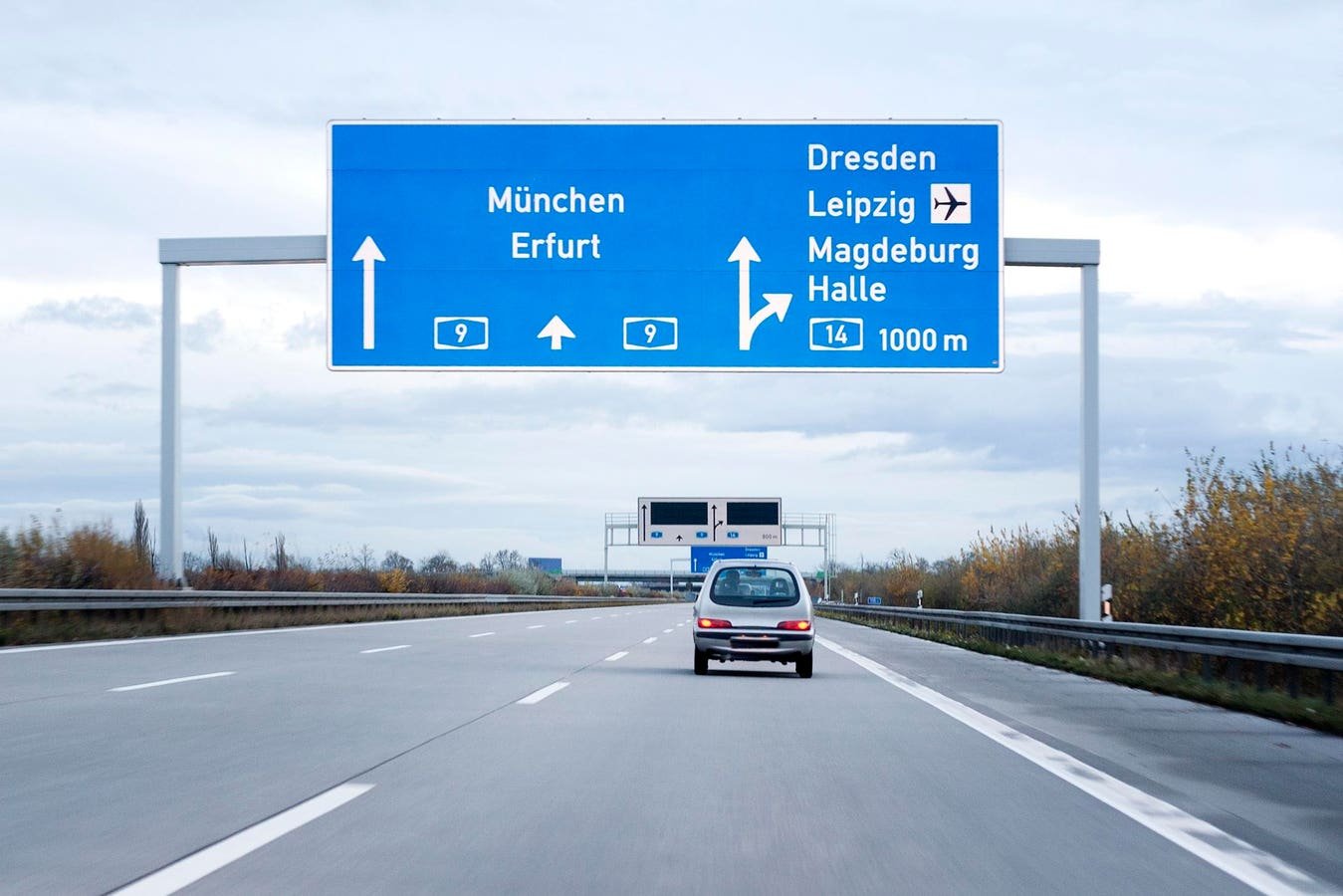

As Europe searches for its next wave of energy transition and industry 4.0 solutions, technology startups driving the continent’s fourth industrial revolution or “4IR” are increasingly heading to a particular part of Germany in their droves – the Munich-Dresden corridor.
An aggregation of Deutscher Startup-Verband and registry origination data from both towns suggests the Munich and Dresden metropolitan areas are currently home to nearly 3,000 startups and counting.
Over a fourth of these startups describe themselves as energy, industrial, clean technology or zero-carbon mobility outfits. They are becoming increasingly instrumental in driving a continent-wide “energiewende” or energy transition as their ranks continue to swell.
This is no quirk of fate but rather a distinct startup ecosystem built over decades between two major German urban clusters some 400km apart.
Attraction Of Two Distinct Towns
Both Munich and Dresden carry their own attraction for startups, whilst their proximity and connectivity accentuates it.
Munich counts on its historically strong venture capital market. It is also the home of leading Bavarian and Northern European family offices often on the lookout for early-to-late stage investments in promising startups.
Some of the area’s most active VC firms include HV Capital, Wellington Partners, Target Capital, Munich Venture Partners, UVC Partners, Occident, Picus Capital, 10x Founders, Possible Ventures, WorldFund VC, Future Energy Ventures, Vsquared Ventures, Venture Stars, Ananda Impact Ventures and Fraunhofer Venture.
Even VC firms in the capital Berlin opt to have substantial operations in Munich. Overall, industry databases point to more than 100 VC outfits in the city, rubbing shoulders with venture arms of major corporates ranging from automaker BMW to the world’s largest reinsurer by revenue Munich Re.
“Ground breaking ideas need seed capital. Once the efficacy of those ideas is proven by a startup, capital is needed to upscale in order to realize that potential. Munich’s VC market, and the unique wider ecosystem it plays a role in, makes the city one of the most attractive places in Europe for startup founders,” said Herbert Mangesius, founding partner of Vsquared Ventures.
Vsquared Ventures’s portfolio spreads from zero carbon aviation startup Vaeridion to new age battery recycling outfit Cylib, next generation rocket maker Isar Aerospace to lithium-silicon battery materials firm Group 14. Such a portfolio composition is pretty typical of Munich VCs.
The VC market is complemented by academic strength provided by institutions like the Technical University of Munich and Max Planck.
Dresden boasts of its strong Saxony region history in hardware engineering and its own technical university. Over the last two decades, it has increasingly moved on to materials science, physical clean energy infrastructure, green hydrogen plants, and heavy industry technologies.
This is all backed up by strategic industrial capital investments readily encouraged by the German government and private entities. Dresden also acts as a major European hub within Germany’s own ‘Silicon Saxony’ with a strong focus on photonics, semiconductors, and quantum technology.
The Munich-Dresden corridor is also peppered with a slew of corporate innovation campuses – Airbus, Bosch, Infineon Technologies, Siemens and more.
At Home In A Natural Environment
Combination of all these factors makes startups feel at home in a natural environment that fosters both innovation as well as patient capital investment, said Kevin Berghoff, co-founder and CEO of Quantum Diamonds.
Berghoff, an ex-McKinsey & Company consultant, fellow co-founder Fleming Bruckmaier, a quantum sensing expert, and their team are crafting atom-sized quantum sensors that have the potential to “redefine” measurement in various high-tech industries like semiconductors.
“In today’s fraught geopolitical climate we are attempting to commercialize synthetic diamond-based quantum sensors with nitrogen-vacancy centers to provide non-destructive, high-resolution magnetic imaging of semiconductor chips,” Bruckmaier explained.
This allows manufacturers to precisely locate microscale defects in complex 2.5D and 3D chip architectures, saving time and money for an arduous precision engineering process, he added.
The startup has secured €152 million ($175 million) for a manufacturing site in Munich, and Berghoff said they couldn’t think of better place.
“The city’s startup ecosystem has been vital in our story and the success we are aspiring for. We hope that our site will play a vital role in the European Union’s plans to produce its own technology and software components, and for Europe to keep up with the U.S. and China in the global tech sector.”
Not to mention around 200 local jobs Berghoff and his team intend to create when the site goes live this year.
Francesco Sciortino, co-founder and CEO of Proxima Fusion, an energy startup that’s developing commercial nuclear fusion power plants, echoed similar sentiments about finding a natural home in the region.
“We were spun out of Munich’s Max Planck Institute of Plasma Physics back in 2023. So, strictly speaking we are homegrown and could not wish for a more conducive environment, including, for instance, a place to attract and hire talent.”
The company’s core offering banks on commercializing “stellarator-based” magnetic confinement fusion technology. So far it has raised over €200 million ($230 million) in equity and grants. In simple terms, a stellarator is a fusion power device that confines plasma using external magnets.
“To leverage recent advances in stellarator optimization, computational design, and superconductivity, we’ll need computer numerical control or “CNC” machinists – highly skilled manufacturing professionals who set up, program and operate digitally-controlled machine tools to finish precision parts from raw materials like metals, plastics and composites. Germany in general, and the region in particular, has the talent pool for that.”
Making Connections And Mentoring
Another thing going for region is the glue the binds much of it together – a thriving community of connectors and mentors based there offering programs to help early-stage deep tech startups scale up. Many are run by serial entrepreneurs themselves with decades of expertise, experience and connections under their belts.
One of the leading ones – Ignite Next – fronted by co-founders Markus Bohl (CEO) and Alois Eder (CTO) has a colorful backstory of its own. Both are alumni of Intel Ignite program that was once under the global chipmaker’s umbrella.
When Intel pulled back, Bohl and Eder took the program down the independent route with wider industry support including that of the chipmaker.
“Now [the independently operated] Ignite Next offers a collaborative model to support startups in the region and beyond bringing together leading global technology players, including Infineon and Intel itself, to support Europe’s deep tech founders,” Bohl said.
Eder noted: “Think of us not just as mentors, matchmakers or consultants for startups – but all of the above and more. We are not strictly speaking a traditional accelerator either. We’d like to think that we’re the missing link between startups and industry.
“Our hands-on, non-dilutive program helps founders scale IP-heavy breakthrough technologies from early to late-stage capital raisings and beyond.”
Bohl added: “A startup founder may have a brilliant idea or deep domain expertise to conjure a product or solution. But not necessarily the knowledge, confidence or contacts to take it to next stage of monetization, strike collaborative partnerships or exercise operational prudence. This is where we come in.
“The problem is more common than you think. In fact, over the last few decades, I’ve often noticed that Europe’s deep tech startups face a persistent challenge: strong scientific foundations and early funding, but limited industrial collaboration and precision scale-up support.”
Ignite Next’s structure allows startups to work with multiple partners across a broad range of frontier technologies, from semiconductors, photonics, advanced manufacturing, robotics and artificial intelligence, through to quantum computing.
“The Munich-Dresden region provides the ideal setting for it, and we’re there at both ends of the corridor,” Eder added.
And for added effect, Bohl and Eder emphasize theirs will always remain a “founders-first” structured program to help startups scale-up without sacrificing ownership (the “non-dilutive” bit), but with a “high-touch approach” of guidance provided by a pool of more than 300 senior industry mentors.
“The overarching idea has always been to give founders direct access to technical expertise, market insight, and investor readiness support in a wider deep tech ecosystem that we’re all a part of,” Bohl said.
Current State Of Dry Powder For Startups
Put it all together and the enterprise value numbers speak for themselves. Munich remains the primary driver of it in Germany – outside of Berlin – securing around the €3 billion ($3.5 billion) mark in raises per year, with a total registered startup enterprise value of over €101 billion ($115 billion), according to Dealroom data.
That’s over a fourth of the combined enterprise value of all VC-backed German startups founded since 1990. The market in Dresden operates on an intertwined scale that’s a fifth smaller than Munich’s each year, albeit one that’s highly targeted.
Bohl and Eder of Ignite Next, and Mangesius of Vsquared Ventures, admit the numbers may appear conservative compared to huge average yearly raises in the U.S., and those pumped in recent years by VC investment entities backed by the United Arab Emirates and Saudi Arabia.
But the figures are significant and more targeted from a pan-European perspective, and some of those VC funds from the U.S. and the Middle East are routinely flowing into the region too.
And collectively, the Munich-Dresden corridor outpaces many competing European hubs in terms of both capital available for deployment as well as the support network it can provide.
This is expected to continue based on current trends for regional startups as European energy and process industries segments embrace autonomous technologies, AI and low-to-zero carbon solutions.
Read the full article here