





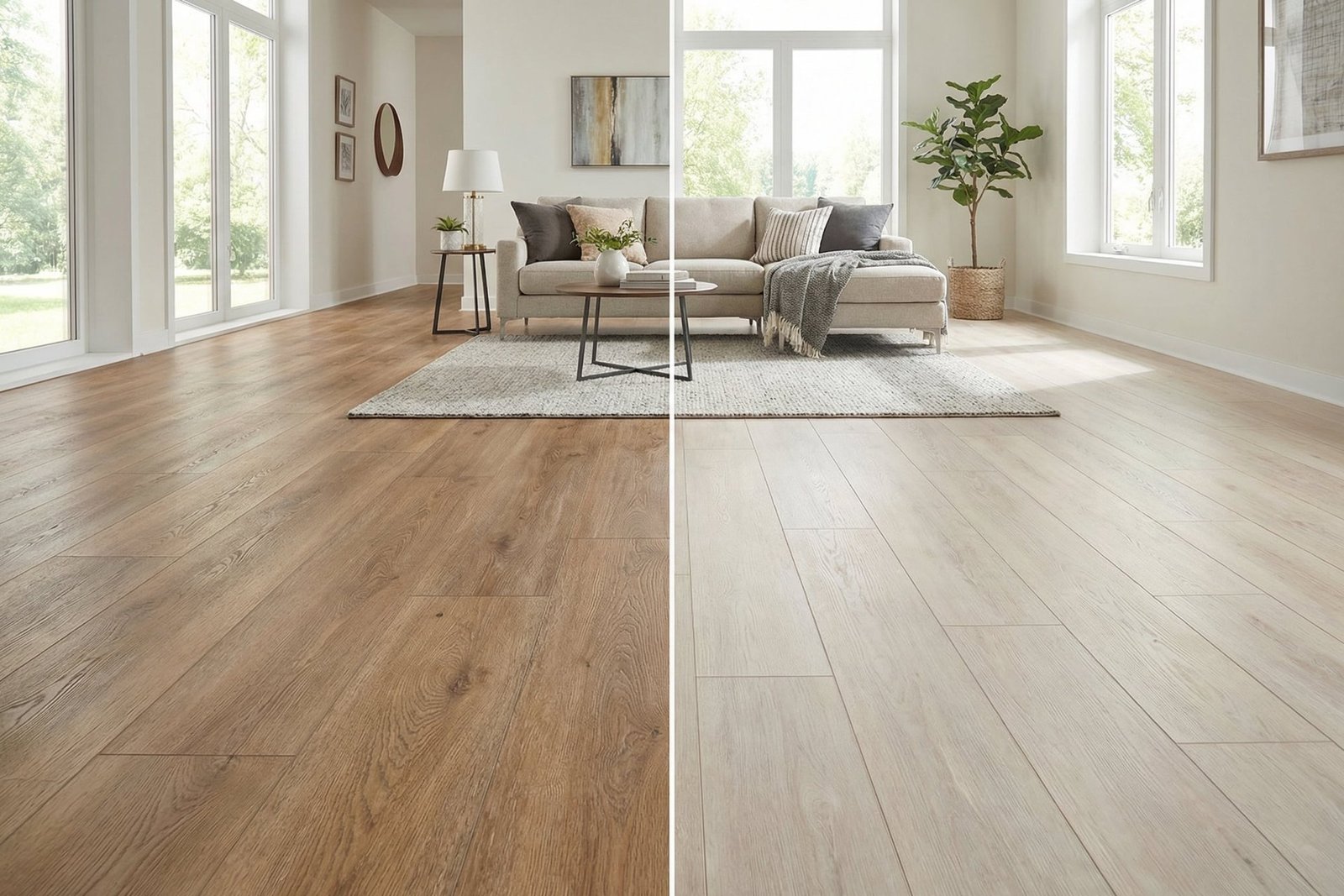

Vinyl and laminate are both manufactured types of flooring that are budget-friendly alternatives to more traditional hardwood flooring. Vinyl is generally considered a higher-end option that has greater durability and visual appeal, but the quality of each product can vary widely.
Understanding the difference between vinyl flooring vs. laminate is a good place to start if you’re not sure which flooring is best for your home.
What Is Vinyl Flooring?
Vinyl flooring is made primarily of polyvinyl chloride (PVC), but it also contains plasticizers to add flexibility, stabilizers to help it resist UV light, and printed layers, which resemble other flooring materials, like wood or stone. It has a wear layer on top, a decorative layer beneath that, a core layer made of PVC, and a backing layer.
There are three main types of vinyl flooring:
- Sheet vinyl: Sheet vinyl is usually the most affordable to install, but it has the least aesthetic appeal of the three options. It doesn’t have seams, so it may offer better water resistance. Sheet vinyl is less durable than the other options, so it’s most common in less-trafficked rooms, like laundry rooms and utility rooms.
- Luxury vinyl planks (LVP): LVP flooring better resembles traditional hardwood flooring, and it can provide better durability and water resistance than engineered wood flooring. It’s most common in living areas and bedrooms.
- Luxury vinyl tiles (LVT): LVT flooring provides similar durability and water resistance to LVP flooring, but it’s more rigid and looks more like stone or tile flooring. It’s most common in bathrooms and kitchens.
What Is Laminate Flooring?
“Laminate flooring has a core made of high-density fiberboard and an upper laminate made of melamine-impregnated paper,” explained Thomas Borcherding, owner and lead designer at Homestar Design Remodel, a home renovation company in Missouri.
Laminate flooring also has a wear layer for physical protection and a design layer that helps it resemble other materials. Much like vinyl flooring, laminate flooring can come in sheets or tiles, but the material looks more synthetic and doesn’t resemble real wood or stone as much as LVP or LVT flooring.
The core layer of laminate flooring will readily absorb water and moisture, so it’s much less resistant to spills and moist environments.
While laminate flooring is more affordable, it’s less common and usually reserved for low-traffic rooms like utility rooms and laundry rooms, especially given its low visual appeal, durability, and moisture-resistance.
Key Differences at a Glance
Neither flooring material is ideal in all situations, so you should understand vinyl vs. laminate pros and cons before deciding which to install in your home.
- Upfront cost (per sq. ft., installed): Vinyl $4–$12; Laminate $4–$10
- Lifespan: Vinyl 25 years; Laminate 15–25 years
- Wear resistance: Vinyl moderate; Laminate low to moderate
- Water resistance: Vinyl high; Laminate low to moderate
- Comfort: Both moderate
- Visual appeal: Vinyl moderate to high; Laminate low to moderate
- Maintenance: Both low
Durability and Water Resistance
Vinyl flooring is more durable because it’s more rigid and has a thicker top layer that resists scuffing, scratching, and wear from foot traffic. It’s also more water-resistant because PVC is impervious, while the HDF or MDF core layer of laminate will readily absorb water.
For these reasons, vinyl flooring is a better option in high-traffic and moisture-prone areas, including kitchens, bathrooms, and entryways. It’s also a longer-lasting option, especially if you have children or pets that can increase wear.
However, laminate is more affordable, so if you want to optimize for an affordable installation, laminate is the better option. Just keep in mind that you’ll have to pay to replace it more often, so long-term value is lower. Some homeowners choose vinyl for high-traffic rooms, like kitchens, and save laminate for less-frequented rooms, like laundry rooms.
Appearance and Comfort
“Laminate flooring, to certain people, carries with it an outdated and lower-quality reputation than vinyl flooring,” said Borcherding. “Vinyl flooring is seen as the more modern flooring solution, and as a result is more attractive to potential buyers. For this reason, vinyl flooring often improves home resale value more than laminate.”
Not only does it better resemble more expensive materials, like wood and stone, but it also wears more slowly and won’t show physical damage as quickly.
Both flooring materials can provide some cushion and comfort underfoot, but the core of laminate is more pliable and can be a bit easier on your joints. You can opt for a thicker underlayment under either for improved comfort. Underlayment can also reduce the noise both flooring types can make as you walk on it.
Installation and Maintenance
Installing flooring requires some tools, patience, and skill, regardless of the material you choose, but compared to options like hardwood, natural stone, and tile, both vinyl and laminate flooring are easier to DIY. You can cut both with a standard blade on a table saw or miter saw, and the materials are both lightweight and easy to maneuver into place.
Still, it’s best to leave the installation to a professional unless you have experience with flooring installation. A pro is more likely to be able to address subfloor issues and repairs, as well as install the flooring without visible mistakes.
In addition to installation ease and cost, you should think about maintenance. Both types of flooring are easy to clean, but most homeowners find vinyl simpler because you can use a wet mop without having to worry about water intrusion and warping. Remember, vinyl flooring also lasts longer, so you’ll have fewer replacements in your future if you go with vinyl.
Cost Considerations
Laminate is one of the most affordable types of flooring available, so it’s the better option if you have a small renovation budget. However, vinyl is more durable and water-resistant, so you’ll need replacements and repairs less often, meaning greater long-term value.
You can expect to pay between $4 and $12 per square foot to install vinyl flooring and between $4 and $10 per square foot to install laminate flooring. Make sure you think about long-term value, too, though. Since vinyl flooring lasts longer and is more durable, you’ll likely get more value from it in the long run.
Additionally, since vinyl also looks nicer than laminate, it’s usually the better option unless budget is your primary deciding factor.
Which Is Better for Each Room?
“Neither laminate nor vinyl is universally ‘better,’” said Mike Solomich, owner of Quality Hardwoods of Michigan, a flooring supplier in Michigan. “It depends on the space and how the home is used. Vinyl tends to perform better in areas where moisture is a concern, while laminate shines in dry living spaces where homeowners want a more traditional wood look at a lower price point.”
Laundry rooms, utility rooms, and guest bathrooms are good options for laminate because of reduced foot traffic and a relatively low risk of spills and leaks. These rooms are also less trafficked, so visual appeal isn’t always a primary concern.
Most homeowners consider vinyl the better option in living areas that guests will see, in areas that see a lot of foot traffic, or in places where moisture and water are a constant concern. Kitchens, bathrooms, living rooms, and bedrooms are often better candidates for vinyl flooring.
For basements and below-grade spaces, laminate might be best if you’re on a tight budget, while vinyl is likely a better long-term investment if you and your family use the space regularly for entertainment.
Bottom Line
Vinyl flooring is a more durable, more appealing, and more water-resistant flooring option than laminate, and it adds more value to your home. “In most cases, LVP and LVT tend to add more value to a home than laminate,” said Brian Meussner, President of Mr. Handyman, a full-service handperson and home renovation company. “Vinyl is durable, water-resistant, and low maintenance, which supports long-term performance.”
However, laminate flooring can provide more than enough longevity in less-trafficked areas in your home. Plus, laminate is more affordable, so it’s a better choice if you’re on a tight budget.
If you’re not sure which option best suits your lifestyle and demands, speak with a local flooring expert about your project. Discuss how you plan to use the space you’re renovating and your cost expectations, and ask which is best for your particular case.
Frequently Asked Questions
Is vinyl flooring better than laminate?
Vinyl flooring usually looks nicer and resists physical wear, water, and moisture better than laminate, but it’s not better in all cases. Laminate is much more affordable, so it’s the better choice if you have a small renovation budget. Laminate can also be a good option for rooms that don’t see a lot of activity, so the choice really depends on your specific needs.
Can laminate flooring get wet?
Laminate flooring can get wet, as the top layer offers good water resistance, but prolonged exposure to water or moisture will cause irreparable damage. The core layer of laminate flooring is HDF or MDF, which is highly absorbent and will warp and crack if it gets wet. You should be careful not to use a dripping mop when cleaning laminate, and clean up spills as quickly as possible.
Does vinyl flooring look fake?
Low-end vinyl flooring can look fake, but high-end luxury vinyl plank (LVP) and luxury vinyl tile (LVT) flooring can very closely resemble more expensive materials, like hardwood, stone, and even ceramic tile. You’ll pay more for natural-looking vinyl flooring, but it can elevate your home without the drawbacks of real wood or stone, like poor water resistance and a high installation cost.
Which lasts longer, vinyl or laminate?
Vinyl flooring will almost always last longer than laminate. Vinyl flooring has a PVC core, which won’t get damaged if it gets wet. Laminate flooring has a wood fiber core, which will expand and warp in the presence of moisture. Even in rooms where spills and leaks aren’t issues, vinyl will last longer because it’s more resistant to physical wear.
Is vinyl or laminate easier to install?
Both vinyl and laminate flooring are relatively easy to install, especially because both are available in click-lock systems that make DIY installation straightforward. However, laminate flooring is sometimes easier to install because it’s more flexible, which can mean you need less work to level or smooth out the subfloor. This is particularly relevant if you’re installing in a basement or directly over a concrete slab foundation.
This article originally appeared on USA TODAY: Vinyl vs. laminate flooring: Which is better for your home?
Reporting by Dan Simms, USA TODAY / USA TODAY
USA TODAY Network via Reuters Connect
Read the full article here