






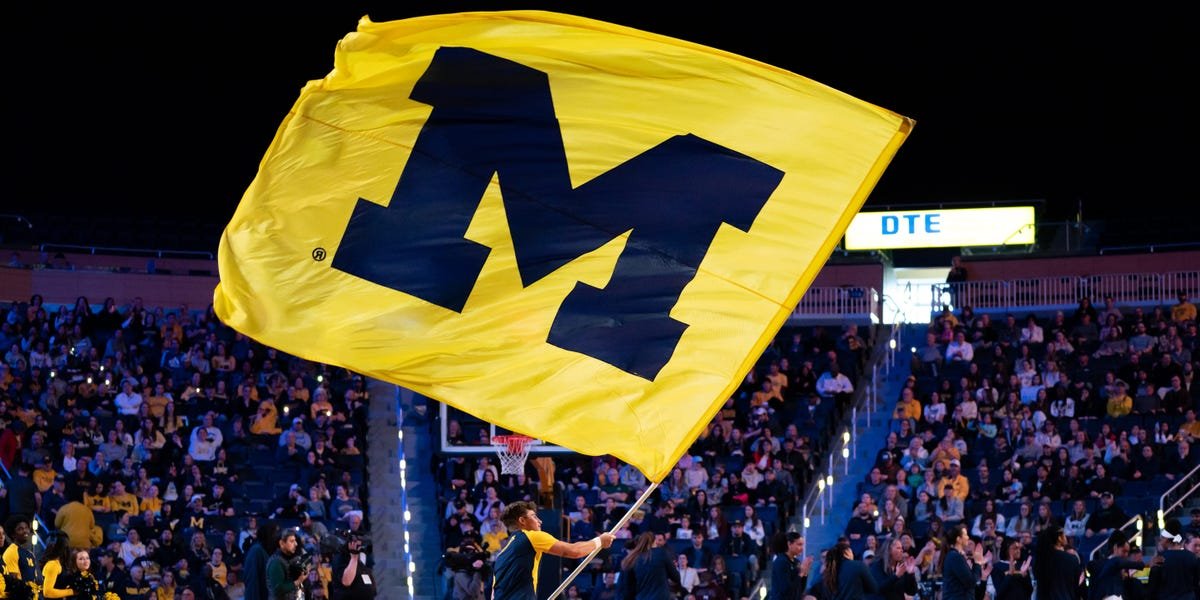

University of Michigan made a very good, very early bet on OpenAI.
Investors running the public school’s endowments put $20 million into one of the AI lab’s earliest fundraising efforts, according to an exhibit in the ongoing Elon Musk and Sam Altman litigation. The University of Michigan moved in before Microsoft invested billions into OpenAI and before ChatGPT’s release kicked off the modern AI boom. The Ann Arbor school stands to make a fortune.
While the document is unclear about the exact terms of Michigan’s stake, the university is sitting pretty. When it contributed $20 million, it set a “target redemption amount” of $2 billion. That’s how much the university aims to earn back from OpenAI.
The university’s $20 million stake arrived in the same early cluster as $50 million investments from Khosla Ventures and from LinkedIn cofounder Reid Hoffman’s venture philanthropy fund, the Aphorism Foundation. The batch also included $10 million from a Y Combinator fund and $3 million from the trust of Gmail creator Paul Buchheit. Microsoft’s 2019 infusion of $1 billion came later, the document shows.
The University of Michigan and the other early investors would be prioritized above Microsoft in OpenAI’s payout order, the document says. Their “target redemption amounts” also rise with inflation.
The University of Michigan and OpenAI did not respond to requests for comment from Business Insider.
It’s common for endowments to invest with Silicon Valley venture capitalists, though it’s rarer to see a direct stake. Michigan’s total endowment is huge — valued at $21.2 billion last year — and has also invested with Sam Altman’s and his brother Jack Altman’s venture funds.
Dan Feder, who leads the university endowment’s venture capital and private equity investments, joined Jack Altman’s podcast last June. Feder said that venture capital is “a pretty lousy area to invest unless you are investing or getting exposure to the underlying companies that really matter.”
Altman replied, “In which case it’s obviously very good.”
“It’s very good. Very, very good,” Feder said.
The University of Michigan wouldn’t be the only school to make a killing from an early tech investment. In 2017, a Catholic high school in the San Francisco Bay Area made $24 billion from Snap’s IPO.
Have a tip? Contact this reporter via email at scouncil@businessinsider.com, or over text, Signal, Telegram, or WhatsApp at 415-757-8198. Use a personal email address, a nonwork WiFi network, and a nonwork device; here’s our guide to sharing information securely.
Read the full article here