






Federal incentives for electric vehicles disappeared at the end of the third quarter, leaving the US market to survive on its own merits.
So, how did companies perform in this new, realistic environment?
Cox Automotive, an industry data provider, has just released EV sales estimates for the fourth quarter on Tuesday, and the numbers reveal which companies thrive and which struggle without government assistance.
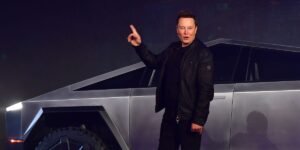
Tesla once again dominates the EV market in the US. Its market share surged to 59% in Q4, up from 41% in the previous quarter, Cox data shows.
One major reason is that EV companies in the US now have to make the numbers work without government help. A significant part of the equation is volume.
Despite a decline in sales recently, Tesla still sold 138,000 EVs in the US during the fourth quarter. That type of volume helps the company maintain relatively low prices while still making money.
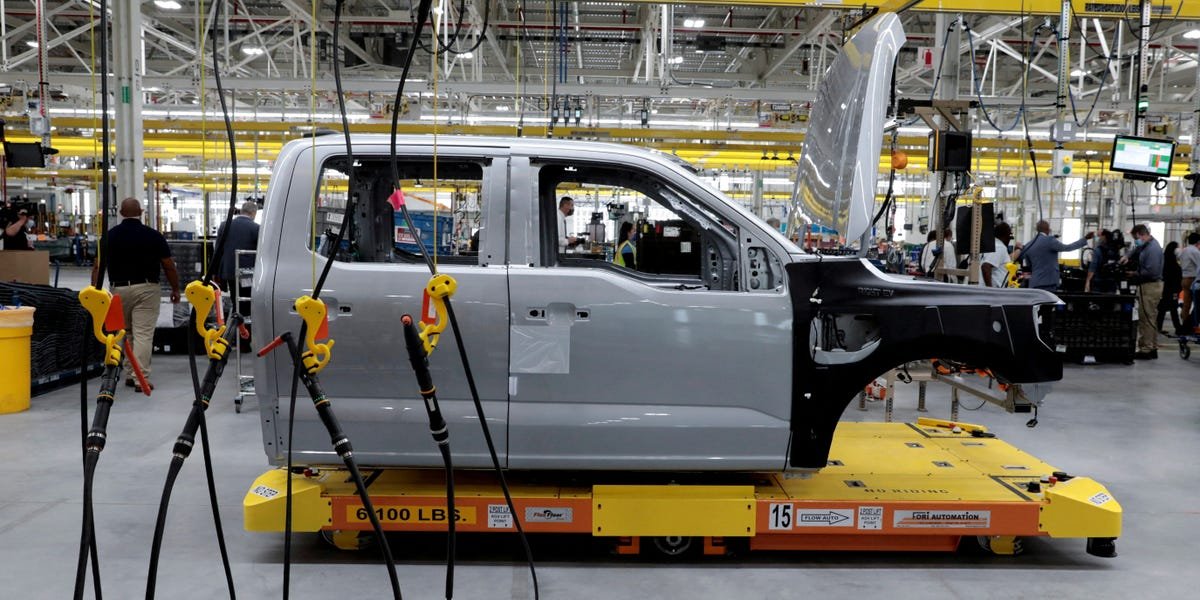
Most rivals don’t have that volume, and their EV manufacturing operations just aren’t as efficient as Tesla’s because they still make other types of cars, which have way more parts than EVs. This can make them more expensive to manufacture and can lead to big losses.
“In the volume-driven business of automotive manufacturing, low volume is the enemy; EV profitability remains a distant dream for nearly every automaker,” Cox warned last year as federal incentives ended.
Ford’s EV market share was measly 6% in the fourth quarter, while Rivian’s stood at just 4%.
General Motors is performing somewhat better, with a market share of over 10%. Even here, the math just doesn’t add up. General Motors took $6 billion in fourth-quarter charges tied to scaling back EV plans in the US.
In December, Ford abandoned large EVs because it couldn’t make a profit on them. The company took a $20 billion write-down on its failing EV business. Rivian still loses a lot of money, although its cheaper R2 EV might improve things later this year.
In July, Mercedes stopped taking EV orders in the US. Stellantis recently shelved some of its EV plans, along with Porsche and Honda. Even Ferrari, which has juicy profit margins, dialed down its EV plans.
If EV operations can’t reach high-volume scale, they risk constantly losing money. At some point, they have to stop the bleeding. When incentives ended in the US, many players decided to give up.
Tesla remains the exception in the US. It’s proving that, in this industry, volume equals survival.
Sign up for BI’s Tech Memo newsletter here. Reach out to me via email at abarr@businessinsider.com.
Read the full article here