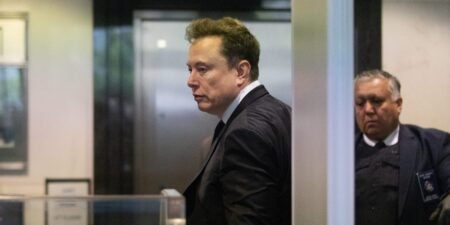





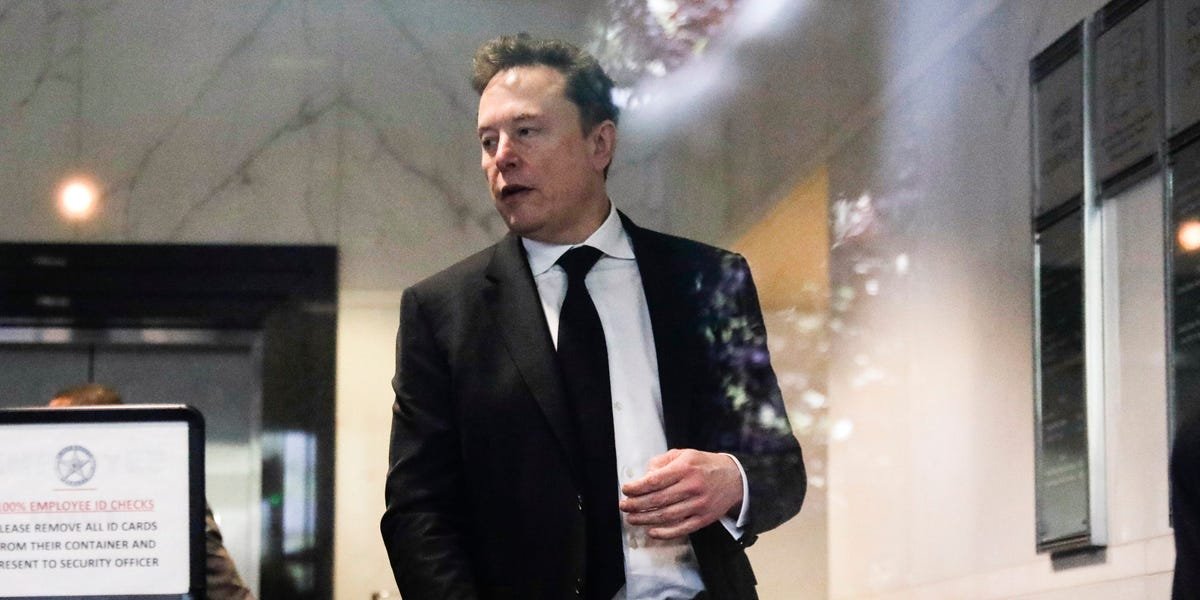

Elon Musk dropped some big names on Tuesday as he sought to convince an Oakland federal jury that he is serious about AI safety.
He told the nine-person jury that he had a one-on-one meeting with former President Barack Obama in 2015. Instead of asking for favors for his company, he “spent an hour” warning Obama about the dangers of AI, which he said “no one was really using” at the time.
Musk also testified that Larry Page called him a “speciest” for being “pro-humanity” over AI in 2015, when Page was Google’s CEO.
“I thought it was extremely important to have a counterbalance to Google,” Musk said about cofounding OpenAI at a time when he already had many other ventures, such as SpaceX and Tesla.
“Google did not seem to care about AI safety at that time,” he said.
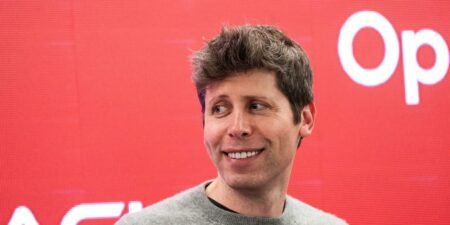
Musk was the first witness in his civil trial against OpenAI and Sam Altman — a high-stakes battle of the billionaires that could reshape the artificial intelligence landscape.
During his roughly two hours of testimony, Musk said he will always be “pro-humans” should humans and AI come into conflict. He also testified about his early career, his lack of work-life balance, and his efforts to recruit AI researcher Ilya Sutskever from Google to work for OpenAI.
“Larry Page refused to speak to me ever again,” Musk said.
Google and Page’s family office did not immediately respond to requests for comments.
Musk’s lawsuit against OpenAI and CEO Altman seeks more than $100 billion in damages, along with a request to unwind the for-profit structure of the $850 billion company behind ChatGPT.
At the heart of the case is Musk’s accusation that OpenAI’s founders, including CEO Sam Altman, abandoned their founding mission as a nonprofit dedicated to developing AI for the public’s benefit, and not for private gain. The Tesla CEO claims that Altman and OpenAI president Greg Brockman deceived him into donating $38 million toward this mission when they cofounded the company together in 2015.
See more coverage of this case:
A court loss would be a blow to charitable giving, he testified.
“It will become precedent, and it will give license to looting every charity in America,” Musk said.
The lawsuit, filed in 2024, says Altman and Brockman used his money to create a “for-profit, market-paralyzing gorgon” that effectively turned OpenAI into a “subsidiary of Microsoft.”
Last year, OpenAI completed a major restructuring that shifted the company toward a more conventional for-profit structure, with Microsoft holding a roughly 27% ownership stake in the for-profit entity, which remains under the control of the nonprofit arm.
During Tuesday’s testimony, Musk compared AI to a very smart child, saying it could “blow up” and run out of control without someone to “instill the right values” in it.
“That has been my long-standing concern about AI, which is what happens when the computer gets much smarter than humans?” Musk said.
In an X post on Monday ahead of jury selection, OpenAI called Musk’s lawsuit “a baseless and jealous bid to derail a competitor.”
The ChatGPT-maker maintains that OpenAI and Musk agreed in 2017 on the need for a for-profit shift, but says Musk “demanded full control” and walked when he didn’t get his way.
Over the roughly three-week trial, a nine-person jury will weigh Musk’s claims of breach of contract and unjust enrichment.
If the jury finds the defendants liable, the judge will determine how to hold them accountable. Musk has also asked the judge to strip Altman and Brockman of their leadership roles and order the return of “all ill-gotten gains” from OpenAI’s for-profit operations.
Musk left OpenAI in 2018 and later launched his own AI startup, xAI, in 2023. Musk’s SpaceX acquired xAI in February, and SpaceX is preparing to go public as soon as this year in an IPO that could value it at more than $2 trillion.
OpenAI is also reportedly eyeing an IPO this year at a $1 trillion valuation.
Read the full article here