






As summer transitions into fall, nothing says cozy weather quite like a gooey, baked mac and cheese.
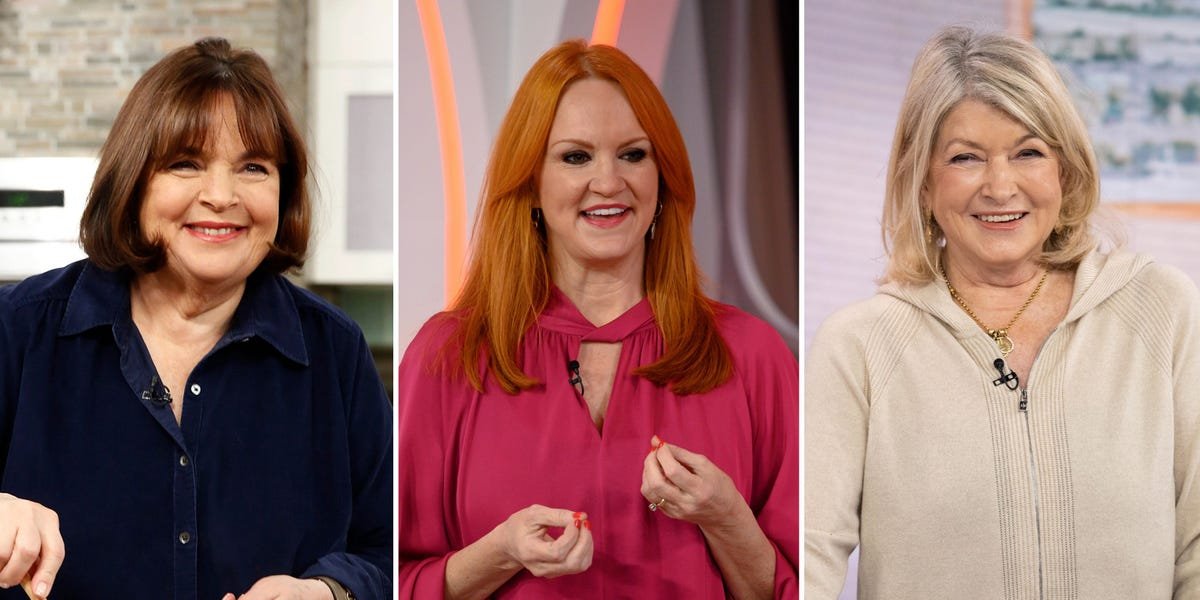
Celebrity chefs Ina Garten, Martha Stewart, and Ree Drummond all have their own recipes for baked mac and cheese, so I decided to put them to the test.
The recipes took different approaches. Martha Stewart kept hers traditional but extra-indulgent, relying on four types of cheese and sautéed yellow onion for a rich flavor.
Ina Garten added tomato, which gave her mac and cheese a brighter, slightly tangy twist that set it apart from the more straightforward versions.
Ree Drummond’s pasta recipe felt the most fall-ready, with roasted butternut squash, caramelized onions, and buttery, savory flavors that felt especially cozy.
Here’s how to make each celebrity-chef-approved baked mac-and-cheese recipe.
Up first was Martha Stewart’s creamy mac and cheese.
Stewart’s recipe calls for four different kinds of cheese and includes sautéed onion.
You can find the full recipe here.
I started by melting a few tablespoons of unsalted butter in a pot on the stove.
I chose a medium-sized Dutch oven to make the cheese sauce.
After the butter had fully melted, I added the yellow onion to the pot and stirred it. The smell of butter and onions filled my kitchen.
The recipe calls for a quarter cup of diced yellow onion and says to sauté the onions until they are translucent, which should take about 5 minutes.
While the onions were cooking, I set about the somewhat grueling task of grating all the cheeses.
It took quite a bit of effort to hand-grate the cheeses. It was also difficult to measure out each cheese exactly, so I ended up estimating somewhat.
However, in the end, I had the right amount of each cheese to make the sauce, plus some cheese left over to sprinkle on the mac and cheese before putting it in the oven.
Next, I cooked the macaroni noodles.
The noodles took about five minutes to cook, as they’re supposed to be slightly undercooked before going in the oven.
After the onions had reached the point of being translucent, I added in the flour.
It quickly thickened the onion-and-butter mixture. Per the recipe’s instructions, I stirred the onions, flour, and butter together and let the mixture bubble for a few seconds.
I then added 3 cups of whole milk. The mixture was now starting to resemble a cheese sauce.
After a few minutes, the mixture had begun to thicken.
To finish the cheese sauce, I added the four kinds of cheese — fontina, Gruyère, cheddar, and Parmigiano Reggiano — along with the seasonings. After stirring the cheese sauce until all the ingredients were completely melted and combined, it was time to add it to the macaroni.
By the time I poured the noodles into the larger pot and added the cheese sauce, I had been prepping and cooking for about an hour.
However, the steps were easy to follow, and I was able to sit down once the mac and cheese was ready to be put in the oven.
You can make the mac and cheese in individual pans or in a larger 1 1/2-quart baking dish.
After scooping my mac and cheese out of the pot and into the dish, I realized I had a lot left over. I could have easily filled another 3/4-ounce dish.
I then topped my macaroni-and-cheese mixture with breadcrumbs.
You can use homemade breadcrumbs, or you can use store-bought in a pinch. I didn’t have a food processor available to make mine homemade, but I found the store-bought kind didn’t negatively affect my end result, and I was happy to cut out a step and save myself some dishes.
After half an hour in the oven, my macaroni and cheese was done. It was delicious.
The top layer of mac and cheese had a delicious, lightly browned crust, while underneath, the mac and cheese was still perfectly creamy. It was enough to feed about four people, though I could have fed more if I had more dishes to bake the rest of the leftover macaroni.
Ultimately, this dish by Martha Stewart was really flavorful, with a slightly smoky taste.
Ina Garten’s recipe for baked mac and cheese calls for fewer ingredients.
The recipe uses only two types of cheese — extra-sharp cheddar and Gruyère — making it a little less time-consuming and expensive to make. Perhaps to make up for less cheese, the recipe uses more butter and milk than Stewart’s version.
You can find the full recipe here.
The recipe calls for a whopping 8 tablespoons of unsalted butter.
Two tablespoons are reserved for the end, so you start off by melting 6 tablespoons in a pot on the stove. It’s important to melt it at a low heat — you don’t want the butter to burn or boil.
While the butter was melting, I started boiling the pasta. The recipe calls for a pound of macaroni or cavatappi pasta. The celebrity chef also recommends adding oil to the boiling water in the pot, which prevents the pasta from sticking to the bottom.
I then added the hot milk into the flour-and-butter mixture.
The next step was whisking it together until the ingredients were fully combined.
While the mixture was off the heat, I started grating my extra-sharp white cheddar cheese. The recipe calls for 8 ounces, which turned out to be the entire package. It took a while to grate, so I was thankful that I had bought pre-grated Gruyere cheese.
After adding the two kinds of cheese, my sauce began to thicken.
I seasoned the pot of cheese sauce with nutmeg, salt, and pepper.
Ina Garten recommends boiling the noodles fully before putting them in the oven, rather than leaving them slightly al dente. After my noodles were cooked, I poured the cheese sauce over them and mixed it all together with a wooden spoon.
The cheese sauce in the Garten recipe was slightly thicker and had a distinct “cheese pull.”
I scooped the mixture into a baking dish and waited for the oven to finish pre-heating to 375 degrees Fahrenheit.
Garten recommends topping the mac and cheese with breadcrumbs and tomato slices before putting it in the oven.
I made one side of my dish with tomatoes and one without, so I could see which one I preferred. I topped both sides with store-bought breadcrumbs.
After about half an hour, the mac and cheese was bubbling and browned on the top.
The dish smelled heavenly, but I thought it could have been a little cheesier.
The tomatoes were slightly roasted, adding a tart flavor and a unique texture to the dish and taking this mac and cheese to the next level.
I thought this recipe was also much easier to make than Stewart’s. With the Stewart version, I had to prep onions and grate four kinds of cheese, for not that much more flavor in the end.
I liked the addition of the tomatoes, which gently popped in my mouth, but felt that, of the three recipes, this was the least kid-friendly.
Ree Drummond’s recipe for butternut-squash mac and cheese takes less than an hour to make.
I started by prepping my butternut squash. Instead of pre-cut cubes, which I usually buy, Drummond’s recipe calls for a whole butternut squash cut in half.
I found it surprisingly easy to cut the squash in half. Since you only need one half, I set the other half aside for another day after cutting it.
You can find the full recipe here.
After cutting the squash in half, I removed the seeds with a spoon.
This only took a minute, but it required vigorous scraping to remove all the seeds and guts from the butternut squash.
After preheating my oven to 400 degrees Fahrenheit, I placed the prepped squash on a baking sheet and drizzled it with olive oil.
I then cooked it in the oven until it was fork-tender and slightly browned, according to Drummond’s instructions. This took about 30 minutes.
While the squash was roasting, I started cooking the onions.
The recipe calls for two sliced yellow onions. I added them to a large, oven-safe skillet with 2 tablespoons of butter. I cooked the onions, stirring them occasionally until they were a deep golden brown.
This was easy enough to do, and I loved how the rich onion scent filled my kitchen — even my roommates commented on how good everything smelled. After the onions were done, I set them aside on a plate.
I used a fork to scrape out the insides of the squash, which was easy because it was so soft.
After transferring the scraped-out butternut squash into a medium-sized bowl, I mashed it lightly with a fork. I found that the squash was already so tender that it didn’t require much mashing to reach the desired consistency.
After the squash was done and set aside, I prepared the sauce in the same skillet I used to cook the onions.
To get started, I added 4 tablespoons of butter to the skillet and melted it over medium-high heat.
The sauce also calls for 2 cups of shredded sharp cheddar cheese. I used medium-sharp cheddar, but you can use whichever cheddar cheese you prefer.
Once the butter was melted, I added the flour, cheddar cheese, and butternut squash.
I added the milk in small increments, folding the sauce to evenly distribute the ingredients.
Once the sauce was done, I added the cooked macaroni and onions and stirred it together.
I used my wooden spoon to fold the macaroni into the sauce, making sure it was well-mixed.
It took a bit of effort to mix the onions evenly throughout the skillet — I found they tended to clump together in spots. However, I was able to distribute them throughout after a minute or two of folding and mixing.
I then prepped the breadcrumbs, which were supposed to be sprinkled over the top of my mac and cheese.
After melting 2 tablespoons of butter in a microwave-safe bowl, I added half a cup of seasoned Panko breadcrumbs.
I sprinkled the breadcrumbs over the mac and cheese and baked it for about 20 minutes.
I baked the mac and cheese in the skillet until the edges turned a deep golden brown and the breadcrumb topping was crisp and toasted.
As I scooped out each serving with a spatula, the creamy pasta gave way, revealing bits of soft, caramelized onion woven throughout the dish beneath its crunchy top layer.
This was one of the most flavorful mac and cheese recipes I’ve ever made, and it’s definitely my favorite of the three.
I much preferred this version of the mac and cheese.
This recipe felt especially true to Ree Drummond’s reputation for cozy, crowd-pleasing comfort food. The sautéed onions brought a rich, buttery depth that made every bite feel more comforting and complex, though their flavor was strong enough to slightly overshadow both the butternut squash and cheddar.
Still, I loved the dish’s textural contrast: The pasta was coated in a thick, velvety cheese sauce, while the toasted breadcrumbs added just the right amount of crunch.
Overall, this recipe genuinely blew me away — it was the kind of cozy, filling dinner I’ll be craving as the weather gets cooler.
Read the full article here