






Little treats are getting littler.
With US shoppers under seemingly never-ending strain, large consumer product companies are finding success in introducing smaller formats that won’t break the bank.
In earnings reports this week, executives from Coca Cola, Mondelez, Proctor & Gamble, and Hershey acknowledged that consumers were responding to the new price points.
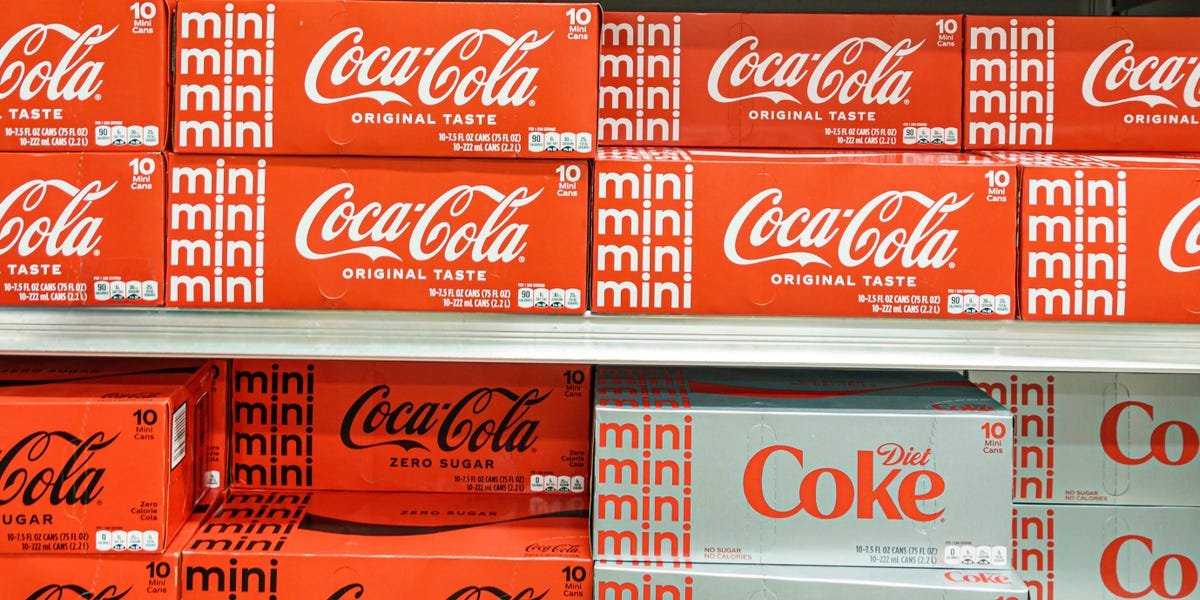
Coke CEO Henrique Braun kicked off the discussion Tuesday saying that lower-income customers continue to be pressured, but they are still looking for ways to buy their favorite drinks.
“We made it easier for the consumer,” he said. “When you go into the convenience store, you have the mini-cans sold as a single at the lowest entry price.”
Later that day, Mondelez CEO Dirk Van de Put said the company was developing a new pack size and price offering in response to a consumer shift toward value.
P&G bucked the trend somewhat Wednesday, saying its customer base skews toward higher earners who prioritize value per dollar over the lowest price. Those shoppers tend to save by buying in bulk, and the company said it is putting its focus on improving products rather than lowering prices to attract new sales.
CFO Andre Sultan said consumers who are more impacted by gas prices “continue to look for smaller pack sizes. They continue to be very affected by promotion patterns.”
Hershey’s said Thursday it largely completed a transition to a new set of retail pack sizes — including smaller options — that started last year as cocoa prices were soaring.
Earlier in the summer, Boston Beer Company said it was offering new four-packs of its Twisted Tea drink specifically to provide an option below $10.
And while companies of all sorts have weathered charges of “shrinkflation” in recent years, these changes are arguably more transparent than quietly putting fewer chips in the same bag at the same price. These brands are creating entirely new packages.
“The consumer is most likely getting a poorer value in these smaller pack sizes, but it may make a product that was just simply not affordable into something that someone can now at least buy a smaller size of,” analyst Jerry Thomas, CEO of Decision Analyst consulting firm, told Business Insider.
At the same time, Thomas said offering smaller portions of sweets and other highly processed foods could present a healthier option than their jumbo-sized counterparts.
“It’s a good thing in the sense that people have an option that is easy for them to consume less of a product that might not be especially good for them,” he said.
Either way, it’s clear after this week that the shift toward small isn’t poised to go away anytime soon.
To wit, a recent survey from marketing firm Omnisend found that nearly half of respondents downgraded or cancelled vacation plans this summer due to high costs. Of those more than two thirds said they would use some of that unspent money to get “little treats.”
So go ahead. Treat yourself.
Read the full article here