





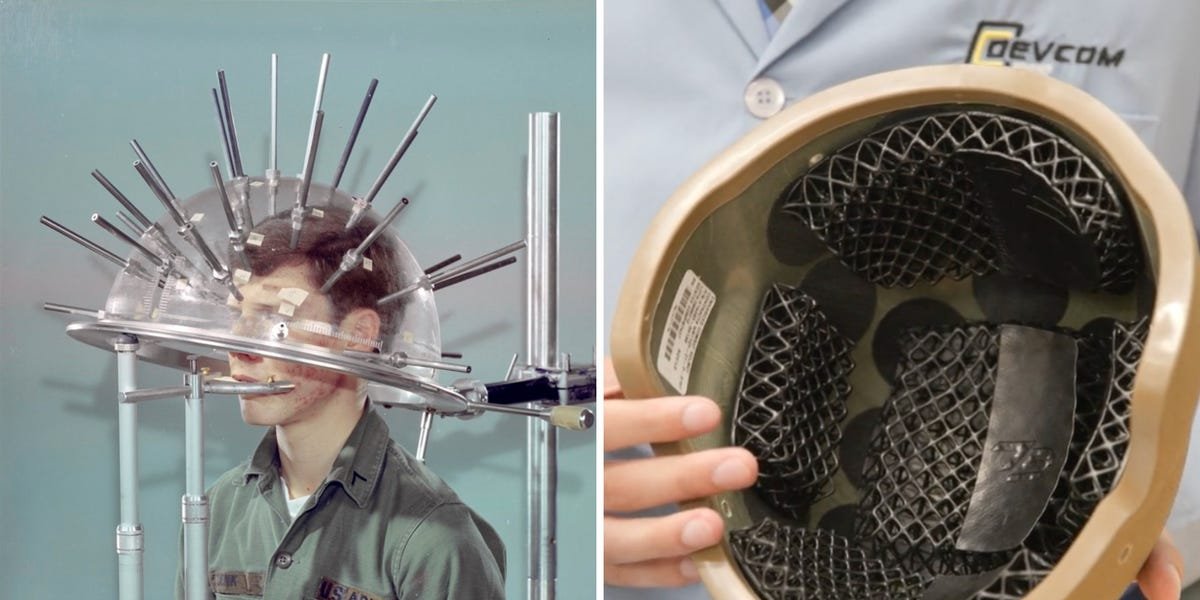

From flash fires to freezing rooms, the US Army Natick Soldier Systems Center has spent more than 60 years pushing equipment and soldiers to their limits.
The research facility opened in Massachusetts in 1954 following gear failures during World War II. In a 1943 Alaska operation, for example, soldiers’ leather boots couldn’t protect them from the constant damp, cold conditions, which resulted in more troops injured with trench foot than enemy fire.
Today, Natick runs controlled experiments across clothing, food, and human performance. In one lab, uniforms are exposed to burns to measure how long a soldier would have to escape a flash fire. In another, low-oxygen environments replicate conditions above 14,000 feet to track how memory and alertness change.
Scientists also study how sleep deprivation and sustained physical strain affect performance. Business Insider went inside the facility and spoke with scientists and soldiers about how these experiments influence the gear and systems of future warfare.
Read the full article here