




Buckle up: the robotaxi race is heating up.
After years of missed targets and false starts, driverless taxis finally hit the road in a big way in 2025. There are now seven cities in the US where you can hail a robotaxi, although some services still require a human safety driver.
Waymo, Tesla, and Uber all launched robotaxis in new markets this year — and they have more planned for 2026.
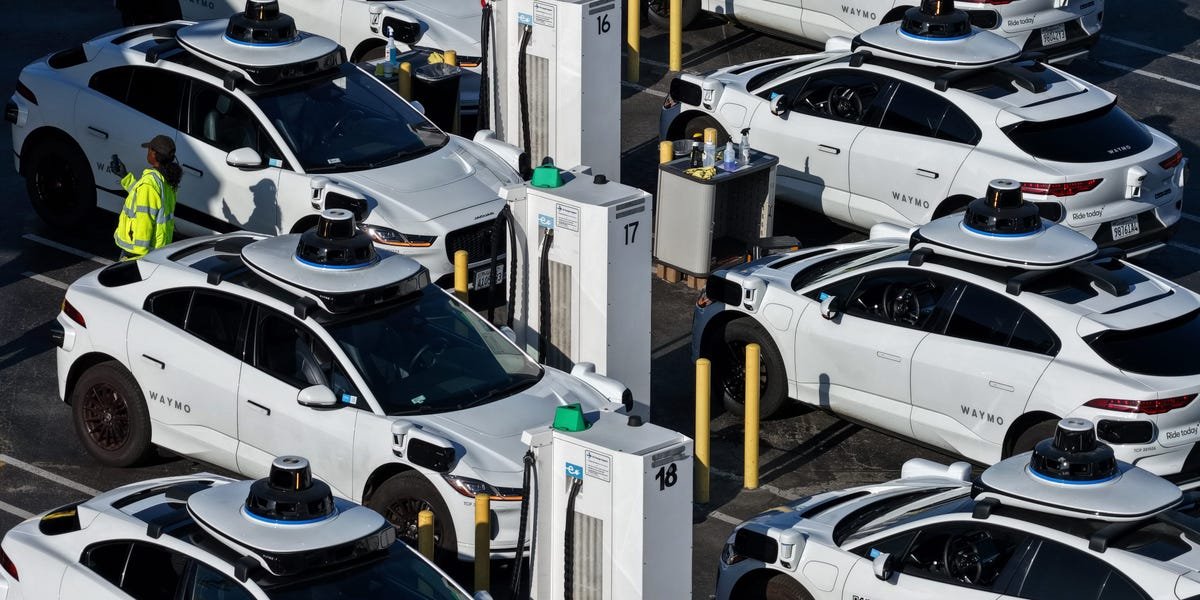
Google-backed Waymo led the way, stating in a December 10 blog that it had served more than 14 million trips in 2025 so far, more than triple the total from last year. The Google-backed company also expanded to Austin and Atlanta, started operating on freeways, and announced plans for its first overseas expansion in London.
Uber, which abandoned its own in-house robotaxi unit in 2020, has also gone all in on robotaxis. The ride-hailing company has formed a series of partnerships with startups to introduce robotaxis across the US and abroad. Its CEO, Dara Khosrowshahi, described driverless taxis as a “trillion-dollar-plus” opportunity in a December interview with Bloomberg.
Tesla, meanwhile, launched its own robotaxi service in Austin in June. CEO Elon Musk has said that autonomous vehicles will help turn Tesla into the world’s most valuable company, and the automaker is going on a hiring spree and testing robotaxis without a driver in Austin as it scrambles to meet the billionaire’s ambitious deadlines.
With the robotaxi rollout ramping up, here’s where you can take a ride in a driverless car in the US.
Where can you get a robotaxi now?
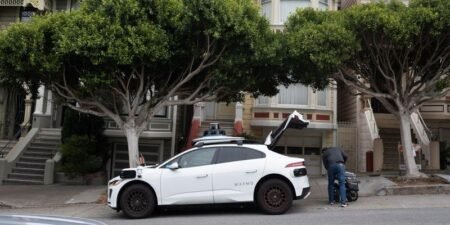
San Francisco is the birthplace of the US robotaxi industry, and the city remains the best option for taking a spin in a driverless taxi.
Waymo has offered paid rides to the public, via the Waymo One app, in the city since mid-2024. Amazon-backed Zoox also launched public access to its toaster-shaped, steering wheel-less robotaxis in November, but you need to sign up for a waitlist on the Zoox app to get a chance to ride.
Tesla also launched a ride-hailing service in San Francisco in July, but with a big caveat. The vehicles are not technically classified as robotaxis, as they use Tesla’s commercially available Full-Self Driving (supervised) technology and are monitored by a safety driver.
Unlike Waymo and Zoox, Tesla does not have the required permits to operate a driverless ride-hailing service in California, which has some of the country’s strictest robotaxi regulations.
Outside Silicon Valley, the number of cities with driverless cars on the road is growing rapidly. Waymo’s vehicles are also available in Los Angeles and Phoenix via the Waymo One app, and on Uber in Atlanta and Austin, thanks to its partnership with the ride-hailer.
In Austin, Waymo is squaring off against Tesla’s robotaxi service. Tesla’s vehicles in Austin, which can be hailed via the company’s Robotaxi app, still have safety monitors in the passenger seat and the driver’s seat on freeways.
Tesla is racing to remove them, however, with Musk telling investors in October the company’s robotaxis would be fully driverless “in at least parts” of Austin by the end of the year. In early December, the billionaire said Tesla had started testing robotaxis without a human safety monitor in the city.
Robotaxi enthusiasts wanting to ride a driverless Tesla in Austin may face a bit of a wait, however. Tesla’s service has been dogged by lengthy waiting times and currently only includes 31 active vehicles, according to a community tracker run by Austin-based robotaxi watcher Ethan McKenna.
Musk said in October that Tesla would aim to have 500 robotaxis operating in Austin by the end of the year.
Beyond Waymo and Tesla, Uber launched an autonomous taxi service in Dallas with safety drivers with startup Avride in December.
Zoox has also started offering free, fully driverless robotaxi rides in Las Vegas via its app, and Atlanta residents can use Lyft to hail an autonomous vehicle with a safety driver developed by Michigan-based startup May Mobility.
What’s coming in 2026
The real action, however, is set to come next year.
Waymo and Tesla are planning to bring their driverless taxis to a dizzying number of new cities in 2026, with both confirming plans to launch robotaxi operations in Miami, Dallas, and Houston.
Waymo is also targeting passenger services in San Antonio, Orlando, San Diego, and Washington, DC, next year, while Tesla is aiming to hit the road in Las Vegas and Phoenix.
Tesla is set to begin production on the Cybercab, its dedicated robotaxi, which does not have a steering wheel and pedals, in April next year.
Next year, Uber plans to hit the accelerator on its own self-driving plans.
The ride-hailing company struck a partnership with German carmaker VW in April to put thousands of autonomous minivans on the road in multiple US cities, starting with LA in 2026.
Uber is also partnering with EV maker Lucid and AI startup Nuro to launch “20,000 or more” robotaxis in dozens of markets across the globe.
The three companies announced in November that the new platform will debut in late 2026 in San Francisco, adding another player to Silicon Valley’s already-crowded robotaxi market.
Read the full article here