





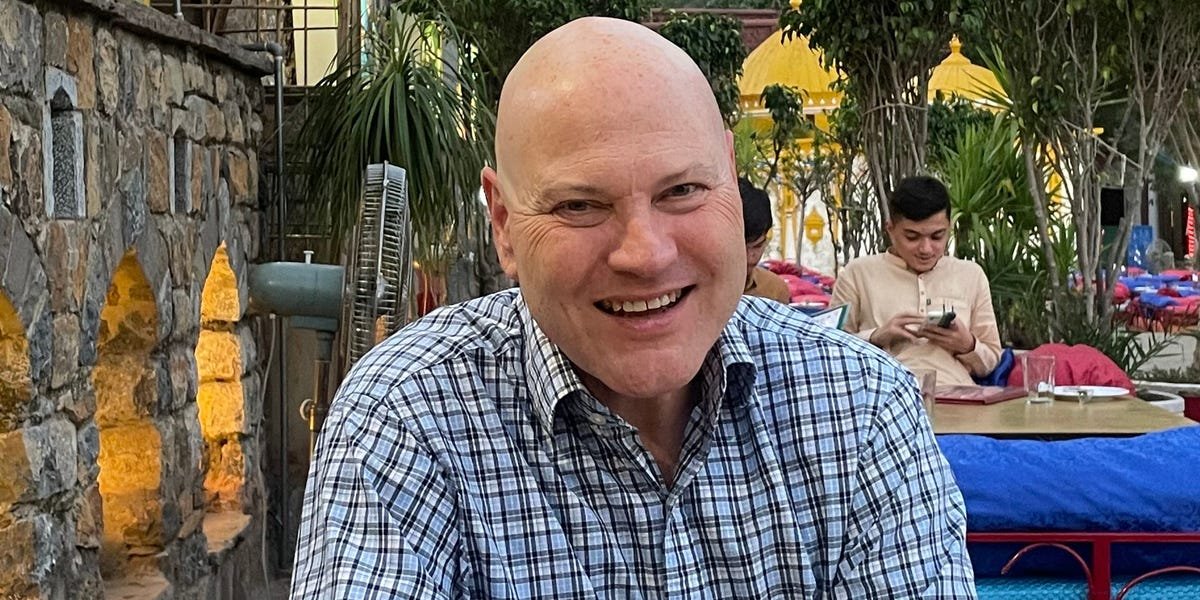

This as-told-to essay is based on a conversation with Jay Gulledge, 59, who is based in Tennessee. The termination of his employment at USAID and current employment have been verified by Business Insider.
When the Trump administration dismantled the US Agency for International Development last year, I was one of the thousands of employees who lost their jobs. I was 58 at the time.
A year on from being laid off, I’m happy with how things have turned out for me: I work for an exceptional organization with great colleagues.
But, every so often, when I talk to a former colleague or see one of their LinkedIn posts, I start to feel survivor’s guilt. I ask myself: Why was I so lucky?
I thought USAID would be the final chapter of my career
I’ve had a long and winding career, and my route into working at USAID was circuitous.
In the early 2000s, I was an academic scientist. I went on to work at a climate-change think tank, then in middle management at a laboratory. I took some years out to consult and build a real-estate portfolio, with the aim of generating passive income.
In my 50s, I became interested in international development. There’s a long-running American Association for the Advancement of Science fellowship program that places scientists and engineers into US federal agencies.
I didn’t have a background in international development, just an interest. The fellowship was a foot in the door of USAID and, starting in September 2022, I spent a year there as a fellow before joining as a climate change integration adviser on a two-year direct-hire contract.
When I joined the fellowship, I was 56, and I expected USAID to be the final chapter of my career.
My work fit squarely within the Biden administration’s priorities, but I knew those priorities would shift with a change in government.
When Donald Trump won the 2024 election, and later when Elon Musk and the Department of Government Efficiency, or DOGE, were in the news, I assumed my days were numbered.
None of us imagined the agency would be shut down entirely.
Colleagues found the layoffs scary, but I found them sad
The atmosphere last February was chaotic. We’d heard a lot of different things, and we didn’t really know what was going on.
Many colleagues described this period as scary. It didn’t feel scary to me. Sadness was my dominant feeling, not a personal sadness, but hurting for the world and my country. USAID had inefficiencies, but it helped millions of people who aren’t getting that help anymore.
On February 19, 2025, I received an email that my termination would take effect on March 5.
Losing my job was a hit, but at 58, I was later in my career, I had some passive income from my real-estate portfolio, I don’t have kids, and I was going to be able to pay my bills. It wasn’t going to devastate me financially or harm my family in any significant way, like it may have done for others.
The job market was flooded by people with expertise similar to mine
When my termination took effect, I tried to find a job that would bring me career satisfaction. That late in my career, I didn’t need to find a job purely for the money.
I was hearing that many of my colleagues were applying for dozens of jobs and getting no calls back. The market was flooded with job seekers in areas related to my expertise. There were thousands of competitors for every job, and the risk was that I might not find anything.
I didn’t apply for many jobs, and largely avoided international development roles, because I had former colleagues who were far more qualified for them than me.
I knew that if all else failed, I could return to investing in real estate.
I was unemployed for about six months before I found the perfect role as the director of scientific programs at PSE Health Energy, a research center that examines the health implications of the energy system.
I still feel survivor’s guilt
A year on, I’m happy with where I’ve landed. I love learning about new scientific concepts and working with exceptional colleagues.
Still, there’s an undeniable sense of loss. I worked for years to move into international development, intentionally cultivating that path, and it was taken away from me. There’s nothing I can do about that.
I also still feel survivor’s guilt. It’s not a daily thing, but it often comes up when I pause to reflect. I think about my former colleagues, really capable people, who are still unemployed.
For many of them, they’d been at USAID for their whole careers, and really cared about their work. My identity was not built around my job because I’d only been there for a couple of years.
I landed on my feet, but the sheer number of people let go meant not everyone could. They must feel an even deeper sense of loss than I do.
Business Insider contacted the Office of Personnel Management for a comment but did not receive a response.
Read the full article here