






Close Menu
Fin Street NewsFin Street News
  • Home
  • Business
  • Finance
    • Banking
    • Stocks
    • Commodities & Futures
    • ETFs & Mutual Funds
    • Funds
    • Currencies
    • Crypto
  • Markets
  • Investing
  • Personal Finance
    • Loans
    • Credit Cards
    • Dept Management
    • Retirement
    • Mortgages
    • Saving
    • Taxes
  • Fintech

Subscribe to Updates

Get the latest finance and business news and updates directly to your inbox.

Trending
America’s Hidden Economic Crisis: Personal Financial Chaos

America’s Hidden Economic Crisis: Personal Financial Chaos

December 23, 2025
Why the Slate Truck Doesn’t Have Screens, a Stereo, or Power Windows

Why the Slate Truck Doesn’t Have Screens, a Stereo, or Power Windows

December 23, 2025
California Regulator Probes Waymo Stalls Following Power Outage

California Regulator Probes Waymo Stalls Following Power Outage

December 23, 2025
Wegovy Pill Approved in US, Offering a Cheaper Alternative to Shots

Wegovy Pill Approved in US, Offering a Cheaper Alternative to Shots

December 23, 2025
An AI Godfather Says He Lies to AI Chatbots to Get Better Responses

An AI Godfather Says He Lies to AI Chatbots to Get Better Responses

December 23, 2025
Facebook X (Twitter) Instagram
  • Privacy Policy
  • Terms of use
  • Press Release
  • Advertise
  • Contact
December 23, 2025 5:10 am EST
|
Facebook X (Twitter) Instagram
  Market Data
Fin Street NewsFin Street News
Newsletter Login
  • Home
  • Business
  • Finance
    • Banking
    • Stocks
    • Commodities & Futures
    • ETFs & Mutual Funds
    • Funds
    • Currencies
    • Crypto
  • Markets
  • Investing
  • Personal Finance
    • Loans
    • Credit Cards
    • Dept Management
    • Retirement
    • Mortgages
    • Saving
    • Taxes
  • Fintech
Fin Street NewsFin Street News
Home » From Thermostats to Trash Cans: How Nest Cofounder Matt Rogers Is Making Food Waste Sexy
From Thermostats to Trash Cans: How Nest Cofounder Matt Rogers Is Making Food Waste Sexy
Finance

From Thermostats to Trash Cans: How Nest Cofounder Matt Rogers Is Making Food Waste Sexy

News RoomBy News RoomNovember 17, 20250 ViewsNo Comments

Fifteen years ago, I was an out-of-place finance reporter in San Francisco, trying to reinvent myself as a tech journalist. That’s when I scored a lucky meeting with Tony Fadell and Matt Rogers, two former Apple engineers with a wild idea to make thermostats sexy.

Last week, I went to see Matt Rogers again. He’s still turning ordinary household objects into extraordinary gadgets at his latest startup, Mill.

When I first met Fadell and Rogers above a store above the Town and Country Village Mall across from Stanford, the two were on a quest to build internet-connected home devices at their startup Nest. They didn’t know me, but they let me in, and that act of generosity changed my career.

“I’m gonna show you something, but you have to promise not to write about it. Yet,” Tony said at that first meeting 15 years ago.

I agreed, and they took me into a side room where an early version of the Nest Thermostat sat on a table. I wrote a big story when they launched a few months later, and Google eventually bought Nest for $3.2 billion.

I was reminded of all this when I saw Matt again on Friday. A lot has changed since we first met. After the Google exit, Matt started a group called Incite that tackles climate change. And he worked on transportation policy with former US Secretary of Transportation Pete Buttigieg.

Some things stay the same, though. At Mill, Matt is trying to make food waste sexy (like an iPhone) through a high-tech trash can that turns your uneaten scraps into sweet-smelling powdery sediment.

As you enter the office, there’s a giant yellow sun logo hanging from the ceiling. “That’s the Walmart logo,” Matt said, pointing up at it. “This is Walmart’s old e-commerce office in Silicon Valley, and we didn’t bother to take the sign down.”

I had another flashback. I’d been here before as part of my quest to refashion myself into a tech writer. Over a decade earlier I’d walked this same floor with Venky Harinarayan and Anand Rajaraman, another pair of tech entrepreneurs, who ran Walmart’s e-commerce incubator in Silicon Valley.

The “stink bomb” area

Back in the present day, Matt took me on a tour and introduced me to Adam Mittleman, Mill’s head of engineering (another former Apple designer).

I saw testing areas where the devices are opened, closed, rotated, heated, shaken, and dropped to ensure they last for years.

We visited the “stink bomb” area, where chemical engineers work on new ways to keep your food scraps smelling fragrant, not foul.

They showed me a tub of old food and pointed to a giant bin of the finished product: light brown “food grounds” that are 80% lighter and completely dry. This can be stored for months and put on gardens and other areas to fertilize plants. Or Mill can pick it up for you, for a fee, and put it to use elsewhere.

The key is transforming wet, sticky old food into much lighter material that doesn’t go off. The sleek Mill device can turn 100 pounds of food waste into roughly 20 pounds of dry “grounds.”

Making food scraps lighter

Why does this matter? It turns out that a big chunk of the cost of collecting and processing garbage is related to food waste. It’s heavy and goes off so quickly that garbage trucks must run collection routes regularly, and they burn more diesel carrying that extra weight.

If Mill can turn everyone’s food scraps into much lighter, storable material, then garbage collection can happen less frequently and use less energy.

Mill Food Recyclers are currently in tens of thousands of homes. Customers either buy the device upfront, for about $1,000, or they rent it for $35 a month.

The fanatical, Apple-style attention to detail was evident everywhere at the office. Mill engineers have spent years designing and re-designing every part to meet Matt’s simple but ambitious promise: If you can eat it, you can throw it in a Mill Food Recycler and (in the words of the late Steve Jobs) it just works.

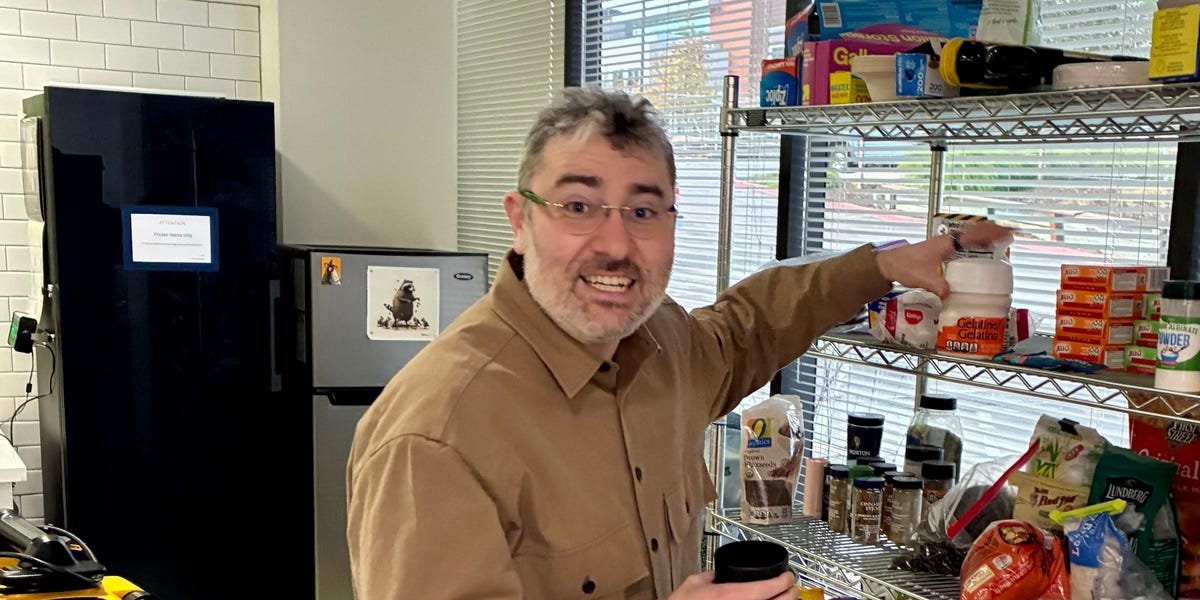
That includes processing big sloppy stuff like watermelons. Even gelatin, which apparently is very hard to turn into dry powder. Matt keeps a jar of gelatin in the corner of the office as a reminder — along with a bunch of other food items that are challenging to recycle.

What’s next for Mill? The startup has raised more than $100 million, enough to fund big plans.

Matt wouldn’t say much, other than the goal is to scale from here. Designing and making hardware is hard. To be really profitable, you have to sell in huge volumes (like an iPhone).

At first, Mill sounds quixotic. But there’s potential, if you think different. Dishwashers were expensive, luxury items when first sold to homeowners. Now, everyone has one.

Sign up for BI’s Tech Memo newsletter here. Reach out to me via email at abarr@businessinsider.com.


Read the full article here

cans cofounder food making Matt Nest Rogers sexy Thermostats trash waste
Share. Facebook Twitter LinkedIn Telegram WhatsApp Email

Keep Reading

America’s Hidden Economic Crisis: Personal Financial Chaos

America’s Hidden Economic Crisis: Personal Financial Chaos

Wegovy Pill Approved in US, Offering a Cheaper Alternative to Shots

Wegovy Pill Approved in US, Offering a Cheaper Alternative to Shots

Social Media Gives a Glimpse Into Company Holiday Parties

Social Media Gives a Glimpse Into Company Holiday Parties

Google Says It Will Ramp up PERM Green Card Process in 2026

Google Says It Will Ramp up PERM Green Card Process in 2026

Why Are H-1B Visa Workers Getting Stuck Overseas? Here’s What to Know.

Why Are H-1B Visa Workers Getting Stuck Overseas? Here’s What to Know.

TikTok Revamps Its Pay Structure to Reward High Performers in 2026

TikTok Revamps Its Pay Structure to Reward High Performers in 2026

Lottery-Winner Advisor: What to Do Right After Winning Powerball

Lottery-Winner Advisor: What to Do Right After Winning Powerball

8 Abandoned Mansions Around the World That Were Once Worth Millions

8 Abandoned Mansions Around the World That Were Once Worth Millions

Internet Debates 0K in-Office or 0K Remote Job

Internet Debates $240K in-Office or $120K Remote Job

Add A Comment
Leave A Reply Cancel Reply

Editors Picks

Why the Slate Truck Doesn’t Have Screens, a Stereo, or Power Windows

Why the Slate Truck Doesn’t Have Screens, a Stereo, or Power Windows

December 23, 2025
California Regulator Probes Waymo Stalls Following Power Outage

California Regulator Probes Waymo Stalls Following Power Outage

December 23, 2025
Wegovy Pill Approved in US, Offering a Cheaper Alternative to Shots

Wegovy Pill Approved in US, Offering a Cheaper Alternative to Shots

December 23, 2025
An AI Godfather Says He Lies to AI Chatbots to Get Better Responses

An AI Godfather Says He Lies to AI Chatbots to Get Better Responses

December 23, 2025
James Cameron Says Getting Fired Led Him to Write ‘the Terminator’

James Cameron Says Getting Fired Led Him to Write ‘the Terminator’

December 23, 2025

Latest News

Jim Beam Pausing Production at Its Iconic Kentucky Bourbon Distillery

Jim Beam Pausing Production at Its Iconic Kentucky Bourbon Distillery

December 23, 2025
How To Take Penalty-Free Withdrawals From Your IRA Or 401(k)

How To Take Penalty-Free Withdrawals From Your IRA Or 401(k)

December 22, 2025
What’s Behind Rising Electricity Bills in the US?

What’s Behind Rising Electricity Bills in the US?

December 22, 2025

Subscribe to News

Get the latest finance and business news and updates directly to your inbox.

Advertisement
Demo
Facebook X (Twitter) Pinterest TikTok Instagram
2025 © Prices.com LLC. All Rights Reserved.
  • Privacy Policy
  • Terms
  • For Advertisers
  • Contact

Type above and press Enter to search. Press Esc to cancel.