






Dress for the job you want to… keep?
In a job market where power has shifted toward employers, at least one thing remains within an employee’s control: how they choose to show up to work.
With layoffs and slow hiring shaping the labor market and RTO mandates pulling employees back into offices, experts say workers are dressing more carefully to project competence.
In periods of uncertainty, clothing is less about comfort and self-expression, and more about job security, Lizzy Bowring, a creative strategist and trend forecaster, told Business Insider.
“Dressing smarter serves as career risk management,” she said.
The business casual era gave way to full-on casual
Business casual had an era — a long one. Over the past 30 years, suits and ties have given way to blazers and sweaters in many white-collar industries.
By the early 2000s, the casual look was ubiquitous in tech. Think Mark Zuckerberg’s signature gray T-shirt, hoodie, and jeans.
When the pandemic hit, casual dressing went from trend to default. There was no need to dress up for your living room.
But times are different now. Workers are being called back into the office, and the franzied “Great Resignation” period post-pandemic, when employers were scrambling to retain staff and thrust into bidding wars to scoop up talent, is well behind us.
The balance of power has shifted from employee to employer. US businesses are hiring at one of the slowest rates since 2013, and the early impact of AI is beginning to show up.
Last month saw more layoffs than any January since 2009, as big companies like Amazon and Citi announced plans to cut thousands of jobs.
Because of this, “employees are becoming more conscious of how they present themselves, not because they’re being told to, but because uncertainty changes behaviour,” Frances Li, founder and director of Biscuit Recruitment, a boutique recruitment agency based in London and New York, told Business Insider.
Recalibration, not return
Still, experts say we aren’t seeing a full return to suits and straight-cut dresses.
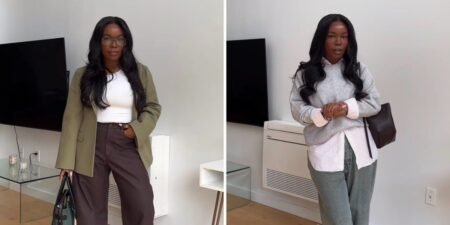
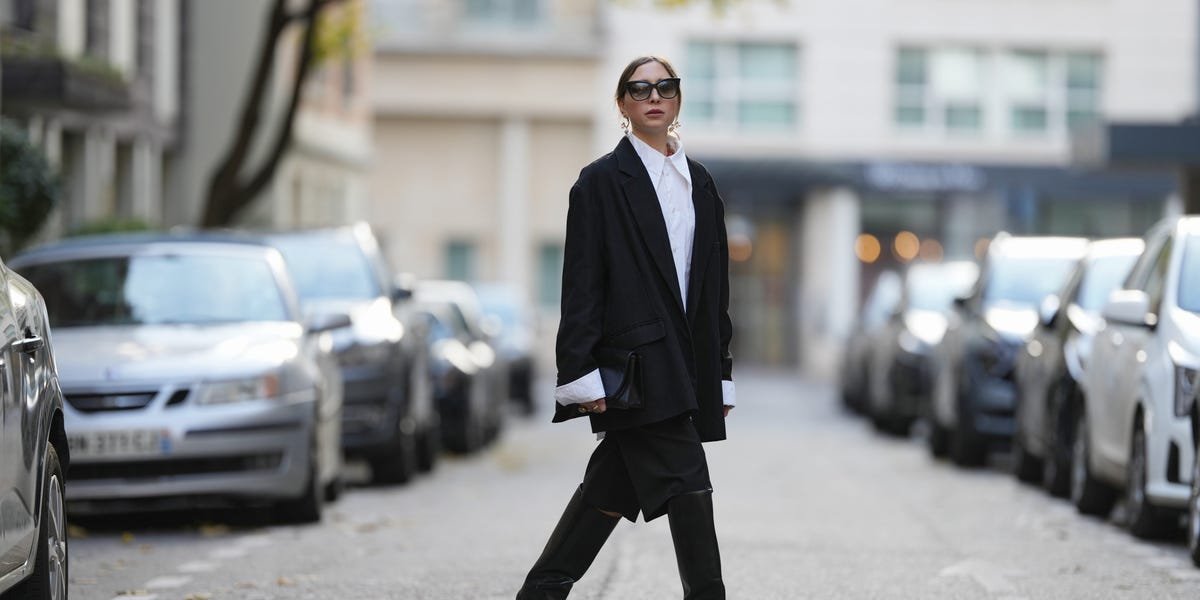
Trend forecaster Lizzy Bowring describes this as an “‘intentional recalibration’ — blending comfort with sharper silhouettes, structured tailoring and more deliberate styling.”
The jacket you once wore over a T-shirt to look smarter for a Zoom meeting is now shifting to a more tailored look, said Bowring. Think oversized blazers and fitted dresses.
Fashion’s messaging is reflecting this. There’s a focus on tailoring and silhouette-forming pieces across luxury brands like Prada, Saint Laurent, and Bottega Veneta, she said.
Economic uncertainty has also revived interest in investment dressing: wardrobe staples that work in the office and beyond, cut with precision and built to last.
Brands like The Row and Toteme have gained cultural relevance by positioning their pieces as investments, reinforcing the appeal of clothing “that communicates stability, longevity and professional credibility,” Bowring added.
TikTok content about what to wear to the office and why it matters has also grown in popularity.
Younger members of Gen Z, entering office settings for the first time, are questioning how to balance their personal style with work-appropriate attire.
Grace McCarrick, a content creator who delivers soft skills training to companies such as Uber and Spotify, said her TikTok videos on being intentional with your appearance at work have been some of her most viral — garnering hundreds of thousands of views.
“It is so complicated to move up and get noticed in the workforce today,” she said. The idea of ‘dressing for success’ is one of the only levers you can control to help you progress at work, she added.
“People who put in the effort stand out like neon signs. They’ve upped their charisma factor by simply not being as schlubby as everyone else. They could be the most awkward person, but because they look good in a sea of wrinkled khakis with black sneaker ‘dress shoes,’ they’re magnetic,” she said.
Setting boundaries
Formal dress is also a way for employees to clearly distinguish between work and home life.
“Work wear cues a performance state, whereas home wear signals a relaxation state,” Hajo Adam, an organizational psychologist and professor at the University of Bath, told Business Insider.
This separation might help people to actually switch off when work finishes.
So, once the clock strikes 5 p.m. — go ahead, loosen up, and hang up your blazer, whether your desk is in the office or in your living room.
Read the full article here