






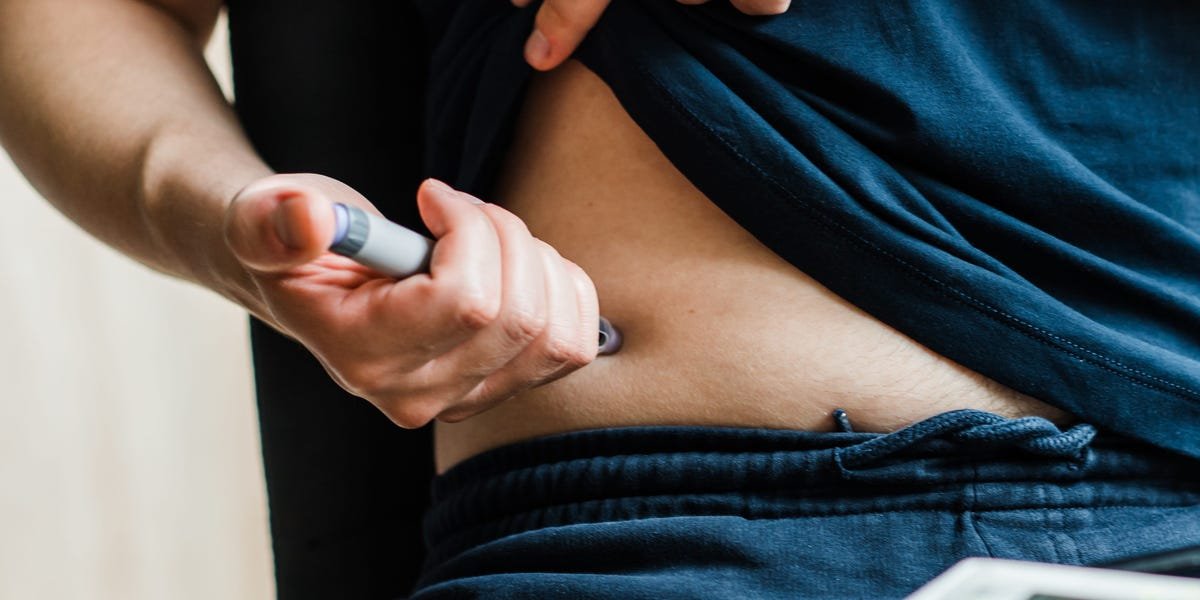

Nearly 2 years after Robert F. Kennedy Jr. vowed to end the FDA’s “war” on peptides, he has convened an unusual FDA advisory committee.
A panel is meeting this week to weigh the future of several popular peptides — including trendy compounds prized for injury recovery, fat loss, and sleep that the FDA has banned.
Unlike a typical FDA panel, several members make their living prescribing, researching, or selling peptide therapies, raising questions about how the debate will unfold.
The compounds under review aren’t GLP-1 drugs or insulin — both FDA-approved peptides. These are lesser-studied injections that have gained traction in fitness and wellness circles.
Under Kennedy’s leadership, this team of doctors, peptide sellers, and pharmaceutical experts is evaluating 7 compounds that the FDA recently barred pharmacies from compounding in the US.
On the first day of the meeting, July 23, the panel voted to approve the ever-popular “wolverine” shot, BPC-157, marketed for speedy recovery and wound healing. Others being discussed during the two-day meeting include TB-500 (touted for wound healing) and epitalon (ostensibly a hack for insomnia).
Here’s a breakdown of the big issues and power players you need to know to wrap your head around the fiery debate.
What is a peptide?
Peptides are an incredibly broad category of substances.
At the most basic level, they’re signaling molecules that aren’t long enough to be considered proteins. Our bodies produce thousands of peptides every day.
Insulin, GLP-1 drugs, and the growth hormone tesamorelin are all peptides that are already FDA-approved to treat certain conditions.
There is also a gray market of peptides that have gained popularity as fitness and wellness hacks — there’s one that ostensibly tans your skin, and another that people use to build lean muscle.
The FDA says each peptide deserves its own careful evaluation, including safety and efficacy testing, just like a drug.
The FDA’s case against these peptides
The US Food and Drug Administration has long played whack-a-mole with peptide production and distribution.
In 2023, under the Biden Administration, 19 peptides were removed from the list of substances that US compounding pharmacies can legally prepare due to safety concerns.
Last week, ahead of the meeting, the FDA released a fresh string of documents recommending against bringing the seven peptides in question back into compounding pharmacies nationwide.
The FDA reviewed the available clinical evidence for each peptide and raised concerns about both its safety and efficacy.
The safety concerns center on the potential for immune reactions to peptides, the possibility that “your immune system wants to go a little bit haywire when you start injecting things,” as peptide practitioner James LaValle, who is scheduled to testify during the meeting, told Business Insider.
“I think that’s one of the biggest concerns from the FDA side,” LaValle, who chairs the International Peptide Society, said. “There’s a lot of research that’s being done to try to be supportive and create assurances around that.”
The FDA also cites a lack of evidence that these compounds really work. The argument, in a nutshell: Why allow products to be dispensed from compounding pharmacies that, at best, don’t work, and at worst, could cause serious health problems?
“It’s not true that there’s something inherent in peptides that makes it not susceptible to the conventional aspects of FDA regulation,” Peter Lurie with the science advocacy group Center for Science in the Public Interest told Business Insider.
“What they’re asking is to unleash upon the American public a group of products for which they haven’t bothered to create any evidence of safety or effectiveness.”
The industry’s case for better peptide access — the key to a multibillion-dollar market
Industry leaders argue that peptides are here to stay, and that means we need better access to peptides and a safer supply.
Jeff Cohen, co-founder of the American Peptide Association, which provides clinical guidance for doctors and organizations, says that the FDA system of evaluating and approving drugs based on expensive, large-scale clinical trials is unrealistic for this industry.
Cohen argues so-called “n of 1” medicine — a system in which the consumer sits in the front seat of their care using trial-and-error to determine their own “stack” of medications — should be respected.
“I think they should take a step back and say: how do we validate safety and efficacy for a product that is consumer-driven, that is all over the consumer space, without sacrificing consumer access?” Cohen told Business Insider.
Cohen said he has tried many peptides and wants the committee to preserve access, while promoting a safer supply. Since many people get their peptides online through sellers operating in a gray “research purposes only” market, peptide enthusiasts like Cohen say it would be better to create a new set of standards for peptide sellers, ensuring purity and potency of these compounds.
“It’s a reality. And if they act like it’s not a reality, all they’re going to do is drive people into darker areas of the world to source products that are not safe,” he said, ahead of the FDA meeting.
The stakes extend well beyond peptide clinics.
Wall Street analysts say a loosening of FDA restrictions could open a multibillion-dollar market for telehealth companies and compounders, Reuters reported. Hims & Hers, which has already invested in peptide manufacturing after its compounded weight-loss business came under pressure from regulators, is widely viewed as one of the companies best positioned to benefit if pharmacies are allowed to compound more peptides.
6 power players making decisions on the new FDA committee
Several new members of the committee run peptide-selling clinics and promote peptide therapy.
“It’s unheard of for somebody who is selling a product to vote on an advisory committee on that very product,” Lurie said.
Though the committee’s decisions are non-binding, the FDA has historically followed its recommendations.
Here are six of the peptide-prescribing doctors and clinic heads who stand to potentially win more business from their decisions:
Gabriel Alizaidy
- Title: Scientific Director of Maximus Health, a telehealth company offering peptides
- Who he is: Alizaidy calls himself a “peptide and hormone researcher, educator, and advisor.”
- According to LinkedIn, he went to medical school in Pakistan and did a master’s in precision health at the University of Chicago. In his most recent Instagram post, Alizaidy said peptides can “fix problems that most people just accept as part of getting older.”
His telehealth company, Maximus Health, was recently served a warning letter by the FDA for promoting misleading claims about compounded GLP-1 drugs being “clinically studied” and “proven.” Though he lives in Iowa City, he is not a licensed physician with the Iowa Board of Medicine, according to state records. On his website, he offers 30-minute consultation slots to “get peptides right the first time.”
Dr. Asare Christian
- Title: Founder and Medical Director, Aether Medicine in Wayne, Pennsylvania
- Who he is: His CV on the FDA’s website says he’s an expert in “hormone optimization” and that he uses peptide therapy, among other tools, to resolve pain, restore performance, and extend healthspan in his patients.
Melissa Loseke
- Title: Owner, Re-New Institute in Omaha, Nebraska
- Who she is: At her longevity-focused clinic in Omaha, she offers “peptide therapy.”
Dr. Haleem Mohammed
- Title: Chief Medical Officer, Gameday Men’s Health
- Who he is: Dr. Mohammed runs several health clinics in South Florida, and serves as the CMO of a large and growing chain of nationwide clinics offering testosterone, GLP-1 drugs, Vitamin B12 shots, and peptide injections for wellness. Mohammed has spoken to Business Insider in the past about his peptide strategy, and says he takes a conservative approach to prescribing, emphasizing nutrition, exercise, adequate sleep, stress management, and social connections as the key cornerstones of any wellness plan.
“I’m seeing a lot of stacking of peptides,” he previously told Business Insider. “There’s no clinical basis to it. I don’t know how effective or how safe it is.”
Mohammed, like others on this list, declined to comment for this story, saying he wanted to stay as impartial as possible until he sees the evidence presented at the meeting.
Dr. Joshua Starbuck
- Title: Founder, owner and physician at Makena Health in Maui, Hawaii.
- Who he is: Like many of the other doctors on this list, Starbuck runs a longevity-focused practice that incorporates peptides into patient care. His offerings include hormone therapy, hyperbaric oxygen therapy, red light therapy, and NAD-boosting drips.
Dr. Kris Wusterhausen
- Title: Founder and Medical Director, The Resurge Clinic in Weatherford, Texas
- Who he is: Wusterhausen runs a clinic in Texas where he offers hormone pellets and injectable peptides. According to the resume he provided to the FDA, he is a former United States Air Force Reserve Flight Surgeon.
Read the full article here