





So are you buying or selling a house, but feeling lost in the real estate lingo circling around you? Sometimes it feels like you’re hearing a bizarre, unknown language. We get it! That’s why we’ve put together this handy list of real estate terms.
Now you can feel confident about crushing your housing goals. Check out this crash course of terms that you’re going to hear when buying or selling a home.
First, we’ve grouped the terms by category to give you an idea of when you might hear each one. Take a look.
Opening Sale Terms
Home Financing Terms
Home Transaction Terms
Closing Sale Terms
Real Estate Terms Defined
Okay, now let’s unpack the definitions of these common real estate terms in alphabetical order.
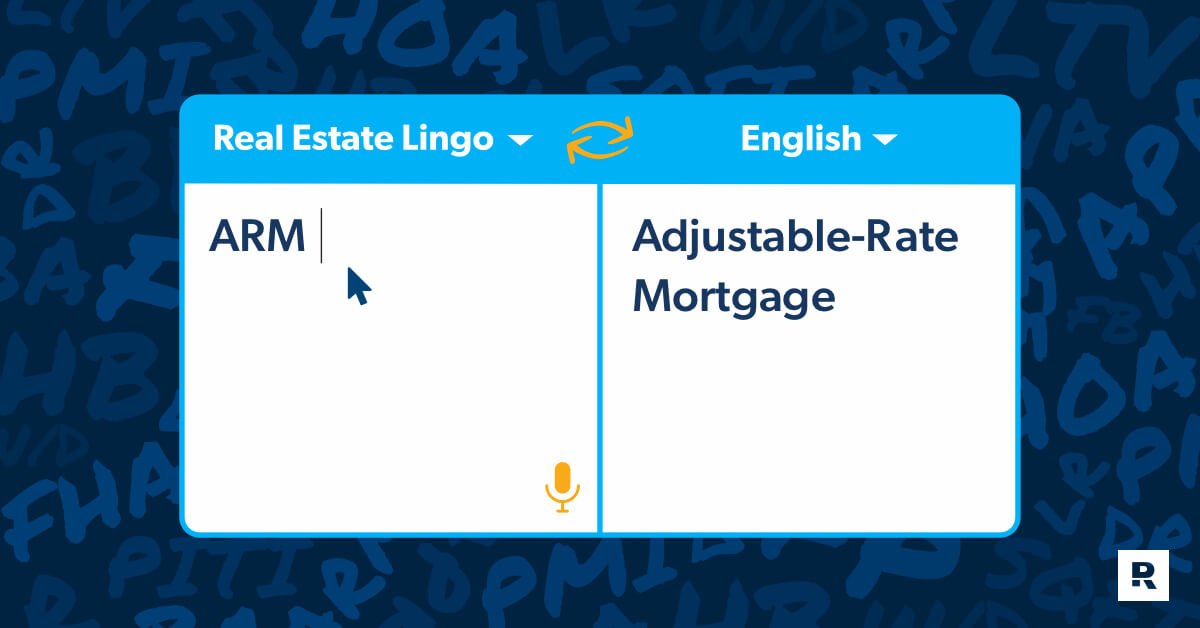
Adjustable-rate mortgage (ARM)
An adjustable-rate mortgage or ARM is a type of unconventional loan that tosses the risk of rising interest rates into the homeowner’s lap. While you may start out with a low interest rate, it can go up. And up. And up. An interest rate that shoots up and down like a pogo stick can end up costing you way more money and stress than if you went with a fixed-rate mortgage.
Amortization
Amortization is a fancy financial term that simply refers to the repayment of a loan over a period of time. An amortization schedule is a way to see each repayment amount—like how much of each payment goes to principal (the original loan amount) and how much goes to interest over the life of the loan.
Avoid overpaying for your home with a RamseyTrusted® agent.
A 15-year mortgage will amortize (or be paid off) in a shorter time than a 30-year mortgage because more of the monthly payment goes toward principal and less is wasted on interest.
An appraisal is an unbiased estimate of a home’s value. The estimate is based on recent sale prices of homes that have a similar size, quality and location. If you’re getting a mortgage, your lender will choose a licensed appraiser to determine the appraised value of the property you want to buy. This protects you from a home seller who might set an unrealistic price.
This is similar to an appraisal because it’s an estimate of a home’s value. But the assessed value is given by a local or state government so you know how much you’ll pay in property tax. Once a value is given, the government slaps a property tax rate onto the assessed value.
Closing Costs
Closing costs are fees and expenses that get paid when ownership of a property passes from the seller to the buyer. For the buyer, closing costs include things like the home inspection fee, loan processing fees, appraisal fee, taxes, insurance and agent cost. A seller’s closing costs are typically made up of agent cost, transfer tax and an attorney fee.
Closing Disclosure
This disclosure is a final statement of closing costs and loan terms (like the buyer’s monthly payment schedule). As the buyer, you can expect to receive the closing disclosure from your lender no less than three business days before you close on the mortgage loan. This time allows you to look over your final costs and terms and ask any questions.
Comparative Market Analysis (CMA)
A comparative market analysis is a selling strategy real estate agents use to help you set the right price for your home from the start. The agent will research recently sold homes that are similar to yours in size, quality and location to help you set a price you’re happy with and that’s fair for buyers.
Contingencies
Real estate contingencies are conditions the buyer and seller must meet before the contract becomes legally binding. If the contingencies aren’t met, the buyer or seller can back out of the deal, fair and square. Common contingencies in real estate contracts are a home inspection, appraisal and the ability to get financing.
Conventional vs. Unconventional Mortgages
A conventional loan is a deal between you and a lender that meets Fannie Mae’s mortgage approval guidelines. Unconventional loans include government-insured programs (FHA, VA) that set their own approval guidelines to make it easier for people to buy a house with a super low down payment or poor credit score.
The problem with unconventional loans is that they end up costing you much more in interest and fees compared to a conventional loan.
Deed
A deed transfers a property title to a new owner. To sell your home, you and the buyer will have to sign this legal document and file it with the local county to prove transfer of homeownership.
Down Payment
Down payment is the amount of cash a buyer pays for the home at closing (shown as a percentage of the total home price). It’s smart to save for the largest down payment possible so you can decrease the amount of interest you pay overall (for as long as you have the mortgage). A good minimum amount to put down is 20%—that way you avoid paying private mortgage insurance (PMI).
Earnest Money Deposit
An earnest money deposit is an amount of money you pay early on in the buying process to show a seller that you’re serious about buying their home—that you have skin in the game. Typically a smaller chunk of the purchase price, this deposit is held in an escrow account (we’ll talk about that term a little later) and goes toward what you owe at closing.
Equity is how much of a home’s value you own minus how much you owe. For example, suppose your home is worth $200,000 and you owe $125,000 on the mortgage. Your equity is $75,000. If you sold the house, you would get the equity after you paid off the mortgage.
Escalation Clause
An escalation clause is a way for home buyers to beat out other potential buyers. So if you found your dream home and there’s a ton of competition, you could add an escalation clause in the contract that says you’re willing to increase your offer by a certain amount if the seller receives higher offers. Just make sure you don’t offer more than you can afford.
Escrow
An escrow account is like an iron-clad vault for anything of value that’s involved in a real estate transaction. The account is managed by a trusted middleman (usually a title company or lawyer) who holds onto things like money and important documents until the home buyer and seller seal the deal.
FHA Loan
An FHA loan is a type of unconventional home mortgage from the Federal Housing Administration for first-time buyers and folks who might have a hard time getting approved for a conventional mortgage. But here’s the catch: FHA loans usually cost way more in interest and extra fees in the long run than with a conventional loan.
Fixed-Rate Mortgage
A fixed-rate mortgage means your interest rate stays the same for the life of the loan—which means you wouldn’t have to worry about rising interest rates as you would with an adjustable-rate mortgage. The two most common loan terms for a fixed-rate mortgage are 15 and 30 years.
A 30-year fixed-rate mortgage tends to carry the highest interest rate of any mortgage option—which means you’ll pay much more for your house over the life of the loan. You’ll be debt-free faster and pay much less for your home with a conventional 15-year (or less) fixed-rate mortgage—as long as your payments aren’t more than 25% of your monthly take-home pay (including PMI, property taxes, insurance and HOA fees).
Homeowner’s Insurance
Usually included in the monthly mortgage payment, this insurance can cover the cost to repair, rebuild or replace items in your home. Since a house is likely your biggest investment, it’s no wonder homeowner’s insurance is so important.
Loan-to-Value (LTV) Ratio
Loan-to-value ratio is bank lingo for how much debt a buyer is using to purchase a home—shown as a percentage. To find out an LTV ratio, divide the amount of the mortgage loan by the home’s value or purchase price.
For example, if you took out a $240,000 mortgage to purchase a $300,000 home, you’d have an LTV ratio of 80%—which means you paid cash for 20% of the home. Lenders use the LTV ratio to make decisions about a buyer’s loan application. High LTV ratios (usually anything above 80%) mean a high risk to lenders and often a higher interest rate for the buyer.
Mortgage Discount Points
Mortgage discount points are used to determine a one-time fee that’s paid to a lender at closing to “buy down” (or lower) the interest rate on a mortgage. One point usually equals 1% of the loan amount. For example, two points on a $200,000 loan would equal $4,000.
Because you paid those points, your lender reduces the interest rate and your monthly payment amount. This really just means you’re prepaying the interest. You usually don’t want to pay mortgage points because it takes a long time to break even. Instead, put that extra money toward a higher down payment and reduce your loan amount altogether.
Multiple Listing Service (MLS)
The MLS is a home-listing database that’s exclusively operated by real estate professionals. That means the home listings are usually more accurate and up to date than websites where non-professionals list homes. The MLS helps sellers match with buyers faster and makes it easier for buyers to find their dream home for the right price.
PITI
Pronounced like the word pity, this acronym stands for principal, interest, taxes and insurance—the things that make up a monthly mortgage payment. It’s important to know how much property taxes and homeowner’s insurance will add to your monthly payment so you don’t buy a home you can’t afford.
Private Mortgage Insurance (PMI)
PMI is extra insurance coverage you’re required to buy if you take out an FHA loan or if you finance more than 80% of your home’s value. The coverage protects the lender if you can’t pay your loan, but it doesn’t go toward paying off your home. In other words, it’s an extra fee that does you no favors.
You can avoid PMI if you save up a down payment of 20% or more of the home’s purchase price. If you already bought your home and put down less than that, not all hope is lost. You can eventually cancel PMI after you’ve built up enough equity in your home by paying down your mortgage balance and letting your home grow in value.
Preapproved vs. Prequalified
When buyers are preapproved for a mortgage, it means a lender has already approved them for a specific loan amount. When you make an offer on a house, including a preapproval letter with it puts you ahead of other buyers who aren’t approved yet. It shows the seller you’re a serious buyer and means the closing process will move faster.
Getting prequalified for a mortgage is less official than being preapproved. When buyers are prequalified for a mortgage, it just means a lender has given an opinion on their ability to be approved for a loan. It’s kind of like getting a quote for how much money a lender might give you.
Title Insurance
Title insurance allows you to transfer the risk of an unclean title (that means there are competing claims of legal ownership on your home). For example, let’s say the house you buy was once inherited by three siblings. If two of the siblings sold you the house without consulting the third sibling, that third sibling could come at any time to claim their legal portion of the inheritance. Title insurance pays off that legal owner and protects your homeownership.
VA Loan
A VA loan is a type of unconventional home mortgage offered by private lenders and backed by the U.S. Department of Veterans Affairs. These loans make it easier for veterans to buy a home—but not easier for them to pay for the home! Loaded with fees, VA loans usually also carry higher interest rates than conventional loans.
Ready to Buy or Sell a Home?
If you’re ready to put these real estate terms into action, work with an agent. To find the top-performing real estate agents in your area, try our RamseyTrusted program. We only recommend agents who take the time to communicate the right expectations so you feel confident on every step of your home journey.
Find your real estate agent today!
Read the full article here