






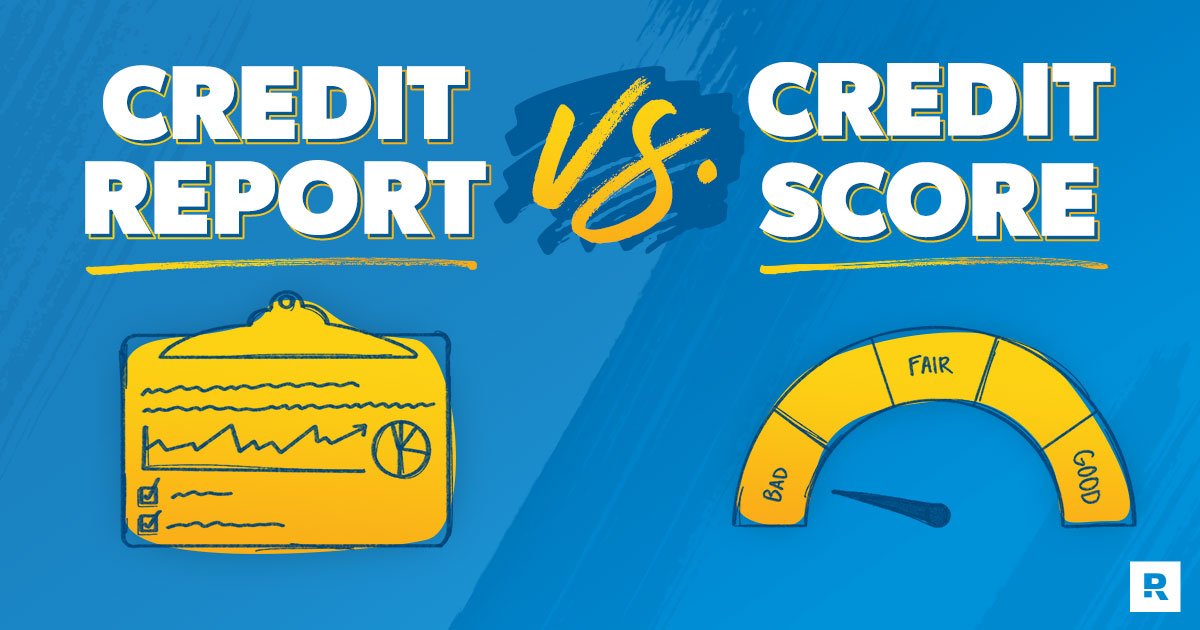

You’ve probably heard the terms credit report and credit score thrown around a lot in your adult years. That’s because both of them can be used to help you get stuff—like loans, credit cards, cars and apartment rentals. But what’s the difference between a credit report vs. credit score? And why do you need both?
The truth is, you don’t need both. A credit report is an important tool that can help you in a lot of ways, while the credit score is a bogus number that you should stop paying attention to.
Let’s dive deeper into the credit report vs. credit score comparison so you can see how they’re different.
What Is a Credit Report?
Simply put, a credit report is a statement that has super detailed information about your past and present credit activity. Think of it like a report card you used to get in school—except instead of having to show it to your parents, you now have to show it to potential lenders, landlords and sometimes even employers. Why do they want to see it? Well, your credit report helps them determine your “risk”—aka the likelihood that you’ll pay your bills on time.
What’s on a Credit Report?
When you give permission to a person or company to look at your credit report, they’ll typically get it directly from one of the credit reporting bureaus—the most popular are Equifax, Experian and TransUnion. All of these bureaus work independently, so their reports will have slightly different details on them. But across the board, your credit report will have:
- Your current balance on every account—including your credit cards, personal loans and mortgage
- Your history of taking out and paying off debts
- Your monthly payment history
- Your credit limits and total loan amounts
- Your public record—including if you’ve ever been sued, arrested or bankrupt
- Your personal information (name, address, Social Security number)
How to Get a Credit Report
Like we mentioned, you don’t have to worry about getting a copy of your credit report to show a landlord or a lender—they’ll be able to get it on their own. But what if you’re curious about what your credit report looks like?
Pay off debt fast and save more money with Financial Peace University.
Good news: You can get one free copy of your credit report every year from one of the major credit reporting agencies we talked about. Even better news: Because of the pandemic, you can actually get a report every week from now through April 20, 2022. Again—Equifax, Experian and TransUnion will each have slightly different reports, so it’s worth checking all three.
What Is a Credit Report Used For?
A credit report is typically used by lenders and credit card issuers to see how good you are at paying off your debt on time. But the reports might also be used by insurance agents to figure out your rates or by landlords who are looking at your housing application.
In some cases, potential employers might also look at a credit report. Why? Because a credit report says a lot about a person. If there are lots of late payments, it could mean that person is irresponsible or unorganized. And if there’s any sign of botched finances, a potential employer probably wouldn’t want that person anywhere near their books. According to a national survey, 25% of human resource professionals do a credit check on some of their candidates based on the position they’re applying for.1
What Is a Credit Score?
Your credit score is based off of your credit report, but they’re not the same thing. A credit score is a number from 300 to 850 that represents your credit history. According to society, that number is like a grade for how financially responsible you are. But that’s actually a bunch of bull. In reality, a credit score is just a three-digit number that tells banks and lenders how likely you are to repay your debt and how quickly. It says absolutely nothing about your wealth or your financial responsibility.
How Is a Credit Score Calculated?
The top credit reporting companies that develop credit scores—like the FICO Score and VantageScore—are pretty tight-lipped on how exactly they come up with this life-altering three-digit number. (Sketchy, isn’t it?) But here’s what we know they take into consideration:
- Payment history (35%), aka how much debt you’ve borrowed and paid off
- Amounts owed (30%), aka how much debt you’re currently in
- Length of credit history (15%), aka how long you’ve been in debt
- Credit mix (10%), aka the types of debts you have (student loan, credit card, etc.)
- New credit (10%), aka any new debts you’ve taken on in the last 12 to 18 months2
Did you catch what all of those things have in common? Debt, debt and more debt! That’s why we call the credit score an “I love debt” score. It doesn’t say anything about how much money you have saved or how well you budget every month. It only tells you how “good” you are at handling debt.
What Is a Credit Score Used For?
Just like credit reports, credit scores are used by lenders, credit card companies and other financial corporations to gauge how much risk they’d be taking on by working with you. Credit scores are also commonly used by collection agents, potential landlords and insurance agents.
But despite what our culture will try to make you believe, it’s actually pretty easy to live your life without a credit score. Sure, it might feel a little inconvenient sometimes, but the benefit of being debt-free is way better than having a good “I love debt” score.
Credit Report vs. Credit Score: What’s the Difference?
Now that you’re a pro on the credit report and the credit score, you probably understand that they’re totally different . . . and yet, kind of similar. When comparing the credit report vs. credit score, it all boils down to this one major difference:
A credit report gives detailed information about a person’s finances. A credit score is a number calculated based on that information.
You shouldn’t give a crap about your credit score, but you do need to pay attention to your credit report. Yes, even if you’re debt-free. Why? Because if someone is stealing your identity, you’ll find weird things on your credit report. It’s a good idea to check your credit report at least once a year to make sure everything is accurate so you know your identity is protected.
Your end goal should be to become credit invisible—that means you have no credit history in the eyes of the Consumer Finance Protection Bureau. In this case, being invisible is a good thing—like a cool superpower. And if you think you can’t live life without a credit history, think again. Right now, roughly 26 million Americans are enjoying their cloak of credit invisibility.3
So, how can you join the invisibility club? Start by kissing debt goodbye forever! The best way to prove that you’re financially responsible is to kick debt to the curb and never let it back into your life—period.
If you want to learn the best way to pay off debt and start building true wealth, Financial Peace University is exactly what you need. This easy-to-understand course will teach you how to manage your money, pay off your debt, budget your best, and build lasting wealth.
It’s time you take control and start living the life you really want—no matter what your credit report or credit score have to say about you.
Read the full article here