




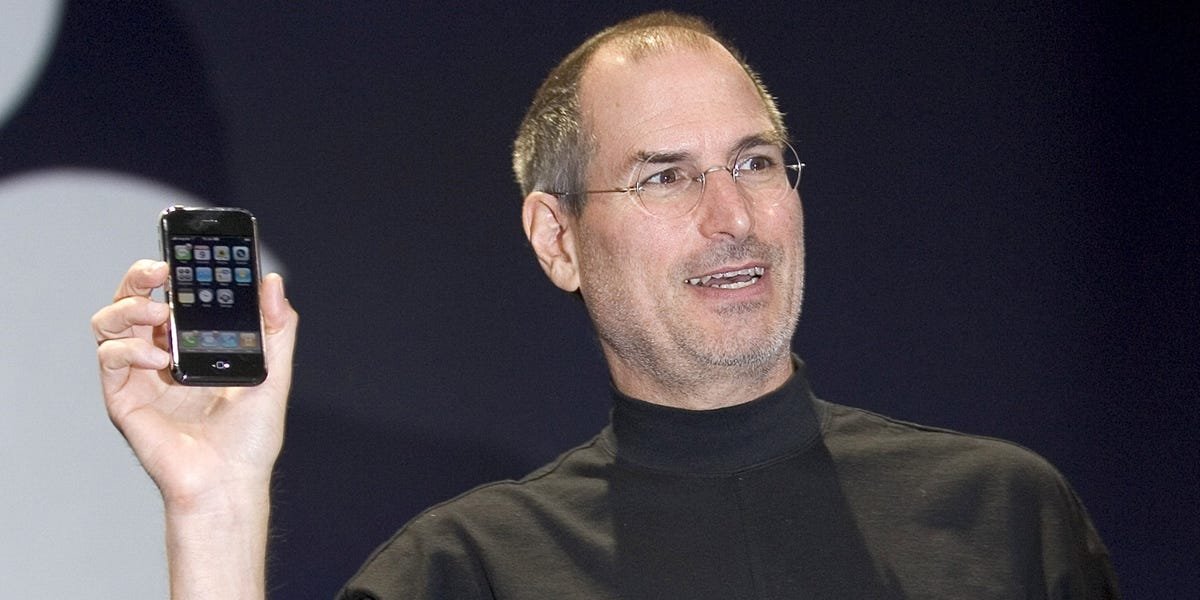

John Ternus, Apple’s new CEO, is no Steve Jobs.
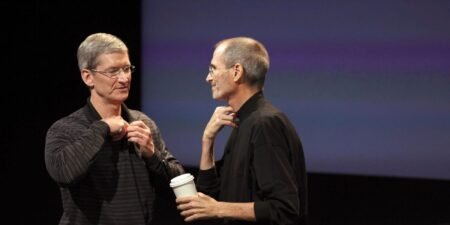
Which could be just fine. Tim Cook, Apple’s current CEO, is also no Steve Jobs. And while some people still pine for the Jobs era, the Tim Cook era worked out very nicely for Apple and its shareholders: Some 3 billion iPhones sold, and a market value that leaped from $300 billion to $4 trillion over 15 years.
Perhaps the Ternus era will work out similarly. Like Cook, the 50-year-old isn’t known for inventing a signature Apple product, but doing the behind-the-scenes stuff that makes it possible for you to buy and use Apple’s signature products.
For Cook, that meant building a global supply chain — one that’s largely dependent on China — that allows Apple to make iPhones and other high-priced, high-margin electronics at massive scale. For Ternus, that meant hands-on engineering to make sure that the hardware Cook sold actually worked.
This does not make for a romantic biography — “Ternus distinguished himself by overseeing the expansion of the iPad line with new models, as well as shepherding development of the AirPods and the company’s first 5G phones,” Bloomberg dutifully noted last a few weeks ago, amid increased speculation that Ternus was likely to take over when Cook left — but someone at Apple certainly needs those skills. Why not the CEO?
The question, of course, is whether being really good at this sort of blocking-and-tackling makes you qualified to be Apple’s CEO, or if you need some other quality. Cook answered that question over the years with record sales and stock prices. The fact that he never made The Next iPhone — a world-changing piece of consumer tech — stopped being an issue, too, primarily because no one else made The Next iPhone, either.
But now we’re in the AI era, and it’s very possible that AI is going to reorder our world in the way that Apple did with the iPhone. And if that’s the case, it may not matter which CEO runs Apple during that era. What matters may be the AI strategy Cook took in his last few years.
It’s quite common to argue that Apple has fallen very far behind in AI, because it hasn’t invested enormous sums in the tech like Google, Meta, OpenAI, and Anthropic have. The counter argument is that Apple has stumbled upon a winning strategy after all: It is letting everyone else clobber each other to produce the best AI products, and then it will sit back and collect (some kind of) rent when those competitors need to reach billions of iPhone users.
Now I’m hearing from besotted vibe-coders who are more convinced than ever that new AI software will eventually be so powerful that it’s going to create a new piece of tech that does replace the iPhone — they just don’t know what will be yet.
It’s still possible that in that theoretical era, Ternus and Apple will be just fine because people will still need some kind of phone-like device, and they’ll trust Apple to deliver it instead of someone else. But if we do end up in a world where computing is once again up for grabs, Apple may wish it had a leader who wanted to take big, ambitious swings, instead of optimizing — and one that didn’t opt out of the AI wave.
Read the full article here