





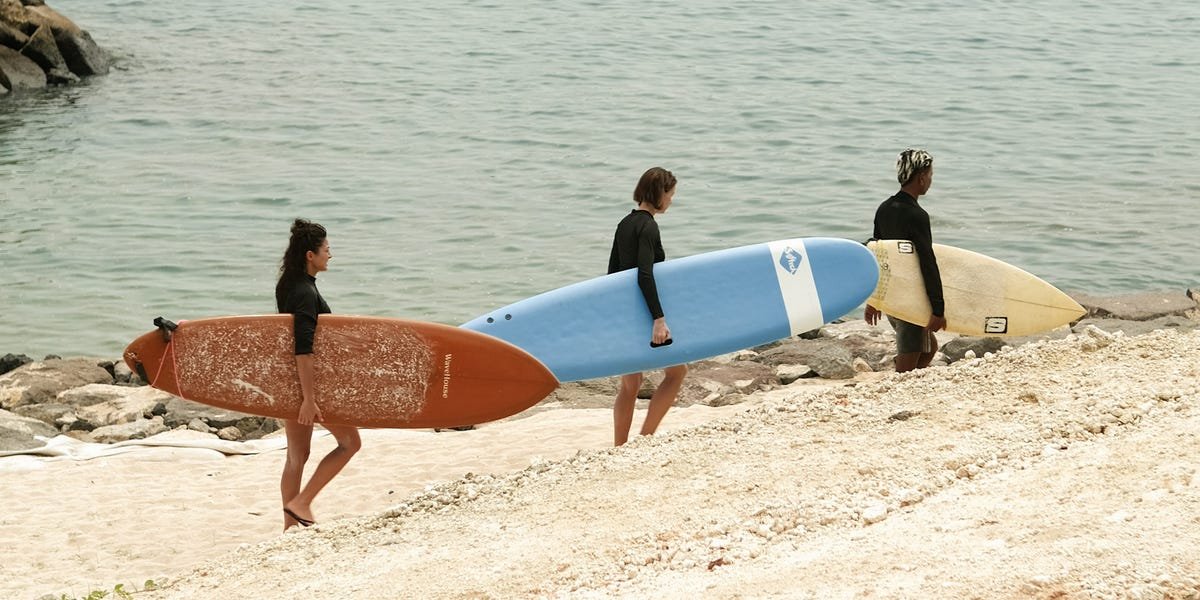

I’m not very religious. But at 11:30 a.m. on a blue-sky day in Bali, Indonesia, I sent up a prayer to the Boeing 787 roaring above my patch of waves: Singapore Airlines, please, please take me with you.
My plea came as I gagged out seawater and paddled back to my new friends. It was November, and I had met this international crew of beginner surfers three days ago.
Like me, nearly all of the 30 surf campers arrived at our hostel on Bali’s south coast alone. They ranged in age from 22 to over 50 and hailed from Russia to New Zealand. On the way to our first lesson on the beach, their backstories tumbled out as the sun rose.
In our group were digital nomads, startup founders, and working professionals from nearby cities. Many shared a common refrain: They wanted to try something new, but didn’t have anyone to do it with.
A Singapore-based finance whizz said he had wanted to learn the sport for years, but it was too hard to coordinate a trip with friends. An Australian woman was ashamed that she had never tried a sport abundant in her backyard. (This surf camp showed her that she hated it, but she had no regrets.)
“Most of my friends are in relationships. I was sick of waiting for them to travel with me, so I came alone,” said Gina Jaguttis, a 26-year-old real estate project manager who made an 11-day trip from Munich.
I came to this all-inclusive, resort-like surf camp from Singapore because late last year, I had started to realize I was burning out at work, even after snagging a big promotion at 23. After two years of channeling my energy into my job, I was craving a phone-off, brain-off trip.
On top of that, I was burning out on trying to organize group trips with my friends. I’ve repeatedly struggled to wrangle my busy circle into the kind of adrenaline-fueled trips I like to think I’m into.
So when an Instagram ad for the surf camp — featuring blue waves, smoothie bowls, and people my age laughing — hit my feed in the fall, it felt like a creepily perfect nudge.
No tour buses, please
This surf camp was my window into a growing travel category aimed at people like me: urban Gen Zers with some cash to spend on hobbies that offer a physical challenge and built-in community.
From my conversations with the surfers and with Gen Z researcher Meghan Grace, the pull to adventure sports is part of a broader post-pandemic rebellion among young people tired of Zoom calls, social media, and online dating.
“Gen Z is moving towards intentional investment of their time and their money around their interests,” said Grace, a consultant in Nashville. “They don’t want to wait because tomorrow’s not promised.”
Much of my generation is feeling a strong financial pinch, with AI-induced job worries, student loan debt, and the skyrocketing cost of living weighing us down. Many of us are also choosing different budget priorities than our parents, as we ditch or delay homebuying, luxury items, and having kids young. I, like many 24-year-old Singaporeans, live at home, which gives me more money to spend on my main hobbies, travel, and fitness.
I’m not alone: Younger Americans are leaning into more active experiences and hobbies, according to a February research note from Bank of America based on credit and debit card data. While Gen X and Baby Boomers saw strong spending growth at bars, Gen Z and millennials are spending on fitness activities like gyms, golf, and country clubs.
That card data also showed that Gen Z’s travel spend is growing at a much higher rate than the overall population, a trendline echoed by other research. A 2025 BCG report on travel called millennials and Gen Z “the most influential travelers globally” because, compared with older generations, they’re planning more trips. And solo travel is hotter than ever.
“Millennials and Gen-Zers are the most likely to travel on their own,” the BCG report said. “They’re interested in connecting with like-minded people at destinations.”
Paying a premium for community
It’s a good thing Gen Z is saving money on our bar tabs, because these trips don’t come cheap.
Jaryl Tan, who cofounded Singapore-based social travel company Off The Grid, knows how hard it is to plan with your crew. He and his cofounder, Benjamin Ng, are part of a group of six Gen Z friends who grew up together.
“We have never once had a big group trip together,” he said.
“It’s not that easy to maintain a very close group of friends,” he said. “And for this close group of friends, for your interests to align, for your schedules to align, for your budgets to align, and for your traveling habits to align so that you don’t break up as friends after you travel, it’s not that easy.”
Off The Grid’s 10-day trips can go for over $2,000 per person, excluding flights, and they continue to sell out, the cofounders said.
Travel experts, such as Heather Kelly, the director of research at the Adventure Travel Trade Association, said they’ve noticed the bump in interest too.
“We are seeing younger travelers embrace hands-on adventure in a big way, with strong demand for activities like climbing, hiking, camping, and overland expeditions among Gen Z and millennials,” Kelly told me. There’s a growing appetite, she said, for travel that is “active, immersive, and personally rewarding.”
ATTA research last year found that worldwide, the average adventure traveler spends 11 days and about $3,000 on their trip.
My six-day, offseason stay at the Wavehouse surf camp included accommodation, surf lessons, and most meals, cost $850 during off-peak season — Business Insider picked up the tab. During peak periods, rates can exceed $150 a day on an island where 4-star hotels average $66 per night, according to Kayak.
Still, the camp operates at maximum or near-maximum capacity most of the year, Alexander Gontar, Wavehouse’s general manager, told me.
Gontar said that 10 years ago, more people, especially those from farther away, such as Russia and Europe, arrived in pairs. In the last few years, most guests have shown up alone — and they’re coming back.
“Some of them don’t really need instructors anymore,” he said. “They just go back for that life, that familiar feeling. To come hang out with like-minded people.”
A father-son advanced duo from New Zealand said their stay at Wavehouse was a chance to meet people from the other end of the world who shared their passion. The pair had barely explored the island over six days, saying they were content leaving only to “change money and buy Oreos.”
Finding flow state
On the third day of our surf trip, my group of rookies hopped aboard a boat to the open ocean.
The very first set of waves was enough to humble me.
Every once in a while, an instructor screamed, “Paddle out.” If I had the upper body strength to obey in the next three seconds, I was safe. Every time I was too slow, a massive wave would knock me over, flip my board, and drag me back to the beach. There was only one way back: Paddle hard.
One of the camp’s post-dinner activities was surf-exclusive movie nights. As we watched Matthew McConaughey’s flop “Surfer, Dude,” an experienced surfer struck up a conversation with me and described finding a “flow state” in surfing — a total-immersion, no-anxiety mental state.
That night, I realized it was true for me, too. My surf camp days were the first time in months I hadn’t thought about work. I couldn’t say the same about a friend group trip to Tibet I had taken a few weeks earlier, where the lack of physical activity and endless hours on the road had given me plenty of time to wonder about my quarter-life crisis.
Chloe Lee, a 22-year-old Singaporean financial advisor on her fifth trip to our surf camp in two years, said surfing helped her temporarily forget her work and the stresses back home.
“When I come here, I feel like I’m in my element. I feel disconnected from all the hustle and bustle of typical Singaporean life,” Lee said.
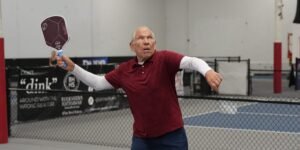
Taking time off her commission-based work meant losing pay, but she said the surf camp helped her make and keep friends. She’s met up with some for pickleball in Singapore; one of the people she met at camp became a client.
Back to real life
As I waited for my flight home to Singapore, adorned with sunburn and coral scratches, I was flooded with messages from campers who had recently left. Like me, they warily eyed a return to the real world.
I texted my new Russian friend, whom I will always remember because of the collision we had in the water hours earlier, to congratulate him on making it to the third level. It’s the mark of an established surfer to graduate from a foam board to a hard one. He thanked me and teased me for continuing to check the 750-person surf camp WhatsApp group for updates.
A few weeks after returning from Bali, Lee invited me to play pickleball after work. Even though I’d sworn to never get drawn into this finance-bro sport, I said yes. As we rested between games, we plotted the best time to go back to Wavehouse. I told her I had decided that I wanted to build surfing into my life — to be one of those people who took trips revolving around their hobbies, like diving or skiing.
After a week of surfing, trying other adventure sports feels more doable, even if my friends chicken out.
Read the full article here