






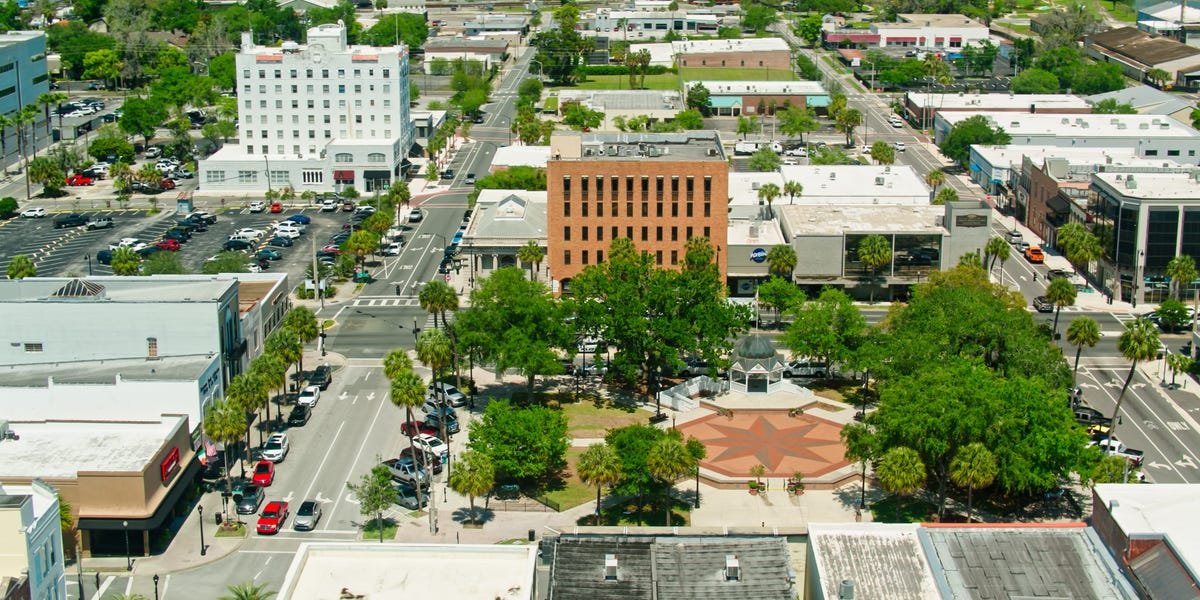

New data shows several Southern cities grew quickly last year, including some in Florida.
The Census Bureau estimates indicate how the population changed in the 387 US metro areas from July 1, 2024, to July 1, 2025. Most experienced at least some population jump, but at a cooler pace than the same period a year earlier, mainly due to smaller net international migration. The agency said the population of metro areas increased 0.6% on average after a 1.1% increase in the same period a year prior.
The metro areas of Ocala, Florida, and Myrtle Beach, South Carolina, had the fastest population increases from July 1, 2024, to July 1, 2025, driven by positive net domestic migration, or more people coming in from somewhere within the US than out.
Twenty-one of Florida’s 22 metros grew, and most increased at a smaller pace than in the same period a year prior. The Miami metro area lost 0.1% of its population due to negative net domestic migration and cooler positive net international migration. Still, that wasn’t the largest percent drop in population among US metros. Watertown, New York, took that title.
The Census Bureau said in January, with the release of the 2025 population estimates for the nation and states, that the US’ population growth “has slowed significantly.” Christine Hartley, assistant division chief for estimates and projections at the agency, said this was mainly “due to a historic decline in net international migration.”
Most metros saw slower growth rates than in the previous year. The Census Bureau said in its latest news release that the three US metros “with the steepest percentage point declines in population growth rates” were Laredo, Texas; Yuma, Arizona; and El Centro, California — all along the border. Laredo and Yuma experienced cooler growth, while El Centro actually lost population.
Slowing population growth can affect areas of the economy, like the job market. With less growth, fewer jobs are needed to keep unemployment steady, leading to a possible new normal of lower headline job growth. While estimates of how many jobs are needed as growth slows vary, Federal Reserve Chair Jerome Powell said at a press conference last week that the breakeven is zero.
Read the full article here