




Close Menu
Fin Street NewsFin Street News
  • Home
  • Business
  • Finance
    • Banking
    • Stocks
    • Commodities & Futures
    • ETFs & Mutual Funds
    • Funds
    • Currencies
    • Crypto
  • Markets
  • Investing
  • Personal Finance
    • Loans
    • Credit Cards
    • Dept Management
    • Retirement
    • Mortgages
    • Saving
    • Taxes
  • Fintech

Subscribe to Updates

Get the latest finance and business news and updates directly to your inbox.

Trending
Doghouse nation

Doghouse nation

March 16, 2026
Robot dogs are protecting data centers. Operators are seeing payoffs.

Robot dogs are protecting data centers. Operators are seeing payoffs.

March 16, 2026
The Iran war is driving an oil shock — but not a broad supply chain crisis, Goldman Sachs says

The Iran war is driving an oil shock — but not a broad supply chain crisis, Goldman Sachs says

March 16, 2026
Cyber pets, blind dates, and stock trading: How Chinese users are jumping on the OpenClaw craze

Cyber pets, blind dates, and stock trading: How Chinese users are jumping on the OpenClaw craze

March 16, 2026
The best live-action short film Oscar ended in a rare tie. Here are the 7 ties in Academy Awards history.

The best live-action short film Oscar ended in a rare tie. Here are the 7 ties in Academy Awards history.

March 16, 2026
Facebook X (Twitter) Instagram
  • Privacy Policy
  • Terms of use
  • Press Release
  • Advertise
  • Contact
March 16, 2026 5:08 am EDT
|
Facebook X (Twitter) Instagram
  Market Data
Fin Street NewsFin Street News
Newsletter Login
  • Home
  • Business
  • Finance
    • Banking
    • Stocks
    • Commodities & Futures
    • ETFs & Mutual Funds
    • Funds
    • Currencies
    • Crypto
  • Markets
  • Investing
  • Personal Finance
    • Loans
    • Credit Cards
    • Dept Management
    • Retirement
    • Mortgages
    • Saving
    • Taxes
  • Fintech
Fin Street NewsFin Street News
Home » I’m an American who got a full medical checkup in Japan. In 4 hours, I learned more about my health than I would in years at home.
I’m an American who got a full medical checkup in Japan. In 4 hours, I learned more about my health than I would in years at home.
Markets

I’m an American who got a full medical checkup in Japan. In 4 hours, I learned more about my health than I would in years at home.

News RoomBy News RoomMarch 12, 20262 ViewsNo Comments

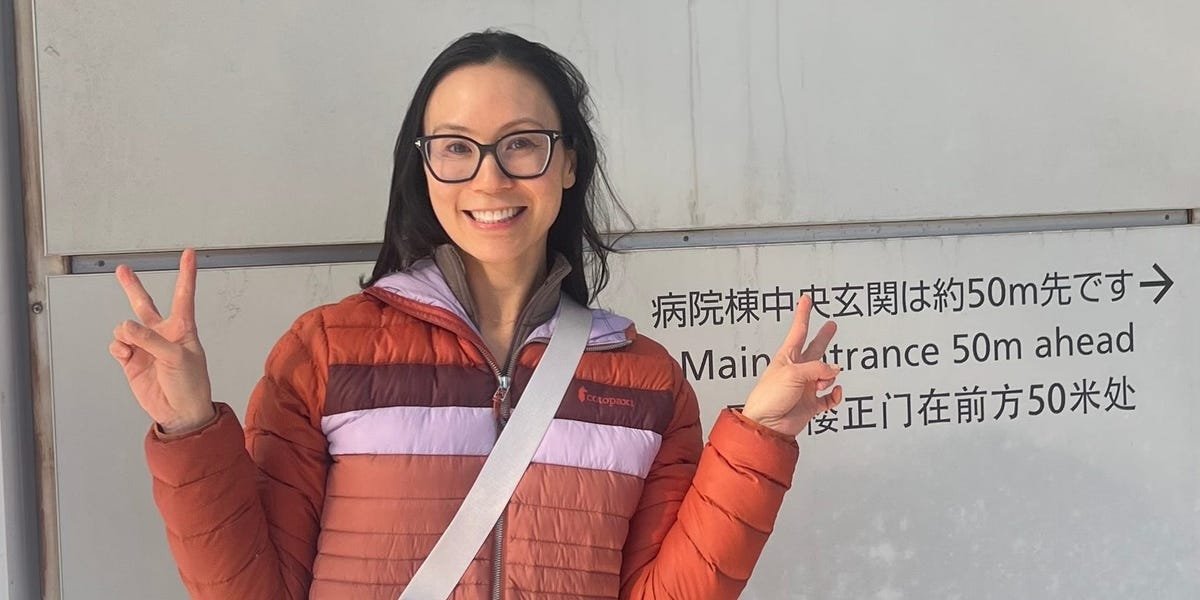
I arrived at the hospital in Tokyo on a clear December morning aware of two things: how far I was from home and how little Japanese I speak.

Like many visitors to Japan, my vocabulary consists of pleasantries, menu items, and apologies, which is hardly the skill you need when checking in for a full medical workup.

As a physician practicing in the United States, I know how medical visits usually unfold, yet that knowledge does not make the experience easier once you become the patient.

Although I’d been to Japan many times before, the country has long fascinated me with its longevity. It consistently ranks among places where people live the longest, and although many factors contribute, its cultural embrace of preventive medicine stands out.

On this trip, I was determined to experience that system from the inside.

A huge goal of these checkup is to catch small issues before they become big problems

Despite my worries about the language barrier, booking the appointment through the Nippon Health website turned out to be easier than expected.

I chose NTT Tokyo in Shinagawa, one of many medical centers that accommodates international patients. The website was in English, the intake forms were straightforward, and the email responses arrived quickly. Within two days, I had a confirmed appointment.

The type of checkup I scheduled costs about $1,800 and is known in Japan as a “ningen dock.”

The phrase loosely translates to “human dock,” borrowing the nautical image of pulling a ship from the water so its structure can be inspected before it returns to sea.

The goal is not to wait for problems, but to periodically examine the vessel. After all, preventive screening in Japan is simply part of the routine maintenance of adulthood.

With the help of a translator, my tests and exams moved smoothly and quickly

When I arrived at the clinic, I searched for English signs while the antiseptic air stirred a subtle flicker of nerves.

My nerves faded when the elevator doors opened. A supervising nurse greeted me with a bow and introduced me to the Japanese-to-English translator, who would guide me through the day.

They led me down a spotless hallway to a private changing room where a neatly folded patient uniform waited: sweatpants and a brown scrub-style top that felt almost dignified compared with the backless gowns I hand my own patients.

I pulled the sleeves toward my wrists and watched them stop short, a reminder that I was an American-sized body navigating a Japanese system.

Over the next four hours, I moved through a comprehensive preventive medical checkup that, in the US, would typically require months of scheduling, referrals, and coordination.

Throughout the day, my translator did more than translate — she explained the reasoning of the sequence of tests and exams and clarified cultural details.

With her help, the visit unfolded smoothly as a clearly guided process. The pace was not rushed, yet nothing stalled.

My morning began with bloodwork and urinalysis, followed by measurements that included height, weight, vision, hearing, grip strength, lung capacity, and blood pressure.

From there, the testing moved to imaging and diagnostic studies: electrocardiogram, chest X-ray and CT, abdominal ultrasound, bone-density scan, and gastric screening.

Each test had its own technician, a clear flow, and a station ready before I arrived.

Small gestures, like technicians bowing before explaining each test, created a sense of ease and reflected a process refined through years of repetition.

At the end of the testing sequence, I immediately met with a physician to review my lab results.

This was incredibly useful and turned out to be one of the biggest differences from the American system — normally, I’d wait days or weeks to get lab results through a portal or follow-up appointment.

While reviewing the results of my exams and tests, the physician emphasized that no single checkup is definitive and that the real value lies in building a dataset over time.

Even so, a few findings gave me clear insight into habits worth adjusting, which made the experience genuinely useful.

I left the clinic with a folder of results, a few recommendations, and additional imaging reports (that required a radiologist’s interpretation) arriving in the weeks ahead.

By the end, I had experienced firsthand a few things Japan’s system gets right about longevity

The $1,800 cost of this exam sounds a bit substantial … until you compare it with the American system. A similar collection of tests in the United States can easily cost more than $10,000, depending on insurance coverage and billing practices.

More important than the price is the simplicity and efficiency of this process — everything took place in one building over a single morning.

There were no separate referrals, no weeks of waiting for scheduling calls, and no surprise invoices months later. The experience was not dramatic or life-changing. In many ways, it was deliberately ordinary.

The most valuable aspect of the visit was its completeness. In the United States, health information trickles in over time: a lab result here, an imaging report later, maybe a conversation at the next appointment.

That morning, everything unfolded in practical succession: bloodwork, scans, consultation. I walked out with a clear sense of what was worth paying attention to and which habits were serving me well.

It reminded me that longevity is not built through dramatic medical moments. It develops through systems that help you see your health clearly and make adjustments before problems appear.

Just one morning inside a Tokyo hospital showed me how a culture can make that kind of maintenance feel routine.


Read the full article here

Share. Facebook Twitter LinkedIn Telegram WhatsApp Email

Keep Reading

Robot dogs are protecting data centers. Operators are seeing payoffs.

Robot dogs are protecting data centers. Operators are seeing payoffs.

The Iran war is driving an oil shock — but not a broad supply chain crisis, Goldman Sachs says

The Iran war is driving an oil shock — but not a broad supply chain crisis, Goldman Sachs says

The best live-action short film Oscar ended in a rare tie. Here are the 7 ties in Academy Awards history.

The best live-action short film Oscar ended in a rare tie. Here are the 7 ties in Academy Awards history.

CEOs of America’s biggest airlines say alt=

CEOs of America’s biggest airlines say $0 TSA paychecks during the government shutdown are ‘simply unacceptable’

Lovable exec says ‘big boys and girls’ like OpenAI and Anthropic worry her more than other vibe coding startups

Lovable exec says ‘big boys and girls’ like OpenAI and Anthropic worry her more than other vibe coding startups

Jimmy Kimmel calls out CBS over free speech at the Oscars

Jimmy Kimmel calls out CBS over free speech at the Oscars

Kevin O’Leary supports his ‘Marty Supreme’ costar Timothée Chalamet so much, he bet ,000 on Kalshi that he’ll win an Oscar

Kevin O’Leary supports his ‘Marty Supreme’ costar Timothée Chalamet so much, he bet $1,000 on Kalshi that he’ll win an Oscar

I started going to raves alone at 35. I learned so much about myself by doing so.

I started going to raves alone at 35. I learned so much about myself by doing so.

I followed the Chinese playbook for success, then quit Meta for startup life. It feels like being on-call 24/7.

I followed the Chinese playbook for success, then quit Meta for startup life. It feels like being on-call 24/7.

Add A Comment
Leave A Reply Cancel Reply

Editors Picks

Robot dogs are protecting data centers. Operators are seeing payoffs.

Robot dogs are protecting data centers. Operators are seeing payoffs.

March 16, 2026
The Iran war is driving an oil shock — but not a broad supply chain crisis, Goldman Sachs says

The Iran war is driving an oil shock — but not a broad supply chain crisis, Goldman Sachs says

March 16, 2026
Cyber pets, blind dates, and stock trading: How Chinese users are jumping on the OpenClaw craze

Cyber pets, blind dates, and stock trading: How Chinese users are jumping on the OpenClaw craze

March 16, 2026
The best live-action short film Oscar ended in a rare tie. Here are the 7 ties in Academy Awards history.

The best live-action short film Oscar ended in a rare tie. Here are the 7 ties in Academy Awards history.

March 16, 2026
2 of the US’ 3 mine-hunting ships assigned to the Middle East were just seen in Asia

2 of the US’ 3 mine-hunting ships assigned to the Middle East were just seen in Asia

March 16, 2026

Latest News

CEOs of America’s biggest airlines say alt=

CEOs of America’s biggest airlines say $0 TSA paychecks during the government shutdown are ‘simply unacceptable’

March 16, 2026
Lovable exec says ‘big boys and girls’ like OpenAI and Anthropic worry her more than other vibe coding startups

Lovable exec says ‘big boys and girls’ like OpenAI and Anthropic worry her more than other vibe coding startups

March 16, 2026
Jimmy Kimmel calls out CBS over free speech at the Oscars

Jimmy Kimmel calls out CBS over free speech at the Oscars

March 15, 2026

Subscribe to News

Get the latest finance and business news and updates directly to your inbox.

Advertisement
Demo
Facebook X (Twitter) Pinterest TikTok Instagram
2026 © Prices.com LLC. All Rights Reserved.
  • Privacy Policy
  • Terms
  • For Advertisers
  • Contact

Type above and press Enter to search. Press Esc to cancel.