




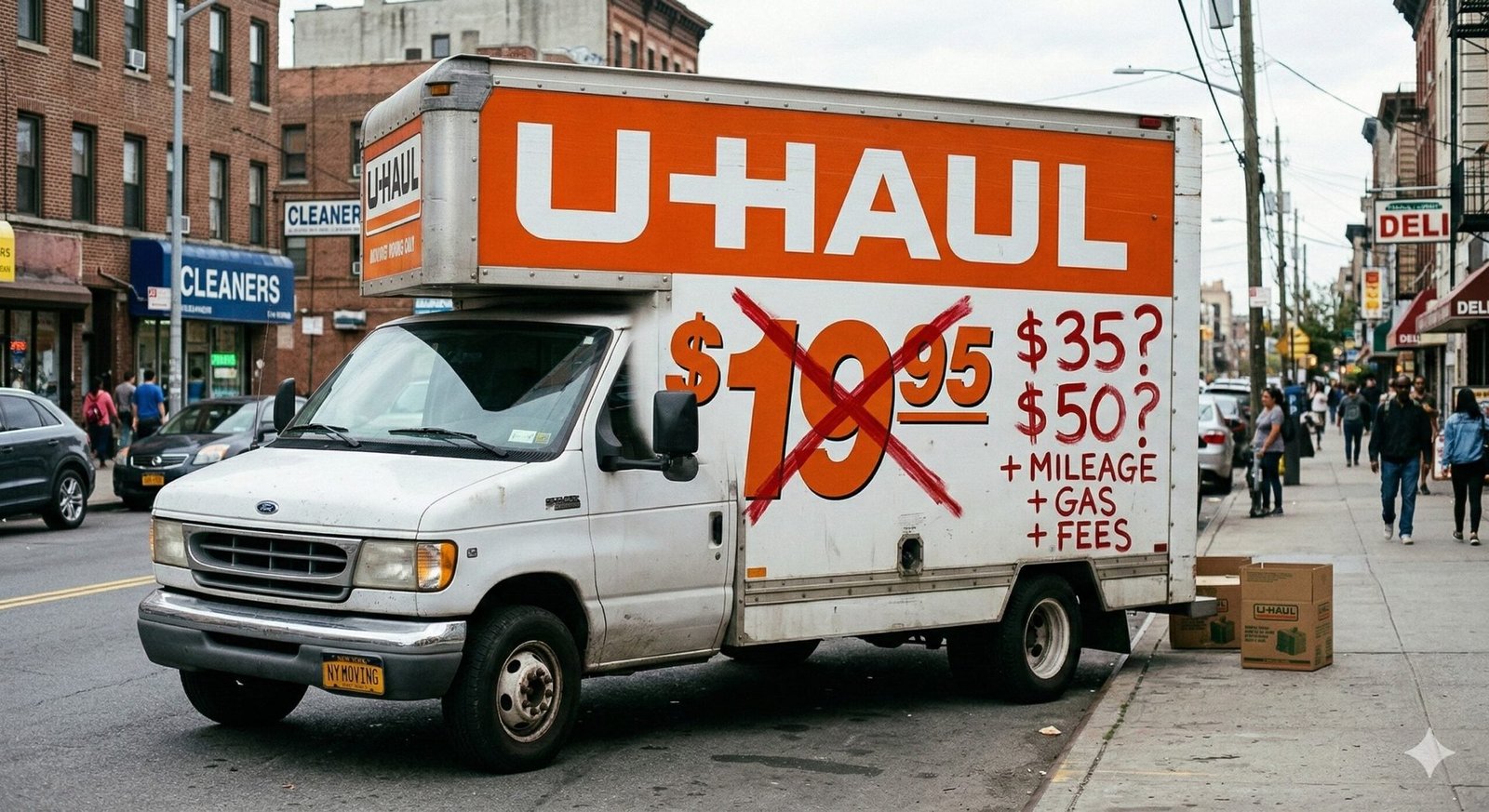

I’ve been writing about money for over 30 years. Lots of things have changed during that time, but here’s something that hasn’t: corporate America’s love for hidden fees.
Example: You see a U-Haul truck roll by with “$19.95” painted on the side in numbers the size of a billboard. You’ll keep that in mind. It’s a cheap way to move across town, right?
Wrong.
As you’ve probably figured by now, that low price is just a hook.
And according to the consumer watchdogs at Truth in Advertising, it’s virtually impossible for anyone in the country to actually rent a truck for that advertised price.
The organization recently filed a complaint with New York City officials, arguing that the moving giant relies on a drip-pricing scheme (advertising only part of a product’s price, then revealing additional charges later) to pad its bills. It notes that thanks to mandatory add-ons, consumers are routinely blindsided by the final total at the checkout counter.
It’s just another prime example of how we’re getting ripped off by junk fees every single day.
The illusion of the $20 truck
When you reserve that $19.95 truck, the meter immediately starts running in ways you might not expect. The consumer group points out that U-Haul slaps an environmental fee and a vehicle cost recovery fee onto every rental across the country.
If you happen to be renting in New York City, it gets worse. Certain locations charge a mandatory facility fee that can run up to $15.95. Cumulatively, these hidden charges can increase the base cost of your rental by nearly 20 bucks before you even drive off the lot. None of this is clearly disclosed until the very end of the online reservation process.
Then there are the tolls. If you drive through a tolled tunnel or over a bridge, U-Haul tacks on an administrative fee for processing that toll. The watchdogs argue this disproportionately hurts drivers in major metro areas where tolls are unavoidable.
New York City recently decided it’s had enough of these tactics. Earlier this year, Mayor Zohran Mamdani signed an executive order specifically aimed at combating hidden junk fees, setting up a task force to crack down on deceptive pricing across the city.
How to protect your wallet on moving day
You probably can’t force a massive corporation to drop its fees, but you can outsmart them. Here’s how you keep your moving costs grounded.
- Read the final screen carefully: Before you click confirm on any rental reservation, scrutinize the itemized list of charges. If you see facility fees or recovery charges you weren’t expecting, factor them into your actual budget.
- Budget for mileage and gas: That low advertised price never includes mileage or fuel. You’re going to pay a per-mile rate that can add up remarkably fast, plus you’ll have to return the truck with the exact same amount of gas it had when you picked it up.
- Compare the total, not the tease: Don’t just look at base rates when comparing U-Haul to competitors like Budget or Penske. Take a few minutes to run test reservations through all their websites to see who actually offers the cheapest out-the-door price.
- Beware the insurance upsell: The rental counter will always push you to buy their collision damage waiver. Check your personal auto insurance policy or the credit card you’re using to pay for the rental. You might already be covered, which means you can safely decline the expensive extra coverage. Read more about rental vehicle insurance if you’re unsure.
Moving is stressful enough without feeling like you’ve been taken for a ride. Always assume the massive numbers in the advertisements are just the starting line, not the finish line.
Read the full article here