
Close Menu
Fin Street NewsFin Street News
  • Home
  • Business
  • Finance
    • Banking
    • Stocks
    • Commodities & Futures
    • ETFs & Mutual Funds
    • Funds
    • Currencies
    • Crypto
  • Markets
  • Investing
  • Personal Finance
    • Loans
    • Credit Cards
    • Dept Management
    • Retirement
    • Mortgages
    • Saving
    • Taxes
  • Fintech
  • More Articles

Subscribe to Updates

Get the latest finance and business news and updates directly to your inbox.

Trending
We went status-symbol spotting at the US Open. Here’s what we found.

We went status-symbol spotting at the US Open. Here’s what we found.

September 10, 2026
President Trump can’t decide if the affordability crisis is real or not

President Trump can’t decide if the affordability crisis is real or not

September 10, 2026
‘Were you there that day?’ Inside Cantor Fitzgerald’s 25-year odyssey of loss and resilience after 9/11

‘Were you there that day?’ Inside Cantor Fitzgerald’s 25-year odyssey of loss and resilience after 9/11

September 10, 2026
Meta is asking some of its employees to become managers again in a new reorg

Meta is asking some of its employees to become managers again in a new reorg

September 10, 2026
OpenAI pulls out of Caltech math hackathon after mathematicians issue open letter criticizing AI math ‘slop’

OpenAI pulls out of Caltech math hackathon after mathematicians issue open letter criticizing AI math ‘slop’

September 10, 2026
Facebook X (Twitter) Instagram
  • Privacy Policy
  • Terms of use
  • Press Release
  • Advertise
  • Contact
September 10, 2026 9:50 pm EDT
|
Facebook X (Twitter) Instagram
  Market Data
Fin Street NewsFin Street News
Newsletter Login
  • Home
  • Business
  • Finance
    • Banking
    • Stocks
    • Commodities & Futures
    • ETFs & Mutual Funds
    • Funds
    • Currencies
    • Crypto
  • Markets
  • Investing
  • Personal Finance
    • Loans
    • Credit Cards
    • Dept Management
    • Retirement
    • Mortgages
    • Saving
    • Taxes
  • Fintech
  • More Articles
Fin Street NewsFin Street News
Home » ‘Were you there that day?’ Inside Cantor Fitzgerald’s 25-year odyssey of loss and resilience after 9/11
‘Were you there that day?’ Inside Cantor Fitzgerald’s 25-year odyssey of loss and resilience after 9/11
Finance

‘Were you there that day?’ Inside Cantor Fitzgerald’s 25-year odyssey of loss and resilience after 9/11

News RoomBy News RoomSeptember 10, 20262 ViewsNo Comments

The financial firm Cantor Fitzgerald lost more employees on 9/11 than any other company: 658 killed after the first plane hit the North Tower of the World Trade Center. To mark the 25th anniversary of the terrorist attacks, The Cantor Fitzgerald Relief Fund has published a book, “The Families: 9/11 Anthology of Love, Loss, and Lessons of Resilience,” edited by Edith Lutnick, cofounder, president, and executive director of the Cantor Fitzgerald Relief Fund, and Caroline Aiken Koster, the fund’s general counsel. Below is an essay by Koster, adapted from the book, which also includes essays, poems, letters, and speeches from families, survivors, and witnesses.

On the clear blue morning of September 11, 2001, my son, Winn, hugged the doorman, and we strolled to his first day of kindergarten. Kiss. Photo. “See you in two hours,” I said, and walked to the nearby Brooklyn Heights Promenade to do legal work until pickup.

A peaceful morning soon turned disastrous: One jetliner, then another, had swooped low and smashed into the World Trade Center. My neighbors and I watched in horror as flames roared from the Twin Towers. I didn’t yet know how the attacks would shatter our country’s invincibility and sear our souls for the next generation. All I could think of was the people up there.

When the structures collapsed and debris surged across the East River, I ran. Passing my nearby church, I saw the sexton sobbing: “They’ve hit the Pentagon too.” I realized only then that America was under attack. I collected my son, and we bolted for home — as papers and ash swirled in the chemical stench — weeping for a nation, our innocence. and all the lost.

Less than a year later, I was an attorney at Cantor Fitzgerald, which had lost 658 people atop those Towers. A colleague warned the job “would be like working in a graveyard,” but I took the offer. My friend Arlene Fried — a law firm colleague who’d become in-house counsel at Cantor — had died that day. Maybe I could help. I’d interviewed with my now-boss, General Counsel Stephen Merkel, in chaos as Cantor was moving from donated, temporary space to 57th Street and Lexington Avenue.

Later, when then-Chairman Howard Lutnick interviewed me, he asked, “Do you care?” “I care,” I said then. And I still do.

By July 2002, my now 24-year journey had begun. Today, I’m a senior corporate lawyer for Cantor and its public companies — with an absurdly long and dull string of titles. I’m also general counsel of The Cantor Fitzgerald Relief Fund.

When people learn I work at Cantor, they always ask, “Were you there that day?” I was not. My tenure is 24 years, not 25. I’m a unique witness — both insider and outsider. I’ve lived the rebirth and resilience and gradual return to laughter, but I was not there on 9/11. I lost a friend, not family. I did not witness the October 1, 2001, memorial service, but I did read names of lost loved ones at the one-year anniversary. I arrived in the aftermath — a chronicler, and now, decades later, part of the story and legacy.

The Families: 9/11 Anthology of Love, Loss, and Lessons of Resilience will be a vital part of that legacy too.

Want more Business Insider in your news feed?

Add BI in Google so our reporting is easier to find when you’re searching for what matters.

Our mosaic

The underlying structure of this book is a mosaic. It is inspired by the video that ends Cantor’s annual 9/11 memorial service. After the 48 minutes required to hear the names and glimpse the frozen visages of the lost, no one leaves their seats. Something remarkable is coming. The hundreds of photographs spin, scatter, and dissolve. A stranger’s smile here, a beloved face there, at once familiar and unrecognizable. Until, slowly, they reconfigure, resolving into a mosaic of 2001-era photographs forming words. Always Love. Then And Remember.

This image gives this book its shape. A true mosaic crafted one voice at a time — e pluribus unum — out of many, one.

When I started at Cantor, all efforts — rebuilding and surviving, care and support, fundraising, profits sharing and Charity Day — were directed at rebuilding the firm for the purpose of supporting those families.

They provided community, care, and eventually a corporate heritage. Today, The Families offers the same — providing a voice when so many have moved on. They are still here. We are still here. They are us.

Some facts

Here are the basic facts: Cantor’s headquarters occupied the 101st through 105th floors of One World Trade Center. When American Airlines Flight 11 struck at 8:46 a.m. on 9/11, the offices were above the impact zone. No assistance could reach them. Everyone on those floors that morning was killed — 658 of the firm’s 960 New York employees. Fifty contractors and visitors never came home. Sixty-one more died at Euro Brokers, a competitor, in the South Tower. Cantor’s affiliate acquired Euro Brokers in 2005, joining their business and the community of families.

Even as he grieved his own brother, Howard promised to rebuild the company and take care of the families. Three days later, after the firm miraculously reopened, the Relief Fund was born.

Rebuilding

When I arrived, there was already a heroic network of employees bringing Cantor back. I joined a whole generation of new hires, standing next to surviving employees in New York and London, working hard, as Cantor people do. The legal department, still decimated by the attacks, was central to these efforts. A blueprint had already been established to help: Surviving attorneys and an army of outside counsel were mobilized to assist with estates, taxes, DNA searches and death certificates. Others focused on tax and airline legislation. Every outside firm assisted family members with Victim Compensation Fund paperwork. Others helped families set up 501(c)(3) charities with Relief Fund seed money, supporting scholarships, golf outings and charity fundraising, many still active.

I worked constantly alongside Howard, Stephen, senior leadership and countless others. Proximity became a byproduct of tragedy. We lined up, deep into the night, for guidance, feedback and decisions. Much early work involved rebuilding — growth through hiring brokerage teams or acquiring technology or trading platforms. I carried stacks of manila folders, speeding through topics… eSpeed earnings prep… acquisition term sheet… break for board meeting… insurance… employment agreement… Empire State Development grant… oops, Form 4 due… press release… broker hire: desk head… STOP: contact transfer agent, replace stock certificates destroyed in World Trade Center… 10-Q time…. more insurance… lease… meet with auditors… repeat. Blank folders. Reshuffle. Try again tomorrow. Some days felt like the bar exam, others like legal triage. Even now, people find my name on a trademark affidavit or old employment report and say, “This can’t be right.” Oh, but it is.

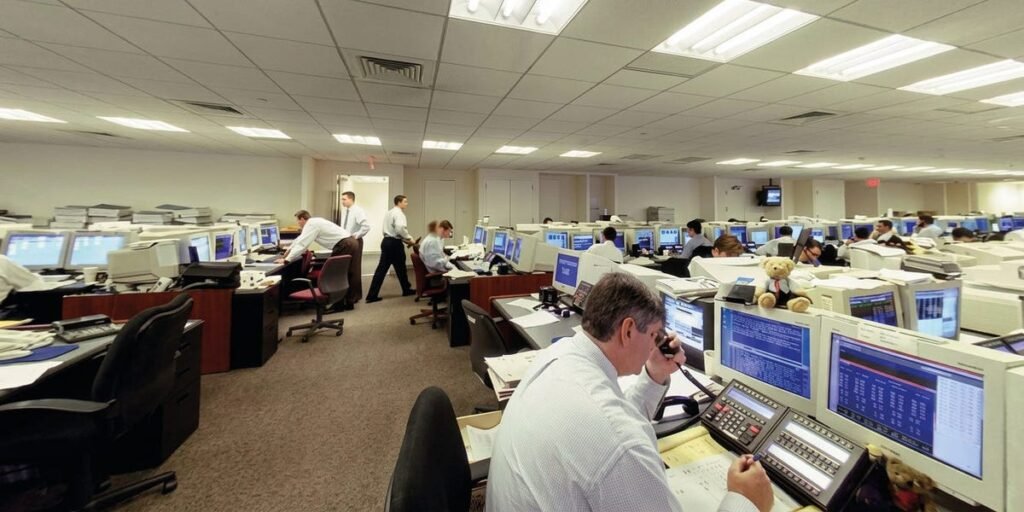
At one point, my office was jammed against the trading floor; it smelled of take-out, men, and cigarettes, as traders (and lawyers) barged through during market open to smoke off the adjacent balcony. There were sometimes bomb threats and evacuations. Since 9/11, we’ve leased low floors. We still do.

The pace was fast, the hours grueling — the kind of drive that comes from a mission greater than yourself. Some days felt like we were rebuilding New York itself.

The first anniversary

Flashback to the first anniversary — a deeply mournful, tomb-like day, grieving in funeral clothes until the afternoon walk to Central Park. The memorial was so packed, I was afraid to displace a family member by sitting down. I was nervous reading the names aloud, afraid to botch pronunciation and disappoint a fragile mourner. The September 11, 2002, memorial service was my first of now 24. Family members, some in photo T-shirts, asked, “Did you know my son?… my aunt?… my mom?” I wished I could say yes. Always, they thanked us for working and the 25% of partnership profits that was used to support their families. It was a different kind of Wall Street trade.

Being with the families mattered. Beyond memorials, the relief fund organized town halls and family support. Even on a corporate level, when companies had long since gone virtual, we kept our eSpeed, later BGC Group, annual stockholders’ meeting live until the pandemic, so family members could attend in person, eat a bagel and have a visit.

Charity Day

It was some time before Charity Day evolved into today’s exciting spectacle. Its roots were to keep the mission of philanthropy alive, with a star-studded crowd of charity ambassadors creating excitement for clients and employees and building publicity. It could be heady stuff for a Kentucky girl like me. I met two former U.S. presidents and one future one. Other times, I escorted celebrity guests, like astronaut Buzz Aldrin and Dr. Ruth Westheimer, who thrilled my parents.

The next decade’s wave of brokers was equally excited by sports figures, actors, rappers, and models. In London, Prince William and Prince Harry executed a royal, brotherly mega-trade. Charity Day can’t happen without our employees. See traders in those logo vests beside glowing screens, escorting celebrities, cutting off ties for newbies’ first trades, hooting and hollering. See the back-office monitoring control rooms and IT systems, carting food, setting up, and knocking down. There’s levity, but this is the serious, legacy work of funding our philanthropy. The frenetic bustle of famous faces alongside staff, non-profits, veterans, kids, and actual cheerleaders all trading for charity brought light, joy, and common cause into the halls.

Underneath it all, always, were the Cantor families. Even when Howard’s promise of direct aid to them was fulfilled, the events honored these loved ones.

The Relief Fund learned from 9/11 and applied it to broader disaster relief, with direct financial aid to those with young children impacted by natural catastrophes. I recall standing hours in freezing temperatures in Far Rockaway, Queens, checking in families devastated by Superstorm Sandy and again in blazing heat in Puerto Rico, distributing aid after Hurricane Maria. Compassion is legacy.

The book

For me, Charity Day inspired this book. For years, I’d ask athletes and movie stars where they were on 9/11. Answers changed as we aged: work, then high school, middle school, preschool. Then, not even born. Ditto the employees. Today’s memorial service volunteers may have no memory of 9/11. Some disaster relief helpers are too young to rent a car.

I wrote an essay in The Wall Street Journal about my colleague Harry Waizer, who, severely burned in the attacks, actually returned to work and eventually retired. The heartwarming response was an inspiring reminder of the power of stories of human resilience.

To mark the 25th anniversary, I proposed an anthology. We’d reconnect with all the families and gather their voices online. I wanted stories to share with the next generation. Edie wanted lessons. We both wanted a look backward that would propel us forward with wisdom. When we saw the powerful submissions, a book was born.

Our cover honors both the past and the future. The Twin Towers rise, ghostly and hollow, made not of steel girders but of pages — the words within this book. Beside them stands the Freedom Tower, representing the generation that rebuilt and those still to come. Above, barn swallows soar — an indigenous New York City bird. Perhaps hope, those things with feathers, or maybe signs sent by loved ones that many families told us they see.

The title itself — The Families — is a mosaic of broken tile, the same blues as the 9/11 sky. Fractured but legible: fragmented, the way loss splits a family. Inside, we list every name, next to Cantor’s photo mosaics at the heart of this book.

My initial assumption — that these essays would be profoundly sad tributes in grief — was confirmed when I read the first batch on the subway. I found myself sobbing and lost on the 5 train to Brooklyn after missing my stop. What I hadn’t expected was how much optimism, faith, belief, and even joy would lie there. In some ways, to me, what results is a manual of surviving grief and building resilience; instructions for how to live.

You’ll find so much variety in these pages. I see moving tributes, then understandable rage. Some speak to the hopefulness of new marriage, new children, new love. Some writers — a West Point cadet, now veteran, a New York City police detective, and many more — meet the attack on their families and on America with civic duty. Others heal through volunteering, or in non-profits founded in a loved one’s name. Others still find solace in poetry, or letters, real or imagined. There’s the broad reach of addiction, generational grief, blessings to count, grace to discover, and signs to grasp or ignore.

Some families take us straight to the trading floor and the humor and horror we may find there. Our survivor stories share accounts of rescue, of injury, yes, but so much more.

Remembering Arlene

This book gave me the chance to face my own history. I’d always regretted not discussing my decision to join Cantor with my friend Arlene’s family. A Relief Fund volunteer tracked down Arlene’s daughter, Dayna Zoller — now a dentist in New Jersey. She not only agreed to write an essay, but also journeyed to Manhattan for dinner. Dayna, our law firm friend Victoria, and I spent a spectacular evening reminiscing, laughing, and sharing stories of her mom.

Scattered pieces, finally coming together. Stories passed to the next generation. Always and again, full circle to the families.

A lesson on kindness and coming together

One of my first tasks at Cantor was a routine corporate qualification filing in a mid-American state — maybe Ohio, Nevada, Illinois. All the potential officer signers were gone, as I explained to the Secretary of State’s clerk. She was skeptical. “Couldn’t Jeff Goldflam or Fred Varacchi sign?” “No, they died.” “Doug Gardner?” “Gone too.” “Fried?” “Nope.” “Howard Lutnick?” “Well, he’s here,” I said, hesitating, “but — well, he’s just so busy.”

There was a pause. Then the clerk: “Honey, what on earth is going on over there in New York City?”

I explained. She gasped and promised to help me. And she did — got her supervisor, made exceptions, took my word for everything, and handled it. Before we hung up, she had one request: Please tell all your colleagues and those beautiful families that we are praying for them…that all of America is with them.

She had no real reason to care about a New York brokerage firm’s paperwork. But fellow humans and Americans were hurting, and she wanted to help.

I’ve never forgotten her.

That, for me, is the real lesson of these 25 years. We are all connected. The common ground beneath us is wider than the issues that divide us, if we’re willing to stand on it. Perhaps this mosaic can help us all recall a day when we were less fractured and remember to show up for each other.

Working on The Families has changed me. Because they shared their loss, I’m thinking about how to live better. I’m looking at others with more tenderness, more connection, and more awareness of the invisible grief carried quietly.

So — here we are at our mosaic. I hope you read these stories, honor these families and grieve with them. Do whatever comes: Cry. Laugh. Be inspired. Be broken-hearted. Be faithful. Be humbled. Be resolved. Be reminded.

And then, I beg you: Rise.

Always love. And remember.

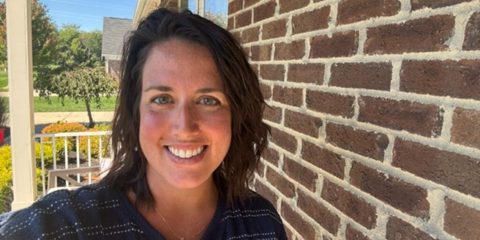
Caroline Aiken Koster joined Cantor Fitzgerald in July 2002. She is a senior attorney at Cantor and general counsel of The Cantor Fitzgerald Relief Fund.


Read the full article here

25year Cantor day Fitzgeralds loss Odyssey resilience
Share. Facebook Twitter LinkedIn Telegram WhatsApp Email

Keep Reading

We went status-symbol spotting at the US Open. Here’s what we found.

We went status-symbol spotting at the US Open. Here’s what we found.

OpenAI pulls out of Caltech math hackathon after mathematicians issue open letter criticizing AI math ‘slop’

OpenAI pulls out of Caltech math hackathon after mathematicians issue open letter criticizing AI math ‘slop’

Sam Altman met with top power utilities about securing the electrical grid. He offered one possible solution: OpenAI’s cyber services.

Sam Altman met with top power utilities about securing the electrical grid. He offered one possible solution: OpenAI’s cyber services.

Trump’s new Air Force One has had a rough journey of security concerns and operational mishaps. Here’s a complete timeline.

Trump’s new Air Force One has had a rough journey of security concerns and operational mishaps. Here’s a complete timeline.

Palantir cofounder and GOP donor says Trump’s proposed ,000 dividend is a ‘bribe’

Palantir cofounder and GOP donor says Trump’s proposed $5,000 dividend is a ‘bribe’

8 of the best foods I ate at the US Open — and 3 I’d skip next time

8 of the best foods I ate at the US Open — and 3 I’d skip next time

How hard is it to get into the nation’s most selective universities? See the 25 lowest acceptance rates in the US.

How hard is it to get into the nation’s most selective universities? See the 25 lowest acceptance rates in the US.

Gas prices are climbing again. See the states where it is the most and least expensive.

Gas prices are climbing again. See the states where it is the most and least expensive.

We asked AI how it could kill humanity. Here’s what it told us.

We asked AI how it could kill humanity. Here’s what it told us.

Add A Comment
Leave A Reply Cancel Reply

Editors Picks

President Trump can’t decide if the affordability crisis is real or not

President Trump can’t decide if the affordability crisis is real or not

September 10, 2026
‘Were you there that day?’ Inside Cantor Fitzgerald’s 25-year odyssey of loss and resilience after 9/11

‘Were you there that day?’ Inside Cantor Fitzgerald’s 25-year odyssey of loss and resilience after 9/11

September 10, 2026
Meta is asking some of its employees to become managers again in a new reorg

Meta is asking some of its employees to become managers again in a new reorg

September 10, 2026
OpenAI pulls out of Caltech math hackathon after mathematicians issue open letter criticizing AI math ‘slop’

OpenAI pulls out of Caltech math hackathon after mathematicians issue open letter criticizing AI math ‘slop’

September 10, 2026
Oracle maintains its capex forecast and reports cloud growth, sending shares up 7%

Oracle maintains its capex forecast and reports cloud growth, sending shares up 7%

September 10, 2026

Latest News

30 Common Job Search Scams to Watch for in 2026

30 Common Job Search Scams to Watch for in 2026

September 10, 2026
Is the Cheapest Mercedes-Benz the Best Luxury Car Deal for Your Money?

Is the Cheapest Mercedes-Benz the Best Luxury Car Deal for Your Money?

September 10, 2026
Sam Altman met with top power utilities about securing the electrical grid. He offered one possible solution: OpenAI’s cyber services.

Sam Altman met with top power utilities about securing the electrical grid. He offered one possible solution: OpenAI’s cyber services.

September 10, 2026

Subscribe to News

Get the latest finance and business news and updates directly to your inbox.

Advertisement
Demo
Facebook X (Twitter) Pinterest TikTok Instagram
2026 © Prices.com LLC. All Rights Reserved.
  • Privacy Policy
  • Terms
  • For Advertisers
  • Contact

Type above and press Enter to search. Press Esc to cancel.