


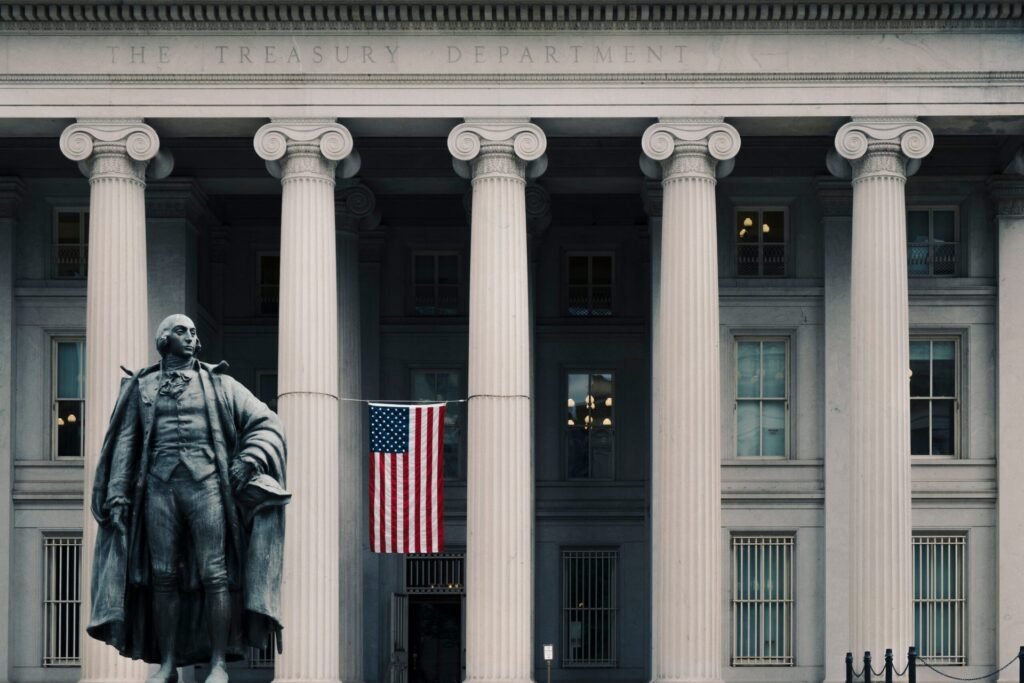
In late July 2026, a photographer at a Camp David cabinet meeting saw Scott Bessent’s notepad. One line read: Buy Japanese yen, $5 billion to $10 billion.
That same week, the United States did exactly that, joining Japan to support its sliding currency. Both governments confirmed the coordinated move in early August. It was Washington’s first yen intervention since 2011, and it was only the warm-up.
None of this is cause to panic, but it is worth understanding, because the yields Bessent is fighting over set the rate on your next mortgage and the value of the bonds you already hold.
If you have over $100,000 in savings, ask a professional what it means. SmartAsset offers a free service that matches you to a vetted, fiduciary advisor in under five minutes.
The yen move and U.S. borrowing costs
On its face, one government buying another’s currency has little to do with a homeowner in Ohio. Any link runs through debt. Japan holds well over a trillion dollars in U.S. Treasury bonds, and a sharp enough currency slide can tempt a country to sell some of those holdings for cash.
That matters because heavy Treasury selling can push long-term yields up, and those yields shape the cost of everyday borrowing. The 30-year fixed mortgage moves with long-term bond yields, plus a lender’s margin.
Japan appears to have found another route. Rather than sell its bonds, it borrowed dollars against them through a Federal Reserve facility built for that purpose. Analysts saw one possible benefit: less forced Treasury selling, which could reduce upward pressure on U.S. yields.
The Treasury’s surprise bond buyback
On Aug. 19, the Treasury said it would at least double the size of what it calls liquidity-support buyback operations for longer-dated debt, raising the ceiling from $2 billion to at least $4 billion per operation for bonds maturing in 10 to 30 years. The larger buying runs from Sept. 9 through Nov. 4.
In a buyback, the government purchases its own outstanding debt, trimming the supply of those bonds and supporting their price. Bessent has made clear he wants investors to rethink long-term yields, though the Treasury frames the operations as liquidity support rather than a program built to cap rates.
The next day, Bessent told CNBC the effort could exceed $4 billion an issue and cast it as a signal. Long-term yields, he argued, do not reflect the fundamentals. Then the line that drew the most notice: “People have bad information. I have asymmetric information.” He did not say what that information was, teasing an edge in data or policy visibility without revealing it.
Why Wall Street is not buying it
The doubt comes down to scale. Even at $4 billion an operation, the buybacks are small against the tide. Analysts at Macquarie estimate the government will need to issue close to $550 billion in bonds this quarter to fund itself. A few billion in repurchases is unlikely to steer a market that size.
The forces lifting long-term yields also look structural rather than seasonal: a widening federal deficit, inflation still above the Federal Reserve’s 2% target, a softer dollar and a wave of corporate bond issuance. The national debt recently crossed $40 trillion.
The 30-year yield had already hit a 19-year high on Aug. 18, the day before the buyback news. The announcement nudged yields down briefly on Aug. 19. By the next day, after Bessent spoke, they had climbed back to about where they started.
There is tension inside Washington too. Fed Chair Kevin Warsh, confirmed in May, has signaled he wants to shrink the central bank’s balance sheet, a step that tends to lift long-term borrowing costs. That runs opposite to what Bessent is trying to do.
The two reportedly still meet most weeks, so this reads less as a feud than a difference of direction. Investors who share Jamie Dimon’s wariness of long-dated Treasurys are watching the fundamentals, not the buyback.
Where this leaves your money
For a saver in or near retirement, there is no emergency here. It maps where the pressure sits. The long end of the Treasury market helps set the rate on your next mortgage or refinance, the yield on new bonds and CDs, and the paper value of any bond fund already in your 401(k).
While yields stay elevated, a new home loan stays costly. The 30-year fixed averaged about 6.65% in late August, and existing bonds trade below their face value. If Bessent is right and yields ease, borrowing could get cheaper and existing bond prices could recover, while yields on new bonds and CDs would likely fall.
Bessent says the market is misreading the fundamentals and has hinted that the Treasury sees something investors do not. So far, Wall Street is not taking that hint.
If you have at least $100,000 in savings, you might want to take the hint and get advice from a pro via SmartAsset’s free service that matches you to a fiduciary advisor bound to act in your best interests in minutes.
Read the full article here