


Close Menu
Fin Street NewsFin Street News
  • Home
  • Business
  • Finance
    • Banking
    • Stocks
    • Commodities & Futures
    • ETFs & Mutual Funds
    • Funds
    • Currencies
    • Crypto
  • Markets
  • Investing
  • Personal Finance
    • Loans
    • Credit Cards
    • Dept Management
    • Retirement
    • Mortgages
    • Saving
    • Taxes
  • Fintech
  • More Articles

Subscribe to Updates

Get the latest finance and business news and updates directly to your inbox.

Trending
I took an 18-hour trip with my grandmother right after losing my grandfather. Now we hang out every single weekend.

I took an 18-hour trip with my grandmother right after losing my grandfather. Now we hang out every single weekend.

September 11, 2026
Here’s how 7 US cities still remember 9/11, 25 years later

Here’s how 7 US cities still remember 9/11, 25 years later

September 11, 2026
This Simple Travel Oversight Can Ruin Your Trip Instantly

This Simple Travel Oversight Can Ruin Your Trip Instantly

September 11, 2026
‘You can’t break the fundamental laws of physics’: T-Mobile CFO says he’s not worried about Elon Musk’s cellular ambitions

‘You can’t break the fundamental laws of physics’: T-Mobile CFO says he’s not worried about Elon Musk’s cellular ambitions

September 11, 2026
The Atlantic fixed its business. Then AI came for media.

The Atlantic fixed its business. Then AI came for media.

September 11, 2026
Facebook X (Twitter) Instagram
  • Privacy Policy
  • Terms of use
  • Press Release
  • Advertise
  • Contact
September 11, 2026 10:42 am EDT
|
Facebook X (Twitter) Instagram
  Market Data
Fin Street NewsFin Street News
Newsletter Login
  • Home
  • Business
  • Finance
    • Banking
    • Stocks
    • Commodities & Futures
    • ETFs & Mutual Funds
    • Funds
    • Currencies
    • Crypto
  • Markets
  • Investing
  • Personal Finance
    • Loans
    • Credit Cards
    • Dept Management
    • Retirement
    • Mortgages
    • Saving
    • Taxes
  • Fintech
  • More Articles
Fin Street NewsFin Street News
Home » The Atlantic fixed its business. Then AI came for media.
The Atlantic fixed its business. Then AI came for media.
Markets

The Atlantic fixed its business. Then AI came for media.

News RoomBy News RoomSeptember 11, 20261 ViewsNo Comments

Running a great magazine is hard. So is turning a money-losing magazine into a profit center.

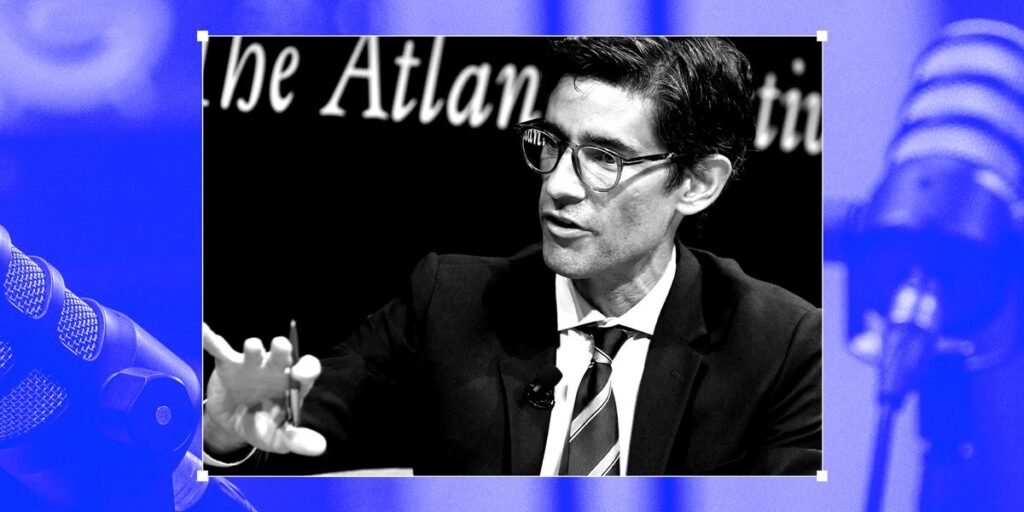
Nicholas Thompson has done both. The CEO of The Atlantic took the job in 2021, when it was gushing red ink and slashing its workforce. Today it’s profitable, boasts 1.6 million subscribers, and revenue that Thompson says is “much bigger” than $100 million — the number it last reported in 2023.

Thompson has the advantage of a very deep-pocketed owner — Laurene Powell Jobs, who is worth a reported $15 billion — and a very talented editor. Under editor in chief Jeffrey Goldberg’s watch, the Atlantic has become a consistent source of must-read pieces.

But Thompson is also an atypical CEO: Prior to joining The Atlantic, he had a long career as an editor at outlets like Wired and The New Yorker. On top of that, he’s a prolific creator who churns out books, podcasts, and, most recently, vertical videos for a very large audience.

I talked to Thompson about what it’s like to work for one of the richest people in the world, what AI has done for his magazine and why it has yet to produce a breakthrough product that normal people use, and why he’s a business-side executive making content that looks a lot like the stuff the editorial staff at his publication might make for themselves. You can listen to the entire interview on my Channels podcast; the following is an edited excerpt of our conversation.

Peter Kafka: Like lots of publishers, The Atlantic has a billionaire owner: Laurene Powell Jobs, one of the wealthiest women in the world. What does she want from you guys, and what is she giving you? Are you supposed to be a self-sustaining business? Do you ask her for money to expand?

Nicholas Thompson: My mandate when I was hired was to make it profitable. When you have wealthy owners, people don’t understand that they care about taking the business seriously.

You don’t get to be that wealthy, and you don’t maintain that wealth by not caring about how businesses are run.

I think she cares a lot about improving democratic conversation in America and making sure that young people know a lot about the most important issues of the day.

Want more Business Insider in your news feed?

Add BI in Google so our reporting is easier to find when you’re searching for what matters.

An ideological project.

That’s definitely the wrong word. I would say more like “idealistic.”

She cares a ton about American democracy, and she wants American democracy to work. We want to try to contribute to that. If you don’t have good information, and people can’t share facts, and they can’t share stories, democracy is a little bit harder.

Now that you’re profitable, how often do you hear from her or her people?

All the time. I talk to people in her office every day, and I talk to her fairly frequently.

What are those conversations like? You say, “We’re profitable. We probably will be more profitable next year. We’re making really good work.” Then what happens?

You talk about things like, “What’s your video strategy? Where are the best opportunities? What can you do more of? OK, is this actually working?” She’s exceptionally perceptive and smart, and says, “Wait, wait a second, Nick. This thing you’re doing here, is that actually really working? And is that the right person to be doing it?” Questions like that.

You were one of the first publishers to sign a deal with OpenAI. [Axel Springer, which publishes Business Insider, also has an OpenAI deal.] There was a lot of hand-wringing about that. It’s been a couple of years. Has it worked the way you thought it would?

I prefer them paying us than not paying us, right? And many of the AI companies don’t pay.

We set up a whole bunch of boundaries in the contract: How much can you summarize? Can you quote an author? Can you try to get your model to write like an author? These things we care about because we want it to be harder for AI to replace what we do.

They’ve been great on that. We wanted to have a seat at the table as they talk through the role of journalism in their models. Absolutely. They’ve been amazing partners at that.

The one thing that we haven’t seen, and I think it’s been a surprise to both parties — one reason to do the deal was my expectation that AI was going to replace traditional search, and that we wanted to make sure that there was lots of traffic directed back to us.

What you hear throughout the industry is that the bots are not sending much traffic to publishers. The click-through rates are very bad.

That has surprised me.

Do you think that’s about the way they’ve designed the product? If the links were bigger or more prominent, or there was some incentive to click through, you’d see the rates go up?

You certainly could change it in ways that would make the rates go up. But the core problem is that people go to it for a different use case. The Google use case was people were trained to go, “I want to find this thing. Now I’ll leave, and I’ll click to a site.” With Claude and ChatGPT, you’re in a conversation with the bot.

Meanwhile, Google has been sending less and less referral traffic.

So I hear.

Can I say something interesting about that, though? The most interesting data point to me is that the number of subscribers we get from Google traffic has gone up.

Mysterious, right? What’s clearly happening is that Google is sending us fewer people who aren’t going to subscribe. Are they doing that deliberately? Is it because of our content mix? Is it because something in the way that we’ve tagged our stories? There are all kinds of different hypotheses.

What would you need to re-up with OpenAI at the end of your deal?

There just has to be a fair exchange of value. What are you giving us, and what are we giving you? Is it fair? And if it’s not, well, then we’ll block you from the site, or we’ll sue you, right? That’s the deal.

There are lots of things they can give you of value. In the old deal, they gave us dollars, which are really nice. They [also] gave us credits, which weren’t useful at the beginning, and then were incredibly useful, right? Codex credits are awesome.

You make your own sponsored videos and post them on platforms like LinkedIn, where you have 1.6 million followers. You’re the CEO of The Atlantic. They are not editorial products. Atlantic editor in chief Jeffrey Goldberg has nothing to do with them. Have you guys had a talk about that?

The stuff the CEO makes is labeled, and it says, “This has not come from The Atlantic’s editorial arm.”

We make a lot of money on the stuff I do, and Jeff likes when we make money, because you know what we do with the money we make? We hire more reporters.

We keep a line between what I do and the editorial side. I’m a little bit different from other CEOs in that I didn’t come in by being the CEO of a smaller publication or being the publisher somewhere else. I came in because I was an editor who had been a very business-oriented editor from the time I’d been at The New Yorker.

The content’s good.

If the content is bad, then there’s a problem, right?

But I think because the content is good, you could say, this, why isn’t this from Jeffrey Goldberg’s team? Why are these separate things?

It’s tension-free. I think what makes it tension-free is because they’re good, and they make money. And because neither side knows what the other’s doing … I just interviewed [Recursive CEO] Richard Socher. The editorial team at The Atlantic might be preparing a hit piece on Richard Socher. It might be preparing a puff profile. They have no idea that I just interviewed him.

So it’s totally independent.


Read the full article here

Share. Facebook Twitter LinkedIn Telegram WhatsApp Email

Keep Reading

Here’s how 7 US cities still remember 9/11, 25 years later

Here’s how 7 US cities still remember 9/11, 25 years later

Photos show the moment President George W. Bush first learned of the 9/11 attacks — and how the president’s day unfolded

Photos show the moment President George W. Bush first learned of the 9/11 attacks — and how the president’s day unfolded

AI might take us all down, just not the way you think

AI might take us all down, just not the way you think

‘AMERICA’S DARKEST DAY’: Newspaper headlines from around the world after 9/11

‘AMERICA’S DARKEST DAY’: Newspaper headlines from around the world after 9/11

‘Healthcare professional’ has dethroned ‘influencer’ as the dream career for young adults

‘Healthcare professional’ has dethroned ‘influencer’ as the dream career for young adults

The foldable iPhone Duo gives you a bigger screen and bragging rights. Here’s what you give up.

The foldable iPhone Duo gives you a bigger screen and bragging rights. Here’s what you give up.

‘I saw Terminator 2’: Y Combinator’s Garry Tan pushes back on AI extinction fears

‘I saw Terminator 2’: Y Combinator’s Garry Tan pushes back on AI extinction fears

Ukrainian drones flew almost 2,000 miles to hit fuel plants in the Russian Arctic

Ukrainian drones flew almost 2,000 miles to hit fuel plants in the Russian Arctic

Getting my H-1B on the first try felt like ‘pure luck.’ 4 years later, a layoff meant I had to leave the US.

Getting my H-1B on the first try felt like ‘pure luck.’ 4 years later, a layoff meant I had to leave the US.

Add A Comment
Leave A Reply Cancel Reply

Editors Picks

Here’s how 7 US cities still remember 9/11, 25 years later

Here’s how 7 US cities still remember 9/11, 25 years later

September 11, 2026
This Simple Travel Oversight Can Ruin Your Trip Instantly

This Simple Travel Oversight Can Ruin Your Trip Instantly

September 11, 2026
‘You can’t break the fundamental laws of physics’: T-Mobile CFO says he’s not worried about Elon Musk’s cellular ambitions

‘You can’t break the fundamental laws of physics’: T-Mobile CFO says he’s not worried about Elon Musk’s cellular ambitions

September 11, 2026
The Atlantic fixed its business. Then AI came for media.

The Atlantic fixed its business. Then AI came for media.

September 11, 2026
The Going Rate For Selling Your Soul In The Age Of AI

The Going Rate For Selling Your Soul In The Age Of AI

September 11, 2026

Latest News

Why Your Biological Sleep Schedule Might Be Costing You a Promotion

Why Your Biological Sleep Schedule Might Be Costing You a Promotion

September 11, 2026
Is Your ADHD Making Money Management Feel Impossible? Here’s What to Do

Is Your ADHD Making Money Management Feel Impossible? Here’s What to Do

September 11, 2026
Vintage photos show what airport security was like before 9/11

Vintage photos show what airport security was like before 9/11

September 11, 2026

Subscribe to News

Get the latest finance and business news and updates directly to your inbox.

Advertisement
Demo
Facebook X (Twitter) Pinterest TikTok Instagram
2026 © Prices.com LLC. All Rights Reserved.
  • Privacy Policy
  • Terms
  • For Advertisers
  • Contact

Type above and press Enter to search. Press Esc to cancel.