

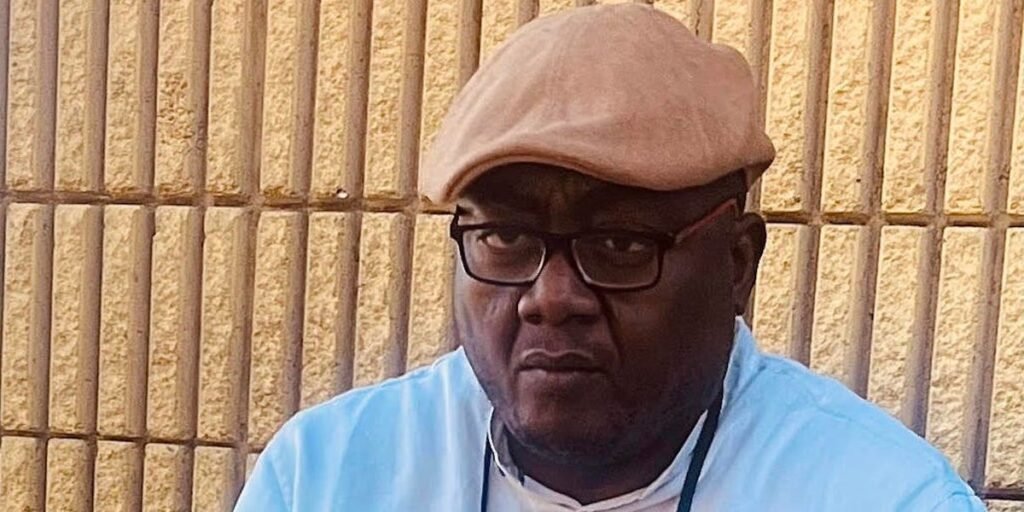
Osahon Aburime opened his Lyft app on Mother’s Day last year to make some money.
That day, the North Carolina driver had made about $80 to put toward taking his wife out to dinner and getting a gift for his mom. As he was on his way to pick up a passenger, though, he got into a car accident.
“All of a sudden, I just saw this car in front of me, so I stepped on my brakes,” he said. “We just ran into each other.”
Sixteen months later, he uses a cane to walk, he said. He tried unsuccessfully to return to work as a ride-hailing driver.
“I said, ‘Let me see if I can continue to drive to make money for my family,'” he said. “But it just got to a point now I can’t even bend down.”
Aburime’s experience shows one occupational hazard of working as a driver for a gig-work platform like Lyft or Uber. While the apps say they provide insurance coverage, the independent contractors doing the work often have fewer protections than traditional full-time employees.
“Safety is fundamental to Lyft and it is our goal to make every ride safe, comfortable and reliable,” a Lyft spokesperson said. “We maintain auto liability insurance that meets local and state regulations.”
‘Nobody deserves this’
After the accident, Aburime had pain in one of his feet, according to a report from the hospital viewed by Business Insider. He also lost the Chevy Malibu that he was driving when he got into the accident.
His income has also been affected. Before the accident, it was typical for him to make around $1,700 a month on Lyft. The money helped support his family, along with his wife’s income working at an eye clinic.
Since the accident, though, he hasn’t been able to earn money, he said. That led him to fall behind on payments toward his minivan, which his lender repossessed earlier this year, according to a notice seen by Business Insider.
Aburime has also been fighting to get a payout from Mobilitas, which provides ride-hailing insurance to Lyft. Aburime said that he’s reached out to the North Carolina Department of Insurance for help. The department has told him to look for a lawyer — something he says he can’t afford.
A day after the accident, Mobilitas denied Aburime’s claim, according to the insurance documents he provided.
The denial contained incorrect information about the accident, though, including the wrong time, according to a letter sent from North Carolina’s insurance department . It also suggested that Aburime wasn’t on his way to pick up a passenger when the accident happened — something he denies.
The company has since corrected some of the details, but has continued to deny his claim. Mobilitas did not respond to a request for comment on this story.
Fighting for an insurance payout has taken time away from trying to find other work and recovering from his injuries, he said. “These rideshare companies tell you that you are covered if something like this happens,” he said.
Other gig workers have faced their own challenges after suddenly not being able to work on apps like Uber and Instacart.
In some cases, the companies have deactivated workers’ accounts, Business Insider previously reported. The company’s policies say that workers can lose access to the apps by abusing them.
Some drivers have told Business Insider that they were kicked off the apps — and lost income — after an overcharge at a store checkout. One Instacart worker won $28,000 in back pay after a months-long arbitration process over such a deactivation.
Others, like Aburime, have tried to get insurance settlements after getting injured on a gig.
“I don’t think any company should treat the people who work with them like this,” Aburime said.
Do you have a story idea about Uber or Lyft? Contact this reporter at abitter@businessinsider.com or via encrypted messaging app Signal at 808-854-4501. Use a personal email address, a nonwork WiFi network, and a nonwork device; here’s our guide to sharing information securely.
Read the full article here