






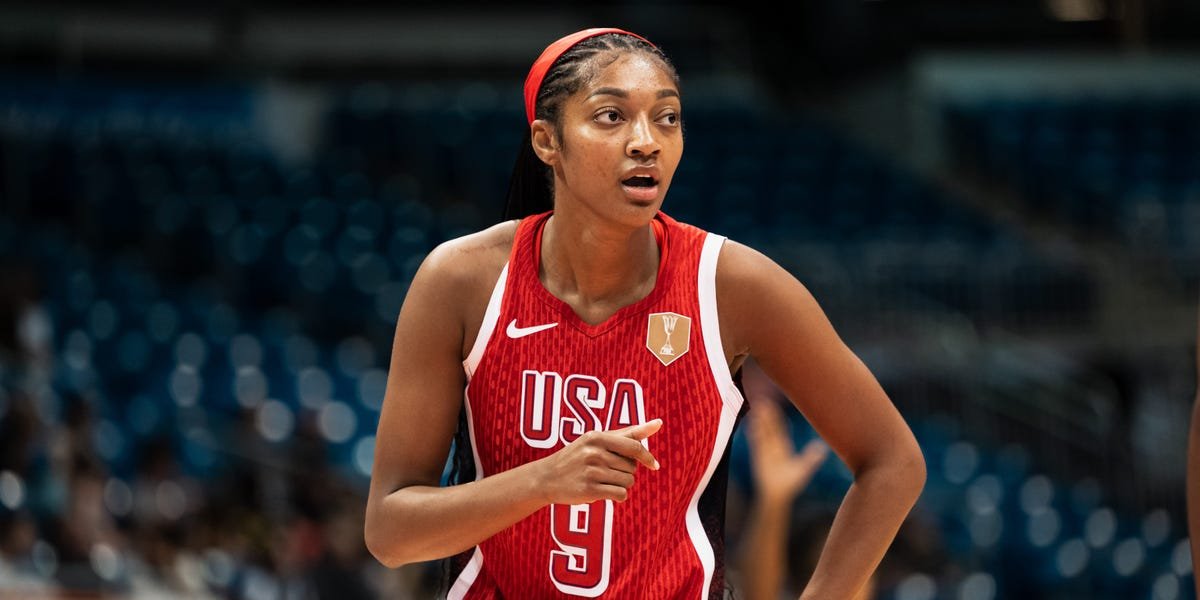


WNBA star Angel Reese, 23, is drawing a clear line between reel life and real life.
On Wednesday’s episode of the “IMO” podcast, Reese said she’s finally learned to protect her peace by tuning out what people say about her online.
“I think I tried to have some type of normalization, of knowing where I’ve come from. I’ll never forget that. I don’t want to ever feel like I’m bigger than anything,” Reese told podcast hosts Michelle Obama and Craig Robinson.
Reese said she tries to practice gratitude every day and finds joy in the small things, like spending time with her loved ones.
“I love being able just to come home and turn my phone off, and just relax, and do the things that I enjoy,” she said.
As she’s gotten older, she’s come to see social media as a distorted version of reality.
“I think over the years it’s been hard for me to realize that, but I think the maturity of just understanding like, social media isn’t real,” Reese said.
“I think we get so caught up in that. Years prior, I would comment back at things and let things continue to bother me,” she said, adding that she no longer tries to engage.
Looking back at her rise to fame and the public scrutiny that followed, Reese said the way she was treated was neither normal nor acceptable — but part of her “new reality.”
She said the experience has made her more appreciative of the things she still has control over.
Reese has previously opened up about the negative attention she received online as her profile rose.
In July, she told ESPN she was subjected to cyberbullying after winning the NCAA Women’s Basketball National Championship with Louisiana State University in 2023.
“And that was the first time I had seen negativity like that on social media. I’ve had a huge following before, but it skyrocketed to millions, and it was bigger than basketball, when they were finding my address, my car, and I had to change my whole lifestyle,” Reese said.
Reese isn’t the only one rethinking social media.
In 2025, Mia Threapleton said her mother, Kate Winslet, encouraged her to make a list of pros and cons for joining Instagram when she was 14.
“The cons completely outweighed the pros for me. That was quite a clarifying moment. Since then, the more time I spend in this world, the more I’m really happy that I don’t have it,” Threapleton said.
In February, biohacker and tech entrepreneur Bryan Johnson said he’s been doing social media “fasts” for his health and wants an AI agent to serve as a buffer between him and his feed.
“I never want to see the raw feed. I want an AI agent to read it for me, strip the engagement metrics that hijack my judgment, filter the rage, and return only what I actually came for,” he said.
Beyond celebrities, a growing number of Gen Zers are deciding they’re better off offline.
They’re swapping smartphones for dumb phones, using makeshift landlines, and creating spaces where scrolling is off limits.
Read the full article here