








The National Park Service is heading into peak summer with fewer permanent staff and looser crowd-control rules at some of its most popular parks.
Advocacy groups say that the combination has already led to longer lines, crowded parking lots, and less predictable trips, so if you’re planning to visit a national park this summer, here’s what you can expect.
Big crowds
The National Park Service recorded 323 million visits in 2025, with 26 parks drawing more visitors than ever before. Demand is expected to remain high this year, as high flight prices and conflict abroad have enticed more Americans to stay stateside this summer or take road trips.
Expedia’s summer travel report found social media interest in domestic vacations was up 77% year-over-year, and that 63% of US travelers were planning a domestic trip.
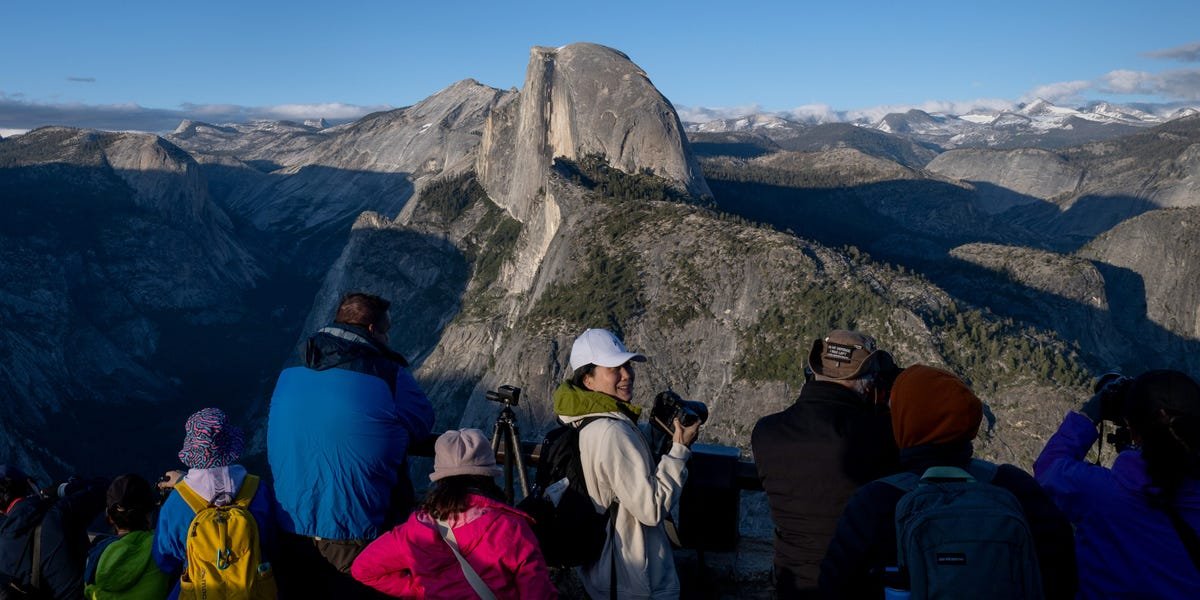
Several parks have already shown signs of increased demand. Yosemite National Park visitation was up 13% year-over-year in May, while Arches National Park logged record visitation in March.
Fewer staff
National Park Service permanent staff is down 25% since January 2025, according to records obtained by the National Park Conservation Association, an advocacy group.
The Department of the Interior has said it would ramp up hiring of seasonal employees to staff the parks and prioritize visitor-facing roles. That means visitors could find entrance gates and visitor centers that appear fully staffed.
Every time Kelsey publishes a story, you’ll get an alert straight to your inbox!
Stay connected to Kelsey and get more of their work as it publishes.
“Some parks have been able to hire just fine, other parks it’s been hard,” Emily Thompson, executive director of the Coalition to Protect America’s National Parks, told Business Insider.
At Sequoia and Kings Canyon National Parks, 48% of permanent positions were vacant as of April, according to the union that represents park employees. The union said the staffing shortage was “placing enormous strain on existing staff, reducing the quality of visitor services, and impairing our ability to carry out the mission of the NPS.”
Thompson said seasonal hiring has been slower this summer, as the parks compete for a smaller pool of seasonal staff, and both front-of-house and back-of-house operations are being affected. That could mean fewer ranger programs, slower maintenance, or less capacity to manage parking lots and trails.
She said one park in the Pacific West was so short-staffed that every park employee had to work a shift at their front gate. She declined to name the park in order to protect the employees.
Cassidy Jones, a senior visitation program manager at NPCA, told Business Insider that even if a park appears to be staffed, the visitor experience could still be affected. She said the mission of NPS is twofold: to provide a good visitor experience and to protect park resources in perpetuity.
“If you’re only focusing on higher quality visitor experiences with your hiring, you’re neglecting half the equation,” she said. “Visitor enjoyment is dependent on good resource conservation.”
Fewer reservation rules
Time-entry and vehicle reservation systems were implemented at several national parks in recent years in response to overcrowding and long lines at entrance gates. Many of those measures were rolled back this year.
Yosemite, Glacier National Park, Arches National Park, and Mount Rainier National Park all cut reservation requirements to enter the park in 2026.
“These tools were created to make park experiences better, more predictable, protect resources, and make operations more effective and sustainable,” Jones said. “The crowding and congestion challenges we expected from the elimination of managed access systems have come to pass.”
Over Memorial Day weekend, Yosemite faced full parking lots and hour-plus waits at its entrance, with visitors posting videos of the long line of cars to social media. The park experienced similar crowding issues in February, when reservations were dropped for its annual Firefall event, during which a waterfall on El Capitan glows bright orange and looks like lava.
The National Park Service said in a statement to Business Insider that the agency is taking a “park-by-park, conditions-based approach to managing visitor access” and that, in some locations, a comprehensive evaluation found that a “season-long reservation system was not the most effective tool.” Instead, parks are using tools like traffic monitoring and active parking management.
“This approach gives visitors more flexibility to plan their trips while still ensuring parks can actively manage peak visitation,” the statement said.
What to do before a visit
Some parks, like Rocky Mountain National Park, have maintained their timed-entry reservations for this year, while others still require permits or reservations for specific hikes, like Angel’s Landing in Zion National Park. Jones said it’s important to check for updates about the specific park you are visiting.
Park advocates also recommend avoiding peak times by visiting a park midweek or arriving at the entrance early in the morning or late in the day.
NPCA recommends taking extra precautions when exploring the parks, since avoidable search-and-rescue calls can put additional strain on park staff and resources.
Thompson said visitors should be prepared for long lines and have a backup plan.
“Be prepared to wait,” she said, adding that visitors should be patient with park service staff who could be “overworked.”
“Maybe thank a park employee too,” she said.
Read the full article here