







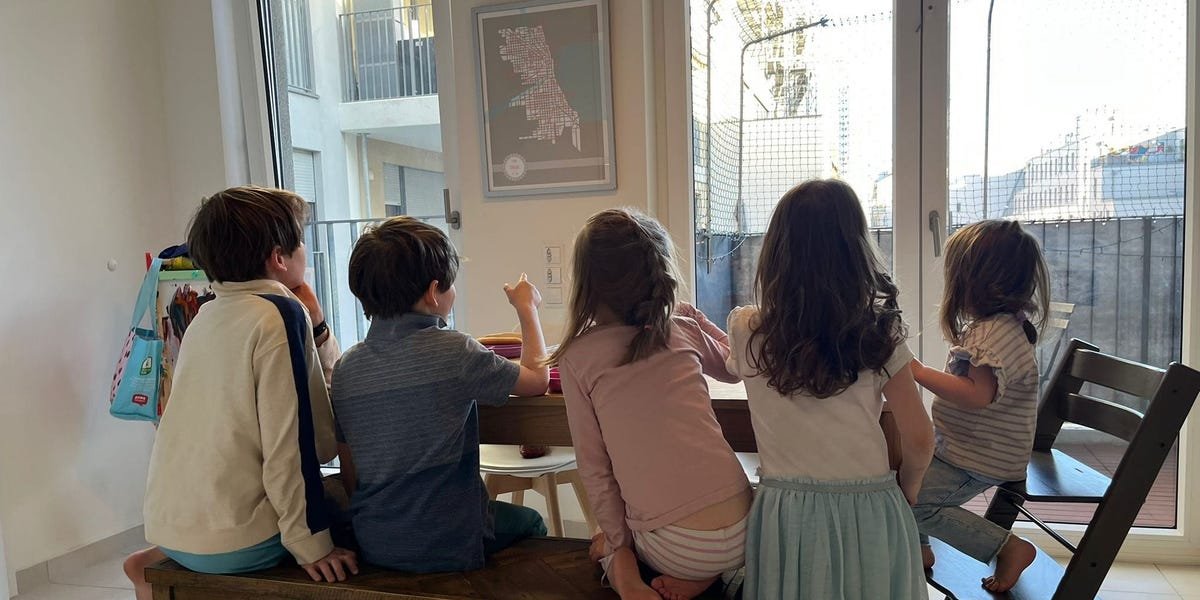


When I first suggested a “kids’ dinner” with our upstairs neighbor, I was mainly thinking about getting a night off.
Feeding my three kids (ages 4, 6, and 10) can feel endless — just when I think I’ve found a meal that works, one of them suddenly refuses to eat pasta, or rice, or chicken. Getting even one night off every other week sounded like a dream.
Thankfully, our upstairs neighbors had two kids who got along with mine, and the parents were just as eager for a break.
The logistics are simple
Every Tuesday night, one family hosts a kids’ dinner. We switch off weeks, and the parents simply walk the kids to the other family’s apartment door. Parents are welcome to stay, but are encouraged to take an hour for themselves.
We also made a key rule: no cleaning before dinner. This arrangement is supposed to make our lives easy, not harder.
I became a go-to adult for someone else’s child
A couple of months into these dinners, my 6-year-old neighbor walked in, took my hand, her eyes welling with tears, and pulled me aside. We sat on the blue couch in my office — a room that’s otherwise off-limits — and she told me about a fight she’d had with her mom. It was a big deal to her. And the fact that she wanted to tell me about it felt big to me, too.
Since that night, we’ve had more of these heart-to-hearts, and I’ve been surprised by how much they mean to me.
I’ve become a go-to adult in her life — a role I didn’t expect to play for someone else’s child, especially since living in Germany means I’m an ocean away from my nieces and nephews. When she gets especially mad with her parents, she threatens to run away. To me. It’s the best-case scenario for her parents, who know she’d be two flights downstairs with a trusted adult.
And my neighbors fill this same role for my three children. On Tuesdays, after my kids drop off their backpacks in our apartment, they run upstairs, bursting to tell Laura what happened that day on the playground or try to stump Michael with a riddle they just learned.
Without grandparents or aunts and uncles around, weekly dinners have provided my children another set of adults — outside teachers — who know to ask about ballet practice, speech therapy, and report cards.
The kids built something of their own
Around the table, the kids have built something of their own. They plan what toys to bring for each other, negotiate over seating, and sometimes show up with handwritten notes.
They sit at the table by themselves, so their conversations aren’t dominated by adults. The talk is about Pokémon cards or about whose birthday party is coming up this weekend.
After dinner, while I clean the kitchen, the five of them have free rein to play. Sometimes I find my 4-year-old daughter and my 3-year-old neighbor huddled in her room, “reading” side by side or listening to “Frozen” on her Tonie box. Other times, my ten-year-old reads to the younger kids or makes up games that everyone can play.
What started as a break became something more
Cooking for five kids instead of three has turned out to be surprisingly fun. Having two extra mouths to feed doesn’t require much more food, and with a party-like atmosphere, I think about what could be fun (like I did in my pre-children dinner party days).
But dinners are still relatively simple. Chicken nuggets and fries. A charcuterie board of sliced meats and cut-up veggies. Breakfast for dinner. If I’ve got a bit of extra time, we’ll make avocado sushi together.
When everyone is back in their own home, I get messages about how my children ate — whether my daughter, who tends to bulk up on preschool snacks and skip dinner almost entirely, touched anything, or whether my oldest son ate an entire pack of hot dogs on his own.
I was looking for a break from endless meal prep, but instead, my kids gained a second set of adults just two flights away.
One dinner at a time, it feels like we’re building a community.
Read the full article here