







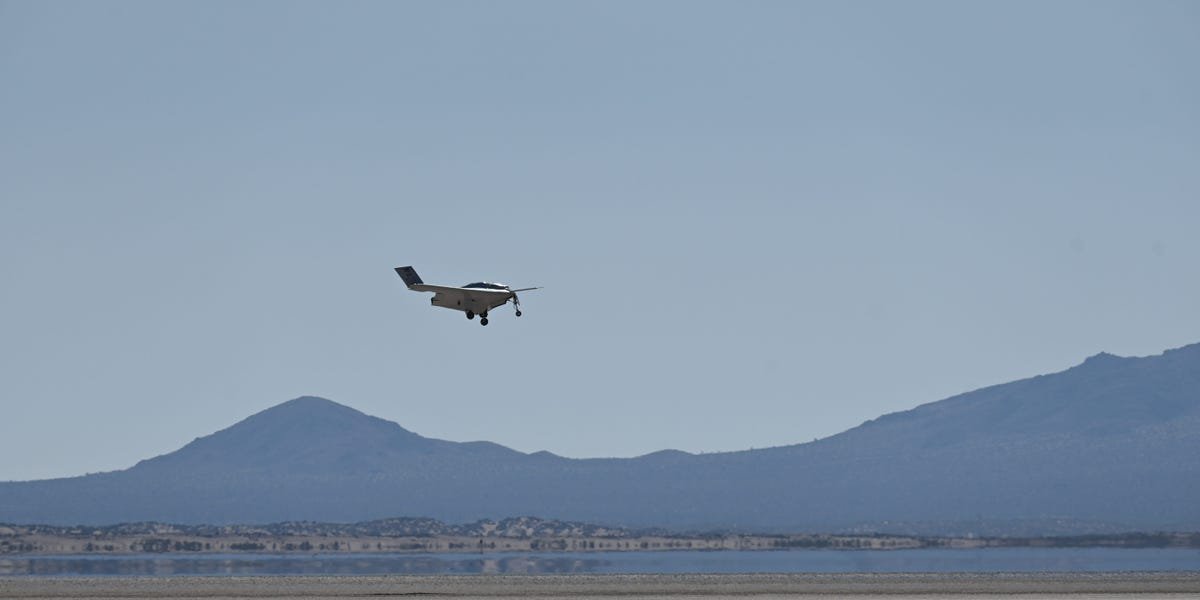


The US military’s defense tech agency said on Wednesday that it flew an experimental hybrid-electric drone called the XRQ-73, testing a next-gen propulsion system for longer, quieter flight.
The drone, built by Northrop Grumman, flew at Edwards Air Force Base in California in April, the Defense Advanced Research Projects Agency said in a statement.
The new tech uses a mix of electric and jet-fuel propulsion, which is meant to help the drone burn less fuel and reduce emissions for better stealth. Most medium- to long-range military drones use jet engines or propellers.
“This milestone is not just about a single flight,” said Lt. Col. Clark McGehee, the program’s manager. “The architecture proven by the XRQ-73 paves the way for new types of mission systems and delivered effects.”
Photos of the XRQ-73 show that its exterior design loosely resembles that of other stealth aircraft, such as Northrop Grumman’s B-2 Spirit bomber or Lockheed Martin’s RQ-170 Sentinel drone.
Unlike those aircraft, however, the tailless XRQ-73 features winglets at the ends of each wing. A front-facing camera is also visible near the XRQ-73’s nose.
It’s unclear how quickly the US plans to move forward with the XRQ-73. DARPA has said that the drone’s program is designed to “provide a minimum viable product to meet an urgent operational need.”
However, the agency also said in 2024 that it had expected the XRQ-73’s first flight to occur at the end of that year, indicating that the drone’s development was delayed.
The XRQ-73 is a Group-3 drone, intended as a medium-sized tactical system that flies below 18,000 feet and at speeds between 115 and 287 mph. DARPA said it weighs about 1,250 pounds.
Its program is part of a contract from the Air Force Research Laboratory called the Great Horned Owl, which aims to develop an efficient, ultra-stealthy recon drone.
A similarly designed but smaller, earlier version of the XRQ-73, called the XRQ-72A, was in the works since at least 2010. But it’s unclear if it ever flew.
When contacted, Northrop Grumman pointed Business Insider to DARPA, which did not immediately respond to a request for comment sent outside regular business hours.
Read the full article here