








Traditional “marketing” is now only a sliver of the CMO job.
The top marketers of 2026 are part brand-builder, part data scientist, part cultural weathervane, and part AI wrangler.
“It used to be one, two, or three-dimensional,” Comcast’s Jon Gieselman said of marketing. “Now, it feels like it’s 20 or 25, and you increasingly have to become more of a technologist these days to really drive the business in a way that’s going to keep up with everyone else.”
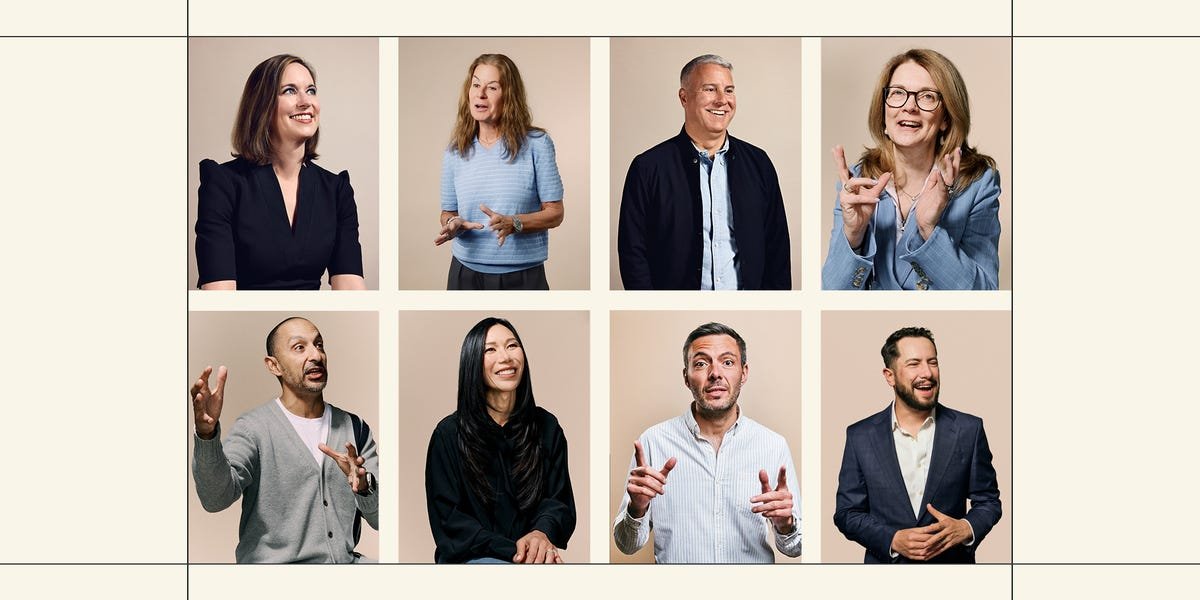
Business Insider’s annual list of the most innovative CMOs spotlights marketers, including Gieselman, who are pushing their brands into new territory and delivering measurable business results.
This year’s 25-person class made insurance funny, fruit feel premium, “dad sneakers” cool again, and a green language-learning owl impossible to ignore.
It features marketers who harnessed AI to personalize soda ads, reshape search strategies, and shrink campaign production times.
AI is “empowering marketers to be more strategic, more creative, more connected to the people they serve,” said Coach’s Joon Silverstein, another of this year’s selections.
The list features some execs who don’t have CMO job titles — such as chief brand officers and chief growth officers — but are the most senior marketers at their organizations. It was drawn from our reporting and more than 100 nominations from industry insiders.
Scroll down to reveal Business Insider’s most innovative CMOs of 2026, listed in alphabetical order by last name.
Asad Ayaz, Disney
Ayaz has overseen marketing for some of the world’s biggest entertainment launches in the past year, helping Disney become the only studio to top $6.5 billion at the global box office.
The run was fueled by blockbuster campaigns for “Lilo & Stitch,” “Zootopia 2,” and “Avatar: Fire and Ash.”
Ayaz’s approach paired large-scale storytelling with fan-driven activations designed to turn movie releases into cultural moments. The “Lilo & Stitch” campaign made Stitch a viral sensation by having the mischievous character crash real-life and virtual environments. Meanwhile, “Zootopia 2” expanded the film’s reach into everyday culture through brand partnerships and fan activations, especially in China, where it broke Hollywood box-office records.
For “Avatar: Fire and Ash,” immersive experiences — including a 27-foot installation of the Nightwraith predator creature at the film’s premieres and major sports broadcasts — brought Pandora to life for audiences worldwide.
Ayaz also led the global campaign for Disneyland Resort’s 70th anniversary, using immersive experiences and cross-platform storytelling to celebrate Disney’s legacy across generations.
In January, Ayaz was named Disney’s first chief marketing and brand officer to unify its messaging across Disney Entertainment, Disney Experiences, and ESPN, the first time the company’s marketing across film, streaming, parks, sports, consumer products, and global brand initiatives had been led by a single person. It was another first for Ayaz, who had become the company’s first chief brand officer in 2023, and signaled continuity as the company transitioned in March to a new CEO, Josh D’Amaro.
Shortly after that promotion, Ayaz presided over a marketing restructuring and layoffs, part of companywide cuts, that he said would let the company better serve customers.
Ayaz is also guiding Disney’s upcoming participation in the America 250 campaign and the ongoing expansion of the D23 fan community.
Mary Beech, Thorne
Beech’s role, as chief growth officer, combines marketing, e-commerce, and the wellness brand’s international expansion. After experiencing a heart attack at 34, Beech redefined her relationship with her health — an experience that informs her strategic lens and leadership philosophy.
Beech’s marketing strategy builds on the insight that while consumers are more invested in their health than ever, they are increasingly overwhelmed by — and often distrustful of — the information available to them. She saw this gap as an opportunity to reposition Thorne from simply a supplements brand to a health and wellness resource for younger consumers.
Under her leadership, the company has expanded into new partnerships, including with the Miami Open and Unrivaled, the three-on-three women’s professional basketball league. Recent brand ambassadors have included the NBA player Jrue Holiday, tennis player Ben Shelton, and singer-songwriter Ciara.
In April, Thorne launched a campaign featuring ballet dancer Misty Copeland and actor Lana Condor to spotlight two of the most-searched areas of women’s health: libido and perimenopause. It honed in on their own realities with both, while leaning on Thorne’s scientific expertise, to help women feel supported — and to promote its Perimenopause Complete and Women’s Libido Boost formulations.
Thorne surpassed $1 billion in retail sales in 2025. This year, Beech is focused on extending this momentum, including expanding the company’s AI-powered personal wellness offerings.
Kipp Bodnar, HubSpot
Bodnar saw early on that AI search and chatbots were redefining how consumers discovered brands.
He’s the driving force behind HubSpot’s answer-engine optimization strategy and has become an influencer in the field in his own right by chronicling his experiments with AI.
For example, he published a blog post walking through exactly how he used ChatGPT to plan an entire marketing campaign during a single flight, sharing the prompts, the process, and the results.
Inside HubSpot, Bodnar’s AEO strategy is paying off. The company said leads sourced from AI channels convert three times better than those from traditional search. HubSpot ranked third for citations on AI platforms within the “business and professional services category” in Semrush’s annual brand visibility index report, published in August.
HubSpot grew its active customer base by 16% in 2025, while full-year revenue grew 19% to $3.13 billion.
Last summer, Bodnar commissioned a dedicated AI transformation workstream within the marketing department as part of a plan to make every marketer an AI practitioner. The project involved role-specific AI training and the creation of a center of excellence so the entire team could share what was working.
Bodnar has also helped HubSpot take on a more expansive approach to customer acquisition. The company has launched more than 10 YouTube channels and scaled its LinkedIn presence.
Bodnar shares how marketing industry shifts are unfolding on the “Marketing Against the Grain” podcast he cohosts, which has more than 90,000 YouTube subscribers.
Andrea Brimmer, Ally Financial
Brimmer has been an evangelist for using investments in women’s sports to grow Ally’s business. She had aimed to spend equally on women’s and men’s sports by 2027, and reached that goal in 2026 — a full year ahead of schedule.
As the first partner of Unrivaled, the women’s three-on-three pro basketball league, Brimmer helped attract 20 other sponsors. A Hansa study for Ally found that women’s sports fans are 50% more likely than the general public to have a favorable opinion of Ally.
She’s also sought to make banking more than a transactional experience with “Money Roots,” a free financial education program Ally launched in August 2024 to help people understand their psychological relationship with money. The Money Roots program reached 3,364 participants in 2025.
Elsewhere, Brimmer’s team used a proprietary company AI tool to cut the time to produce ad campaigns and content by an average of 34%.
Looking ahead, Brimmer is expanding Ally’s Refer a Friend program, which rolled out in 2025 following a 2024 pilot. The bank saw that customers referred by a friend were three times as likely to refer someone else as those who became customers in other ways.
Leandro Barreto, Unilever
Barreto, in January, became the youngest CMO in Unilever’s history, and also its first Latino CMO.
He’s been transforming Unilever’s marketing using an approach he calls “poetry and plumbing,” fusing cultural creativity with the systems, data, and AI capabilities required to power it.
A defining change under Barreto’s leadership has been the shift from broadcast advertising to a greater emphasis on social media and influencer marketing. Unilever CEO Fernando Fernández set the bar high, outlining last year a strategy for the consumer-goods company to work with 20 times as many influencers as it had previously.
As of December, Unilever said it was working with “close to 300,000 influencers” around the world. Barreto has been redesigning the marketing organization to embed community managers, influencer specialists, and content leaders across its top 24 markets.
Barreto’s efforts on Vaseline are an example of his strategy in action. Building on its award-winning “Vaseline Verified” campaign, in which Unilever’s experts tested viral Vaseline hacks in the lab, Barreto and the team launched Vaseline Originals, turning ideas from the online community into real products. Those included a brow tamer, inspired by beauty creator Jen Chae, and highlighter jelly, building upon YouTuber Lauren Luke’s primer hack. Both creators launched the new products in March on TikTok Live, where they sold out in minutes.
Earlier this year, Unilever’s Dove brand asked Redditors for their unfiltered feedback on its Intensive Repair 10-in-1 Serum mask and published a selection, positive and negative (“I hate the smell, it’s like an old lady”) on New York billboards.
The Unilever marketing team is also taking advantage of its recently announced five-year partnership with Google Cloud, using tools like Vertex AI and its Gemini models.
Craig Brommers, American Eagle
“I do think that ‘Sydney Sweeney has great jeans’ will be on my marketing gravestone — it is a once-in-a-lifetime campaign for the ages,” Brommers recently told Business Insider in an interview.
It was certainly among the most talked-about ads of the last year. The July campaign, which leaned on punny wordplay and unsubtle glimpses of the “Euphoria” actor’s cleavage, drew ire from online critics who said the ads were “regressive” and “offensive,” and a “eugenics dog whistle.”
Brommers and his team didn’t apologize or pull the campaign. They stuck to their guns and released a statement saying the campaign “is and always was about the jeans.”
Their confidence paid off. On its next earnings call, American Eagle credited the “great jeans” campaign and its Travis Kelce collab for driving an “uptick in customer awareness, engagement, and comparable sales.” Its stock soared.
“The important thing for a CMO to remember in those particular times is to look at hard facts as opposed to just listening to social media and the mainstream media,” Brommers told Business Insider. “What we saw was business growth.”
Round two of American Eagle’s Sweeney campaign launched in April, with an ad that nodded to last year’s controversy.
American Eagle also credited Brommers’ other high-profile campaigns, including partnerships with Travis Kelce and Martha Stewart for holiday ads, for getting the fashion brand “back on the map” and helping it reach a record $5.5 billion in revenue in fiscal 2025, which ended January 2026, up 3% on the prior year.
More recently, American Eagle has leaned into the popularity of country music among Gen Z, sponsoring the Stagecoach music festival and launching a campaign with the musician Ella Langley, the week her song “Choosin’ Texas” topped the charts. Brommers said in a recent interview that shoppers were visiting American Eagle’s stores and specifically asking for the jeans Langley wears in the ads.
Brommers has pivoted toward performance marketing tactics following a sales decline at the American Eagle namesake brand during the spring season. Influencer marketing is playing a key role. The company recently said the AE Creator Community, which launched in February, is exceeding expectations.
Kim Chappell, Bobbie
Chappell has helped make Bobbie one of the fastest-growing baby formula brands by combining humor and advocacy.
Chappell led the company’s largest marketing initiative to date, “The B is for Bobbie,” featuring Cardi B as Bobbie’s “chief confidence officer,” giving her unfiltered encouragement to parents. It contrasted with the sanitized ads typical of baby formula. The company said the campaign boosted trust among Gen Z parents by 147% and generated 1.8 billion press and social media impressions in its first week, citing Morning Consult data.
The campaign also invited parents to share stories about paid leave and maternal health via a hotline, resulting in more than 1,000 voicemails that Bobbie delivered to lawmakers to lobby for a package of maternal health bills.
Chappell said the company feels responsible for advocating for systemic issues that impact all new parents, which she considers bipartisan.
“That will not change,” she said. “At the same time, I think it’s also important that you don’t take yourselves too seriously. Levity in parenthood is important. It’s very intense and can be a lonely time.”
Under Chappell’s leadership, Bobbie expanded from a direct-to-consumer subscription business into retail distribution at Target, Walmart, and Costco, seeing triple-digit retail growth year over year in 2025. Bobbie cited Nielsen data showing that it was Target’s fastest-growing formula brand in 2025. It also pointed to Nielsen data showing that 90% of Costco shoppers who purchased Bobbie were new to the brand, highlighting its ability to appeal to shoppers beyond the coasts.
Chappell said Costco speaks well to the “price-sensitive, crunchy mom” and that Bobbie was “filling that space in the formula aisle that wasn’t previously there.”
Chappell also led Bobbie’s Transparency Tracker, an initiative that lets customers look up quality and safety data for an individual can of formula, as well as Bobbie for Change, its advocacy arm that lobbies on issues such as paid leave, maternal health, and feeding equity.
Kristyn Cook, State Farm
Cook shook up State Farm’s ads approach, using sports and humor to win over younger people who are ditching traditional insurers for lower-priced competitors.
Cook — whose parents were State Farm agents and who worked as one herself early in her career — oversees over 18,000 independent agents and thousands of employees.
She ran contextually relevant campaigns like “With the Assist” that aired around women’s sports and featured star athletes like Caitlin Clark and JuJu Watkins, showing how the insurer can make everyday life easier.
As part of its “Not the Same” campaign, State Farm used Jason Bateman to show that just like Bateman isn’t Batman, not all insurance is created equal. For a Super Bowl LX version of the ad, Cook enlisted stars like Jon Bon Jovi and Keegan-Michael Key to broaden the ad’s appeal. The Big Game ad ranked 13 out of 54 with viewers, per USA Today’s Ad Meter, during advertising’s biggest showcase.
Cook has leaned on top creators to win Gen Z. She brought State Farm’s original reality TV competition show “Gamerhood” from Twitch and YouTube to Amazon’s Prime Video, tapping Kai Cenat and other creators and streamers to face off in gaming and real-life challenges. That season, the show’s fourth, increased Gen Z’s interactions with the brand by nearly 13%, according to Morning Consult data.
State Farm also announced its first deal with Netflix, a co-branded campaign starring the characters of the streamer’s basketball comedy, “Running Point.”
Looking ahead, Cook plans to continue “With the Assist” with more NBA and WNBA partnerships while bringing back “Gamerhood” for a fifth season.
Chris Davis, New Balance
While sneaker giants like Nike and Adidas battle newcomers, including On and Hoka, the company known for the “dad shoe” is growing strong.
The 120-year-old private company reported that 2025 sales grew 19% to $9.2 billion as Nike lost market share. New Balance revealed that since 2020 it’s grown sales by 180%.
Davis, who was appointed CMO in 2020, shifted the company’s focus from direct-response ads to brand marketing, realizing he had to build an emotional connection with customers. He has embarked on an aggressive store-opening plan — which included opening 80 new locations in 2025 — and didn’t shy away from raising prices.
He’s forged partnerships with a small, elite group of star athletes, including the Los Angeles Dodgers’ Shohei Ohtani, tennis’ Coco Gauff, Dallas Mavericks star Cooper Flagg, and Buffalo Bills quarterback Josh Allen.
The dad shoe has been having a moment, with even Gucci and Balenciaga jumping in with their own versions. Davis has pushed New Balance into pop culture through collaborations with fashion house Miu Miu and athletes, including Gauff.
Jon Gieselman, Comcast/Xfinity
Gieselman gave the broadband company a shot of entertainment and cultural relevance, a shift in a category historically driven by pricing and product specs.
As head of growth strategy for Comcast’s Xfinity’s residential connectivity businesses, he oversees product strategy, marketing, sales, acquisition, retention, and base management.
Soon after joining in 2025, he launched the Xfinity “Imagine That” campaign, which involved a series of ads that leveraged NBCUniversal’s iconic films and characters, and helped raise the brand’s Ace Metrix score — which measures ads based on factors deemed likely to influence consumer behavior, including relevance and likeability — to its highest level of the year.
One ad imagined Frankenstein discovering connection through Xfinity technology. Comcast estimated the ad reached nearly 100 million people and it delivered an Ace Metrix score more than 90 points above its 2025 average of 540.
A “Wicked: For Good” campaign had Jeff Goldblum bringing “Oz-level magic” into his home with Xfinity technology, with Goldblum and costars Ariana Grande and Cynthia Erivo amplifying the ad on social media.
Gieselman’s most visible moment came with Xfinity’s first Super Bowl ad in 2026. The spot reunited the stars of 1993’s “Jurassic Park” and depicted Xfinity preventing the park’s collapse. It ranked in the Top 10 of USA Today’s Ad Meter for the game.
Gieselman followed up the Super Bowl ad with stunts like dinosaur projections across San Francisco’s Hobart Building, a motion-sensing T. rex billboard on Market Street, and a “live” velociraptor roaming the city.
Sean Gilpin, Hyundai Motor America
Hyundai has been leaning into electrification, and Gilpin has been helping the company navigate an uncertain time for the broader EV market.
Hyundai achieved its third straight year of record sales, placing heavy emphasis on its hybrid and EV portfolio in its marketing. Its 8% sales lift outperformed the wider US vehicle market, which grew 2% last year. Electrified vehicles accounted for 30% of Hyundai’s retail sales, while hybrid sales were up 36% year over year.
Gilpin has been raising the bar for how the Hyundai brand shows up during big media moments.
This summer, during the FIFA World Cup, Hyundai’s “Next Starts Now” campaign includes TV ads during the games featuring the South Korean soccer star Son Heung-min and a Boston Dynamics Atlas robot, partnerships with key influencers, out-of-home buys, digital ads, and in-person fan experiences.
Earlier this year, to launch the Palisade Hybrid, Hyundai debuted its “Make Everyday Epic” campaign starring actor and filmmaker John Krasinski. The campaign, which launched during the NFL conference championship weekend, reflected Gilpin’s efforts to shift Hyundai’s marketing toward more premium, cinematic storytelling.
He’s also embraced unusual marketing formats. Rather than shooting a traditional “vehicle walkaround” to launch the Ioniq 9, Hyundai created an escape room competition in which three families raced to solve puzzles to win the car as a prize. The campaign generated 2.4 million total views across all of Hyundai’s social channels. It was a particular hit on YouTube, with the three episodes delivering an overall view count 569% above the average for Hyundai’s long-form content on the platform.
“Sean is not afraid to make bold, smart decisions that many other marketers would shy away from,” said Jason Sperling, chief creative officer at Innocean USA, Hyundai’s creative agency. “He understands both the necessity and potential of shaking up long-standing processes — and secures the support to make it happen.”
Fadi Karam, Fruitist
Fresh fruit and berries have long been considered a commoditized category, where brands barely matter, and loyalty is low. Using his experience leading marketing for major brands, including KitKat, San Pellegrino, and Perrier, Karam set out to prove that branding could matter in the fresh produce space, too. (Fruitist rebranded from Agrovision in April 2025.)
Under Karam, Fruitist profiled a dataset of 18 million consumers using AI algorithms and developed a set of customer segmentations that showed a small share of shoppers drove a disproportionate share of berry consumption.
From there, the company built a person-based identity system using Dentsu’s Merkury tool. On top of this sits an AI-based predictive engine that learns from internal and external data to identify who to target, how to personalize ads to them, and where the company should invest its marketing dollars.
One example of the data strategy at work was this year’s launch of Fruitist’s super-premium berry line, which was informed by profiling that identified a customer willing to pay materially more for exceptional quality. Within a few weeks, sales per store were roughly as strong as Fruitist’s best-selling “Jumbo” berry product, per Nielsen data, even though the Jumbo product had been in the market for five years.
Karam has also been working to expand Fruitist beyond its loyal customers to new, younger consumers. In August, Fruitist launched Snack Cups to make fruit easier to carry in lunchboxes and gym bags. He formed partnerships to link Fruitist to health, performance, and culture, including with the Brain Health Initiative, World Economic Forum, USC Athletics, and Chicago Bears quarterback Caleb Williams, who joined the company as both an investor and brand ambassador.
In 2025, Fruitist said it grew to more than $400 million in annual revenue. The company declined to share the 2024 figure. It also raised a $150 million investment round, led by JP Morgan Asset Management. Fruitist was the fastest-growing berry brand in the US, per NielsenIQ’s Retail Measurement data, for the 12 months ending September 27, 2025.
Later this year, Karam will launch Fruitist’s first direct-to-consumer channel, allowing consumers to order fresh blueberries and have them delivered to their homes the next day.
Mark Kirkham, PepsiCo Beverages US
Kirkham, who looks after Pepsi, Gatorade, Mountain Dew, and Poppi, has been pushing PepsiCo into new categories while keeping its classic soda top of mind.
With young people trading sugary drinks for “better-for-you” options, Kirkham led PepsiCo’s bet on Pepsi Prebiotic Cola, which the company considers its biggest innovation in 20 years.
PepsiCo said a limited, online-only Black Friday launch in fall 2025 sold out in under 30 hours and that initial sales have been strong since it rolled out to major retailers in February.
Pepsi Prebiotic shares characteristics of PepsiCo’s recently acquired Poppi, whose ad campaigns have helped nearly double awareness of the brand, from 28% to 48% in 2025, according to PepsiCo’s internal tracking.
Kirkham has made other moves to jump on the performance-drink trend, introducing protein-enhanced versions of Starbucks ready-to-drink products, Propel, and more.
He’s also reinvigorated PepsiCo’s mainstay drinks. Pepsi Zero Sugar starred in a Super Bowl ad, “The Choice,” that put Coke’s polar bear mascot in a blind taste test in a throwback to the original 1975 “Pepsi Challenge” campaign.
The ad played well with audiences and critics and helped make Pepsi Zero Sugar one of the company’s fastest-growing drinks. The company said Pepsi Zero Sugar grew 30.8% in 2025, nearly double the zero-sugar cola category overall, and reached more than 1 million new households.
Lara Krug, Kansas City Chiefs
America’s most famous couple: Taylor Swift and Travis Kelce.
Krug, who became the Chiefs’ first CMO in 2021 after roles at AB InBev and L’Oréal, oversees everything from brand marketing, digital, social, and content production to influencer partnerships, live events, international growth, and consumer products.
Under her leadership, the Chiefs crossed 1 million subscribers on its official YouTube channel at the end of 2024, making it the first NFL team — and the second US pro sports team — to hit the milestone. The team added 4 million social followers in 2025, ranking first in TikTok followers among NFL teams.
Krug also seized on the cultural momentum sparked by Taylor Swift’s appearances at Chiefs games, helping broaden the franchise’s appeal with women and casual fans. She partnered with Hallmark Media on “Holiday Touchdown: A Chiefs Love Story,” a 2024 Christmas TV rom-com that drew bigger audiences than many college football games. She then helped launch Foolish Club Studios, the Chiefs’ in-house production arm focused on scripted and unscripted programming. Today, the team said, women make up 57% of the Chiefs’ fan base — the highest share in the NFL.
Krug has helped drive the Chiefs’ international expansion. Through the NFL’s Global Markets Program that gives teams marketing rights to boost overseas awareness and fan growth, she expanded the Chiefs’ marketing presence in 2025 to the United Kingdom, Ireland, and Spain, for a total of seven countries — one of the broadest international presences in the league.
Josh Line, Yahoo
Line has been amping up Yahoo’s marketing to make the company feel more forward-looking and less of a “remember them” brand.
He’s been elevating Yahoo’s product launches through brand extensions since becoming CMO in March 2025. Last summer, for example, to mark the rollout of a Catch Up feature in Yahoo Mail, Yahoo created an “Anti Email Email Club” streetwear collaboration with Anti Social Social Club. Yahoo said the Yahoo Mail iOS app hit an all-time high for daily active users the day after the campaign launched.
In July, Yahoo played on the dreaded “I hope this email finds you well” phrase with content from TikTok creator Nick Adams and custom merch and giveaways from the Away suitcase brand, including a case with the wording “I hope your email never finds me!”
Later that summer, the internet company teamed up with Liquid Death to create the Yahoo Fantasy Guillotine Leagues fantasy football game, where players competed for survival each week.
Line has also been embedding Yahoo with pop culture. To introduce the new AI-powered planner feature in Yahoo Mail, the company worked with Cardi B on a campaign that tapped into what it dubbed “FOMSI”: Fear of Missing Something Important.
Line said the “Cardi B Busy” spot was Yahoo’s most-viewed, engaged-with, liked, and commented-on ad of all time, and helped drive Yahoo Mail up the app store rankings. The campaign delivered more than 10 million views and 600,000 likes across Yahoo’s TikTok and Instagram accounts in the first two days after its airing.
Yahoo said it has seen a 141% increase in total engagements across its socials — including likes, comments, reposts, shares, and saves — over the last year, demonstrating the brand’s momentum.
Later this year, Line has more activity planned around the recent launch of Scout, Yahoo’s AI answer engine. In May, Yahoo launched a Mother’s Day ad campaign on Instagram and TikTok based on the insight that parents field dozens of questions a day from their kids.
“We are at the beginning of the journey of Yahoo getting back out there from a marketing perspective,” Line told Business Insider.
Kelly Mahoney, Ulta Beauty
Mahoney is making loyalty and personalization Ulta Beauty’s key growth engines, with a helping hand from AI.
She’s on a mission to grow the Ulta Beauty Rewards loyalty program to 50 million members by 2028, up from 46.7 million in January. Ulta Beauty Rewards now represents roughly 95% of the company’s total sales and has a 70% retention rate.
Ulta Beauty delivered a strong sales rebound in its 2025 fiscal year, which ended in January, up 9.7% to $12.4 billion, after a sluggish 2024. On its March earnings call, the Ulta leadership team credited marketing several times, with CEO Kecia Steelman saying the company had “reinvigorated” its brand.
Mahoney is transforming the loyalty program into what she calls a “relationship engine,” using first-party data and AI to personalize the experience to each member and anticipate their needs.
Through Ulta Beauty’s AI Center of Excellence and partnerships with Adobe and Google’s Gemini, Mahoney is making the discovery of new beauty and wellness products more intuitive. Experiences include conversational search, its GLAMlab virtual try-ons, and predictive recommendations powered by Ulta’s proprietary “Beauty Graph.” Elsewhere, it recently launched on TikTok Shop as a new sales channel.
Mahoney is dedicated to connecting Ulta with key cultural moments. Rather than a traditional broadcast ad buy during this year’s Super Bowl, Ulta styled Cardi B’s makeup look for her appearance during Bad Bunny’s halftime show. Cardi B posted a “get ready with me” pre-game video on her Instagram. Ulta created shoppable buying guides and linked up with top creators for content and other activations at the TikTok Clubhouse, held at 1 Hotel in San Francisco.
Ulta said the push drove more than 81 million impressions on social media and an estimated $4 million in PR and social media earned media value — a calculation of how much attention it created organically without needing to use paid advertising.
Looking ahead, Mahoney is expanding the “Wellness by Ulta” in-store concept, focused on education-led holistic well-being. She’s also leaning into the growing cohort of Gen Alpha beauty and wellness consumers with age-appropriate experiences that let parents and guardians play an active role, such as in-store birthday parties and dermatologist-approved product guidance.
On the AI front, Mahoney wants to expand Ulta Beauty’s presence in the agentic commerce space, where AI agents can help drive brand discovery. Ulta was one of the first 20 retailers to partner with Google’s Universal Commerce Protocol.
Vineet Mehra, Chime
Mehra is showing how marketers can operationalize AI throughout their entire marketing and customer experience operations — and he’s vocal about sharing the results with the wider industry.
He told Business Insider that AI is enabling a “Golden Age of marketing” because marketers can quickly turn their ideas into actual projects.
Under Mehra, the company created an AI-powered creative and content production platform that embeds tools such as Midjourney, Runway, and Veo 3. The platform has helped Chime cut its reliance on agencies. In the past 12 months, Chime reduced the time to produce creative campaigns by about 60% and production costs by roughly 30%, Mehra said.
Mehra describes his approach as “performance storytelling” — creating brand marketing that resonates with consumers while delivering measurable business results.
In September last year, Chime launched its in-house studio, In the Green, which produces branded entertainment rooted in subcultures such as fashion, sports, and gaming.
For example, Chime debuted an original YouTube series called “Mama, I Made It,” which showcased people’s financial success through the lens of their moms. The premiere episode featured the artist Big Sean, who also performed a free hometown concert in Detroit to mark the launch. Other guests have included the basketball player Cooper Flagg, the YouTuber and actor Lilly Singh, and singer-songwriter GIVĒON — as well as their mothers.
“It’s been a huge win for us when we take not just subcultures, but we sort of mash them together and tell stories in that way,” Mehra said.
In December, Mehra was promoted to become the company’s chief growth officer, reflecting his success in translating brand awareness into real business results. Chime grew revenue by 31% to reach $2.2 billion in 2025. Active members grew 19% year over year, which represented an increase of 1.5 million.
Jeff Miller, Anduril Industries
Anduril’s first marketing VP took an unconventional approach to promoting the defense tech company: telling people not to work there.
First, social media posts appeared from an “employee” complaining about the rigors of their job. Then, billboards with a graffiti-tagged “don’t work at Anduril” message popped up in key engineering markets. Company recruiters published synchronized “dontworkatanduril” banners on LinkedIn. A microsite featured a manifesto from an actual employee about the realities of working at Anduril. The point was that working at Anduril is tough and isn’t for everyone.
The results were dramatic: a 30% increase in new role applications, 500,000 searches to the company’s LinkedIn page, and more than 10 million organic views in the first week across Anduril’s social channels.
Anduril employees will star in the campaign’s next chapter, debuting in August, which will highlight their actual work and stories.
Miller has also used unexpected partnerships and cultural moments to elevate the Palmer Luckey-founded company, an approach rarely seen in the defense industry, which typically takes a low-profile approach to marketing. Under Miller, Anduril became the premier sponsor of The Ohio State University’s athletics department and launched the AI Grand Prix, a global autonomous drone racing competition that the company said attracted 2,700-plus teams from 93 countries.
His team’s cinematic film about Fury, Anduril’s autonomous fighter jet, became the company’s most-watched piece of content, garnering 20 million views. It later screened in theaters nationwide before the blockbuster “Project Hail Mary.” Anduril also displayed an image of the jet next to a replica of the Wright Flyer at Dayton International Airport with the copy “FURY: actual size” to call attention to the Fury’s relatively small size.
Under Orssaud, Duolingo became a pioneer of culture- and social-first marketing, setting a playbook that other brands have emulated.
Orssaud encourages his team to treat the comments section as their creative brief, using the insights from how people react to Duolingo’s marketing to shape ideas and adapt campaigns in real time.
One of the clearest examples of Orssaud’s impact this year was Duolingo’s Super Bowl campaign. The company didn’t buy a traditional big game spot. Once Bad Bunny was announced as the halftime performer, Orssaud and his team launched a multi-phase push that included taking over a New York subway car to encourage passengers to brush up on their Spanish. Duolingo also ran 15-second ads during the AFC and NFC championships, featuring its mascot dressed as Bad Bunny, teaching Spanish phrases from the rapper’s lyrics. Duolingo said the campaign led to a 35% week-over-week increase in Spanish-language learning on the app after the Super Bowl aired.
Duolingo reached 50 million daily active users in 2025 and generated $1 billion in annual bookings for the first time. This year, the company is doubling down on user acquisition, including by introducing new courses in areas like music and chess.
Looking ahead, Orssaud recently told Business Insider that he’s planning to dial back some of Duolingo’s “unhinged” marketing tactics, recognizing that there’s a risk in becoming increasingly risqué to maintain the shock factor. Orssaud wants to recalibrate Duolingo’s marketing output from “80% unhinged, 20% wholesome” toward a more balanced approach.
Duolingo is in the early stages of building a “creator army.” It’s begun contacting creators to encourage them to become paid ambassadors and create new TikTok “burner accounts” dedicated to content around the Duolingo brand. User-generated content is where the reach now happens on algorithmically driven social media apps like TikTok, Orssaud said.
He’s also focusing on boosting Duolingo’s brand visibility in AI search, such as by building a team dedicated to Reddit, one of the top-cited sources in AI answers.
Drew Panayiotou, Keurig Dr Pepper
Panayiotou has leaned on social media trends and fan data to expand on the success of Dr Pepper, which has become the No. 2-selling soda.
Blending football viewership data from Disney with its soda sales data, Panayiotou led Dr Pepper to make thousands of AI-personalized ads tailored to people’s team loyalties. The company said the Fansville campaign outperformed its broader national campaign, citing Circana and internal company data.
The former Pfizer and Google marketer, who joined Keurig Dr Pepper in late 2024, has also bet big on cultural moments. Building on Dr Pepper’s push into the dirty soda trend, where flavors and other additions are mixed into a base soda, he promoted the launch of Dr Pepper Blackberry in 2025.
And when Romeo Bingham made a Dr Pepper jingle that went viral on TikTok, Dr Pepper worked with the content creator to capitalize, turning it into an ad that ran during the College Football Playoff National Championship.
Elizabeth Rutledge, American Express
Rutledge wants consumers to end their evenings thinking “that was only possible because of American Express.”
Under Rutledge’s leadership, Amex has forged dozens of partnerships across entertainment, sports, and music.
In March of this year, for example, Amex became the NFL’s official payments partner, giving card members access to tickets, perks, and other experiences.
“Eighty percent of our US consumer card members have said that they’re sports fans, so I want to be there with them in those moments that matter, whether it’s in real life or on the couch,” Rutledge told Business Insider in an interview.
This year, Amex also built on a long-running partnership with Harry Styles to give card members ticket access and other experiences tied to his “Kiss All the Time. Disco, Occasionally” album launch and his global tour.
Rutledge’s work is resonating with younger audiences. In 2025, Amex posted record revenue of $72 billion, up 10% on the prior year, fueled in part by the strong demand for these types of experiences. Millennial and Gen Z consumers accounted for 65% of its new account openings.
Amex has also been growing its internal creative capabilities through its in-house creative agency, OnBrand. Under Rutledge, the team worked on projects including partnering with F1 Academy to develop a custom livery for a car and a race suit design for Amex’s driver. Additionally, it consulted on the designs for the American Express Centurion Lounge Network, including the new lounge concept Sidecar by The Centurion Lounge.
Rutledge is a champion of developing marketing talent through the Amex Marketing U internal training and career development program, which has convened more than 10,000 participants worldwide.
Joon Silverstein, Coach
Coach is on a tear.
Silverstein has helped revitalize the 85-year-old fashion label for a Gen Z audience that’s lapping up its famous bags, totes, and a growing range of clothing and accessories.
Silverstein leans on her background as an anthropologist to get inside the minds of younger consumers and understand what drives them. She’s also meeting them where they’re at: YouTube accounts for nearly 50% of Coach’s overall media investment, per a Coach spokesperson.
Spotting a desire among its target audience for a return to reading physical books, in February, Silverstein and the team launched “Explore Your Story,” a campaign the company described as its biggest to date. Tapping into the connections between fashion and literature, it featured high-profile brand ambassadors, including the actor Elle Fanning and South Korean rapper Soyeon. Coach created 12 miniature, readable book charms designed to be attached to bag straps. The brand toured the campaign with pop-ups on college campuses and created “Coach Book Nooks” in stores.
Coach said the campaign drove more than 15 million organic engagements and 450,000 user-generated posts. The company said “top-of-mind awareness” — a measure of whether people in surveys mentioned Coach first, unprompted, when asked to list handbag brands — grew by 60%.
Parent company Tapestry called out Coach’s brand-building initiatives for helping the company exceed its 2025 fiscal-year targets. Coach grew revenue by 10% to $5.6 billion in the fiscal year ended June 2025, bringing in 4.6 million new customers across North America. About 70% of its new customers were Gen Z and millennials, the company said. In the most recent quarter, ended March 28, Coach’s revenue grew 31% year over year.
“Coach is redefining what’s possible when you blend consumer obsession with disciplined brand building and creativity, and this is translating into compounding and durable growth,” Tapestry CEO Joanne Crevoiserat said last year.
Allison Stransky, Samsung Electronics America
Stransky is helping Samsung try to win over AI skeptics and communicate about the technology in ways that feel understandable and useful.
An example of this is Samsung’s “SmartThings Meets AI Home” campaign. Stransky recognized that while consumers were intrigued about AI, many people didn’t understand how it could tangibly improve their day-to-day lives. The campaign focused on relatable moments rather than tech specs and showed how AI can help people experience entertainment, simplify home needs, and support their health and well-being. Samsung said the campaign increased first-time website visitors and contributed to a 5% lift in brand perception — a measure of how favorably consumers view the brand — from March to November 2025, according to a study conducted by its media agency, PCG, in partnership with the research firm Kantar.
Under Stransky’s leadership, Samsung rose to become YouGov’s “Best Global Brand” of 2025, reflecting her efforts to reposition Samsung from a feature-led marketer to a more human brand.
On the performance marketing side of her remit, Stransky led a consolidation of Samsung’s search ads strategy. Samsung said the move increased return on ad spend by 20% year over year in the fourth quarter of 2025 while reducing cost per click by 23%, despite lower budgets.
Looking ahead, Stransky is focused on delivering Samsung’s new marketing vision, “Your Companion to AI Living,” which aims to demonstrate how AI serves as a quietly useful, always-on companion across Samsung’s products, from wearables to TVs.
Fabiola Torres, Gap
Torres has helped restore Gap’s cultural relevance as its business comeback has gained steam.
The former PepsiCo marketer injected dance and music into the affordable basics brand as her team went heavy on partnerships with celebs such as Tyla, Troye Sivan, and Laura Harrier. Gap’s first product collab with a creator, Julia Huynh, became a sensation known as the “hoodie that hoodies.”
Under Torres, Gap has had a knack for tapping cultural moments.
In the summer of 2025, with the denim ad wars in full swing, a Gap ad featuring the global pop girl group Katseye dancing to “Milkshake” by Kelis went viral, with commenters comparing the more inclusive message with American Eagle’s controversial Sydney Sweeney jeans campaign. The company called the “Better in Denim” campaign its most successful ever and said it drove double-digit growth in denim.
Torres uses creators across all phases of the shopping cycle to ultimately drive sales.
“I do believe that creators actually drive a lot of business for us,” she told Business Insider.
Gap rode the momentum of Bad Bunny’s 2026 Super Bowl halftime show, producing a video with Puerto Rican artist Young Miko that became Gap’s first entirely Spanish-language ad.
Elsewhere, Torres’ team led tie-ups with chic brands like Dôen and Cult Gaia to reach different shopper groups.
After years of decline, the Gap brand posted its ninth straight quarter of sales growth in the first quarter. The brand is also winning over Gen Z — ranking second among 20 brands making significant inroads with that generation, per Ad Age/The Harris Poll.
Kim Utlaut, Build-A-Bear Workshop
Build-A-Bear made a sales comeback over the past several years, and Utlaut has tapped into comfort toys’ appeal to kids and nostalgic adults alike.
Utlaut, who joined in 2024, expanded Build-A-Bear with collaborations with the likes of Harry Potter, Pokémon, Hello Kitty, and the NFL, helping it stay relevant with passionate fan communities and shoppers spanning generations. Leaning into Build-A-Bear’s emotional appeal, she led a social campaign around Valentine’s Day that promoted the toys’ “Record Your Voice” feature to teens and adults.
Adults and teens now represent 40% of the company’s business, up from less than 20% a few years ago. Under her leadership, the company also raised prices selectively without alienating customers.
Build-A-Bear said Utlaut’s strategy helped grow revenue to a record of $124.2 million in the quarter that ended in August 2025. Results have since been mixed: The company lowered its 2026 revenue guidance after year-on-year revenue dipped in the most recent quarter, which it attributed to the uncertain economy and slower store traffic.
Looking ahead, Build-A-Bear Workshop plans to open 50 new stores in 2026 while continuing to expand internationally across more than 36 countries outside the US. The company is also expanding into non-traditional retail spaces such as cruise ships, amusement parks, and hospitality venues, and recently launched its first wholesale partnership with Walmart.
Read the full article here