






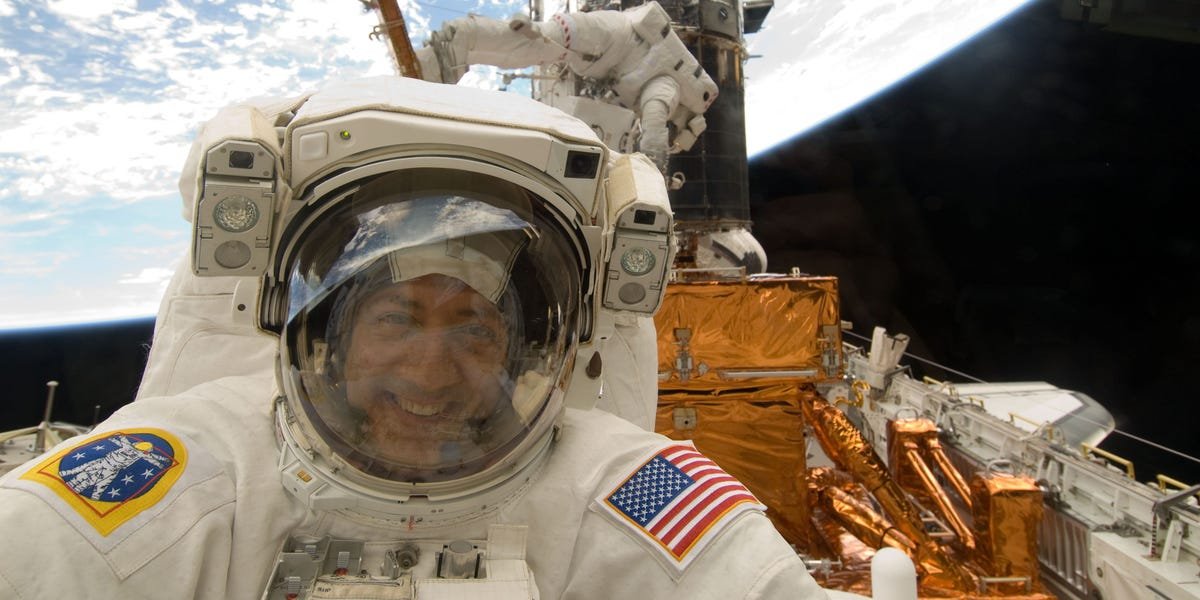


This as-told-to essay is based on a conversation with Mike Massimino, a former NASA astronaut who spent more than 18 years with the agency, flew on two space shuttle missions, and logged more than 30 hours on spacewalks. It has been edited for length and clarity.
The first time I applied to NASA’s astronaut program, I was rejected outright. It happened again when I applied two years later. The third time, NASA invited me to interview.
An initial interview is a big step in the process that starts with thousands of applicants and narrows to about 120 finalists. But it wasn’t meant to be that time, either.
My vision didn’t meet NASA’s standards, and I was medically disqualified. From what I saw, vision issues were the most common reason candidates were disqualified at that stage.
I was disappointed, but I wasn’t ready to stop trying.
I treated the rejection like a problem to solve
After I was disqualified, I started looking for a solution to fix my vision.
One colleague told me to dehydrate before the vision test because it would “flatten the eye” and change how it focuses.
Another told me the opposite — to drink a lot of water because it would make the eye “more viscous” and bend light differently.
Neither seemed like sound advice, but it made me think there might be a way around the problem.
I eventually found a vision training program designed to improve focus. NASA doctors told me they thought it wouldn’t work, but they didn’t see any harm in trying it. So I did.
The exercises involved relaxing my eyes and learning to “focus beyond” an object so it would come into view, rather than forcing my eyes to strain.
I also used undercorrected lenses, so my eyes had to work harder. It was enough to improve my vision by a couple of lines to pass the eye exam and requalify.
When I got the call, I thought it might be a prank
I applied again for the 1996 astronaut class. My fourth attempt. This time, I passed the eye exam, completed the interview process, and then on a Monday that April, I got the call.
I had stayed home that day because I knew the calls were coming. When I picked up, they told me they wanted to make me an astronaut.
The only thing that came out of my mouth was, “Yes, yes, yes.”
After the call, I was so excited, but I wondered if it might have been a prank. So, I called NASA’s astronaut selection office and spoke to the person in charge.
“Yeah, you got the right call. You’re in,” he told me. NASA selected 35 astronauts that year.
What I learned from being turned down
The hardest part of becoming an astronaut wasn’t the training — it was getting the opportunity. There are thousands of qualified applicants, and a lot of the process is out of your control.
For me, the rejections didn’t change my goal; they simply showed me what I needed to work on. Even after I finally got accepted, it still took years before I actually flew in space.
After becoming an astronaut, I spent about two years in training just to qualify. Then I worked technical jobs and kept training before I was assigned to a mission.
It was about four years before I got that first assignment, and then another year and a half before I actually launched.
The whole process taught me patience. You don’t get everything right away, even when you finally get your foot in the door.
It also taught me to focus on what I could control. I couldn’t control how many people applied or who NASA selected. But I could control how prepared I was and how I responded when something didn’t go my way.
Looking back, those rejections were part of the process. Without them, I wouldn’t have pushed myself the way I did to get there.
Read the full article here