






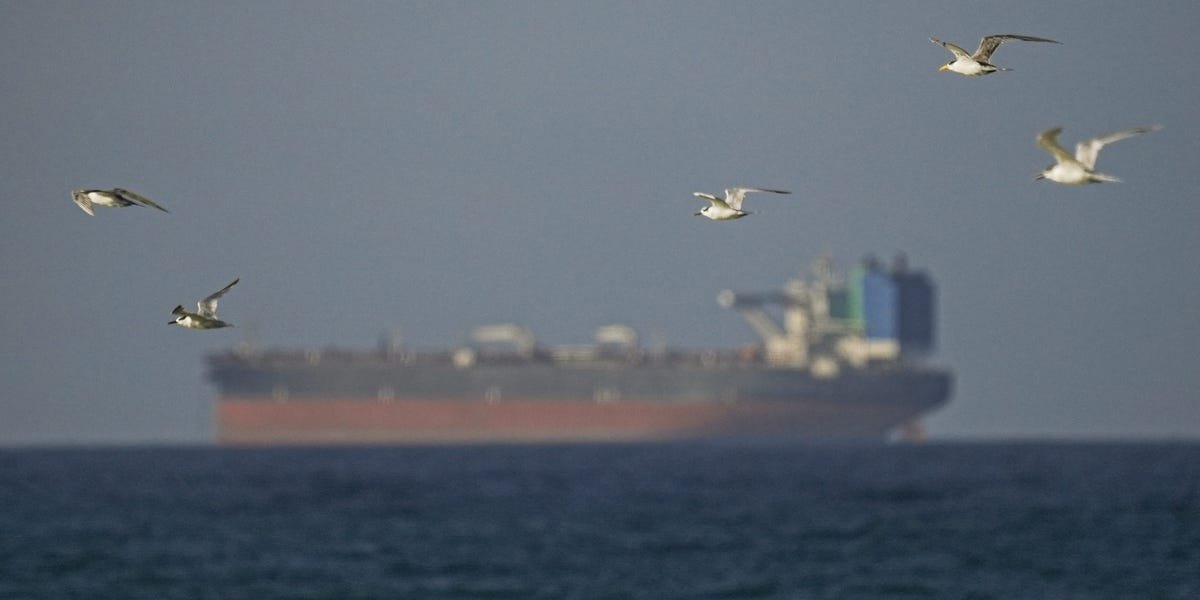


Iran announced Friday morning that the Strait of Hormuz is open for maritime traffic, and data shows that commercial vessels are passing through the strategic waterway, though only a small number.
Opening the strait has been a central demand since the start of a fragile ceasefire earlier this month and amid the ongoing negotiations between Washington and Tehran.
Seyed Abbas Araghchi, Iran’s foreign minister, said in a statement on social media Friday that “the passage for all commercial vessels through Strait of Hormuz is declared completely open for the remaining period of ceasefire, on the coordinated route as already announced by Ports and Maritime Organization of the Islamic Rep. of Iran.” The announcement follows a ceasefire between Israel and Lebanon.
The coordinated route appears to refer to previously released guidance that takes ships through the northern part of the waterway closest to Iran, which has said that the route was determined by security needs. Separate from Iranian considerations, US forces have been working to establish safe passage in the strait.
President Donald Trump acknowledged Iran’s Friday statement in a Truth Social post, writing that “Iran has just announced that the Strait of Iran is fully open and ready for passage.” The market reaction to the announcement saw stocks climb higher and oil fall.
The Strait of Hormuz is a narrow chokepoint linking the Persian Gulf to the Gulf of Oman and a major artery for global shipments of oil and natural gas.
MarineTraffic data shows that just over half a dozen commercial vessels have transited the strait since the announcement.
Data from KPler, a real-time trade intelligence platform, shows that eight commercial vessels had crossed as of 2 pm EST Friday compared to five on Thursday. The data refers to commercial fleets of crude tankers, LPG, LNG, and dry bulk vessels. Containerships are not included in the count.
Before the war, the strait saw an average of over 120 transits daily.
Earlier in the week, days before the announcement on the strait, US Navy warships set up a blockade of Iranian ships and ports. Trump said the blockade will remain in effect until Washington and Tehran reach a deal to end the war.
US Air Force Gen. Dan Caine, chairman of the Joint Chiefs of Staff, has highlighted the role of the Navy’s Arleigh Burke-class destroyers in the blockade during a briefing Thursday but didn’t specify numbers involved.
Dozens of surveillance aircraft, refueling planes, and drones are also involved in the blockade. US Central Command, which oversees operations in the Middle East, said Friday that 19 vessels have turned around to comply with blockade restrictions since it began on Monday.
The US set up the blockade amid a tenuous ceasefire between the US and Iran, which was reached after more than a month of war. US military leaders have asserted that American forces remain poised to resume combat operations should negotiations fail.
Read the full article here