








Ukraine is updating its battlefield robots rapidly and remotely like smartphones.
The use of robots is surging on Ukraine’s battlefields, replacing troops in roles from logistics to combat. But the war is changing so fast that, without constant upgrades, the robots can lose their effectiveness.
Oleg Fedoryshyn, director of R&D at Ukrainian robotic systems maker DevDroid, told Business Insider that the company designs its products so that they can be updated as easily as possible, “like mobile phones or operating systems.
“We can update it remotely, and we add some new features, we fix some bugs,” he said, sharing that the firm updates the software used by its robots every few weeks and can make remote fixes within minutes, critical amid wartime urgency.
Working to stay relevant
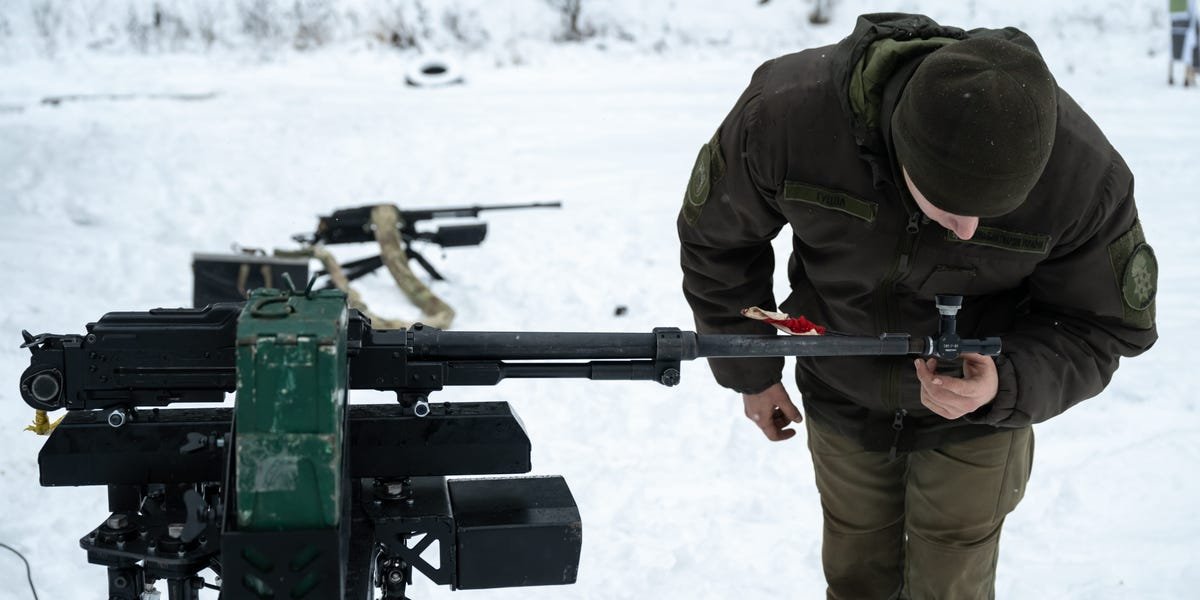
It can design a new update, test it with a brigade, and roll it out across all deployed systems within a week, Fedoryshyn said. The company builds a range of combat robots, along with components that let units mount weapons like grenade launchers and machine guns.
There are limits to remote upgrades, just as there are with smartphones. The technological evolution still requires hardware updates from time to time, a bigger ask, but a necessity to keep up with the pace of change in combat.
They typically do a major modification about every six months, delivering new capabilities, such as more than doubling the distance the robot can travel.
To expedite some processes, the company deploys teams near the front line to fix damaged systems or make rapid hardware upgrades. That allows for same-day turnaround, and teams can even help evacuate disabled robots from the battlefield.
Fedoryshyn compared it to ” a warranty, like when you buy a new car,” and said it allows soldiers to stay focused on operations.
When the company works on a broken system, it analyzes what failed and whether upgrades are needed: “We think how to do it better.”
Russia’s invasion of Ukraine has been marked by rapid technological change, with battlefield tech constantly evolving. Ukrainian soldiers say equipment can become outdated within weeks or months.
Soldiers often adapt gear in unexpected ways, feeding back into rapid redesigns. DevDroid says it has 24/7 support chats with every unit using its systems. At 3:30 a.m., a unit can ask for help and get a response, Fedoryshyn said.
The idea to arm robots with anti-tank RPGs, now a feature that’s being rolled out, first came from soldier feedback, which accelerates the iterative development process.
Lessons in speed
NATO officials have warned that Western industry and militaries need to learn from Ukraine’s speed. Adm. Pierre Vandier, NATO’s Supreme Allied Commander Transformation, for instance, previously told Business Insider that the alliance needs Ukraine’s “adaptation DNA.”
The UK’s armed forces minister, Luke Pollard, warned last year that Western military processes are “outdated.” In Ukraine, drone tech “iterates every two to three weeks on the front line,” he said, arguing that NATO must rethink how it procures weapons.
The speed of innovation has pushed defense manufacturers to design systems that are easier to update, including making them more modular and software-driven. Fedoryshyn said that was key because “it’s quite easy to update software, but it’s hard to update some hardware.”
It’s something the US Army increasingly views as critical. Leaders at its new drone school previously told Business Insider that they primarily want to work with companies that make plug-and-play gear that can be updated easily.
Maj. Wolf Amacker, who leads the Army’s Unmanned Aircraft Systems and Tactics Branch at the Aviation Center of Excellence, said that when it comes to defense manufacturers, “if whatever they’re building isn’t modular with other industry partners to work together, then I’m going to go with another industry partner that is.”
Robots are a growing part of Ukraine’s military. Their usage has surged, with President Volodymyr Zelenskyy saying they carried out more than 22,000 frontline missions in three months.
Ukraine has plans to go much further. Its defense minister this week revealed plans to contract 25,000 new robots in the first half of this year, which is double last year’s total, and said that the country’s goal is to eventually have 100% of front-line logistics carried out by robots.
Read the full article here