








When Anthropic found itself in a high-stakes standoff with the White House over its newest AI models, it wasn’t CEO Dario Amodei who smoothed the tensions. Instead, one of the company’s quietest cofounders stepped in.
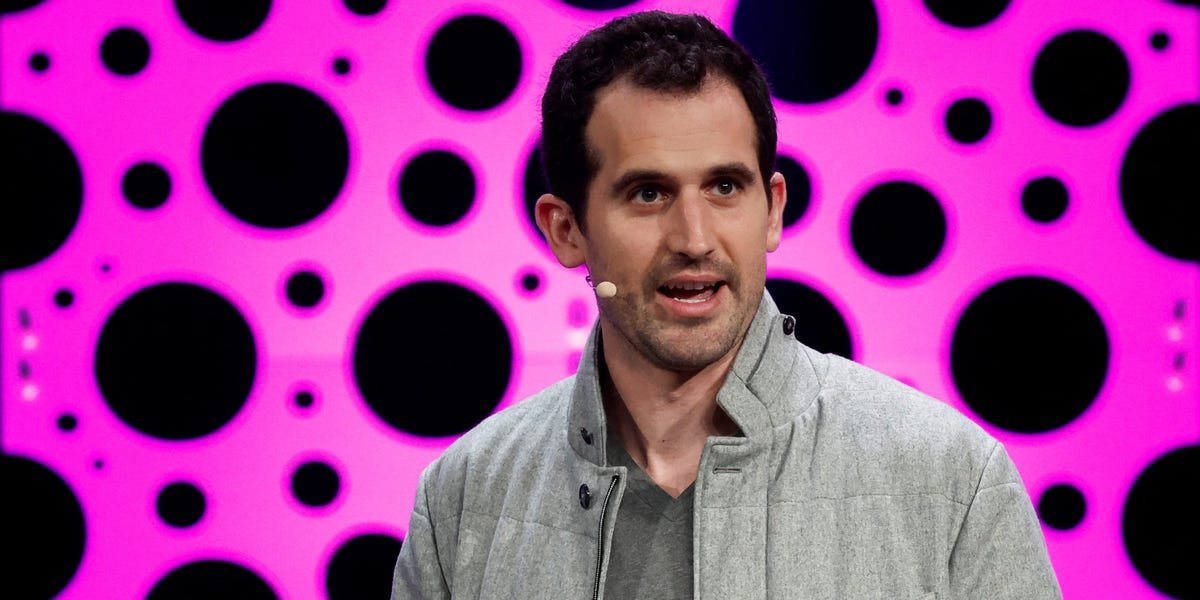
Tom Brown, Anthropic’s chief compute officer, helped negotiate a deal that persuaded the Commerce Department to lift export restrictions on the company’s newest flagship models, Fable 5 and Mythos 5. The episode thrust one of AI’s least visible leaders into the spotlight — and revealed how the engineer responsible for securing Anthropic’s computing power has become one of its most important diplomats as well.
It proved to be a win for the under-the-radar cofounder. Brown hasn’t received the same media spotlight as his peers, but in finding the chips to power the company’s AI technology, he leads an indispensable part of its grandiose ambitions. These recent White House negotiations show that his value extends to the political arena, where he’s served well by his knack for relationships and straightforwardness.
Michael Waxman, who cofounded a dating startup with Brown in the 2010s, told Business Insider that he’s generally been very optimistic about AI, but added, “Knowing Tom’s character and that he’s in the room at the leading edge of some of these really important decisions definitely makes me just feel better and sleep easier at night.”
Anthropic’s Head of Public Policy Sarah Heck worked alongside Brown on the White House talks, but Lutnik addressed his Tuesday letter about the export controls directly to Brown, Wired reported. Here are some key things to know about the 39-year-old cofounder’s background.
Brown bounced around Silicon Valley’s startup world before teaching himself AI research
Out of college at MIT, Brown jumped into the Silicon Valley scene. He worked as an early employee at the language-teaching startup Lingt, went briefly back to school, then worked at the mobile advertising startup MoPub. He then cofounded Grouper, a startup that matched pairs of trios for in-person meetups, with Waxman as part of the accelerator Y Combinator’s winter 2012 batch.
Waxman said in those days, Brown had all the “table stakes” of a leader — “good human, kind, high integrity, always truthful, direct” — and that he also managed to build bridges across discipline divides within the company.
Brown left a struggling Grouper after a few years and then decided to pivot. He said on YC’s Lightcone Podcast last year that at the time he didn’t have the skills to jump into AI research, so he kicked off a months-long self-study sprint: a Coursera course, Kaggle projects, and the book “Linear Algebra Done Right.” He even bought a GPU chip with YC credits, he said, to work through his courses.
Waxman remembers Brown asking him to join a machine learning study group in 2015. He shrugged off Brown’s invite — not knowing his old cofounder was learning enough to later transform the entire field.
Greg Brockman helped Brown get his foot in the door at OpenAI
Grouper ultimately lost out to Tinder and other swipe-based dating apps. But the startup had gained one major fan: then-CTO at Stripe, Greg Brockman. Brown said on the Lightcone Podcast that, during one stretch, Brockman would set up Grouper meetings as often as once a week, and the two got to know each other.
At the end of 2015, Brockman cofounded OpenAI with a small crew of researchers and engineers — the first office was his apartment.
“I messaged Greg as soon as OpenAI was announced, and I was like, ‘I’d love to help out in some way. I got a B- in linear algebra, but I know some engineering. I’ve done a bit of distributed systems work if you guys need help. I’m happy to mop floors if you guys need me to. I want to help out however,'” Brown recalled.
Brockman eventually gave Brown a job on a project related to the game “StarCraft.” Brown didn’t do machine learning work for his first nine months, he said.
In a 2024 video discussion with Anthropic’s cofounders, Brown recalled being drawn to OpenAI by the idea that, as an engineer, he could help advance AI safety — a field that had previously seemed reserved for researchers.
Brown worked on multiple blockbuster papers of the AI era
Brown wasn’t originally a researcher. Now, his Google Scholar page lists more than 140,000 citations.
He was one of six authors from OpenAI and DeepMind on a seminal 2017 paper that paved the way for Reinforcement Learning from Human Feedback, a cornerstone of modern AI training. After leaving for a stint at Google, Brown returned to OpenAI in 2018 and helped push the field toward its eventual boom.
Two more bombshells landed in 2020. Brown helped with “Scaling Laws for Neural Language Models” — this paper established the “scaling laws” that have driven frontier AI developers to build ever-bigger models, forecasting performance improvements over time.
Then, later in the year, came “Language Models are Few-Shot Learners.” Brown was a main author, having led the research’s engineering effort. The paper introduced the large language model GPT-3, marking a major turning point in the industry toward training bigger models and using prompts to control them. It would serve as the foundation for ChatGPT.
Brown said on the Lightcone Podcast that it was OpenAI’s scaling and safety teams — who reported to Daniela and Dario Amodei while at OpenAI — that seemed to take the “scaling law” idea most seriously. He said the group thought there would be a time “where humanity will hand off control to transformative AI,” and that they wanted to be sure the stakes were taken seriously enough. That group cofounded Anthropic in 2021.
Brown leads Anthropic’s high-stakes compute push — a job that demands constant cooperation
Some AI executives can hunker down within their companies, focusing on research bets or product iterations. Brown is forced to haggle with some of the biggest power players in the corporate world.
In a bid to secure enough computing power to train and run its models, Anthropic’s compute team, led by Brown, has struck deals across the industry. The company uses Amazon’s Trainium chips, Nvidia’s GPUs, and Google’s TPUs, routing different tasks to different chips and benefiting from access to a broader range.
This spring, when Anthropic was feeling a compute crunch amid rabid demand for its Claude Code product, Brown and his team announced a multi-billion-dollar deal to run Anthropic’s models on SpaceX’s huge data center, Colossus. Brown has also spoken on behalf of Anthropic at Amazon Web Services’ re: Invent conference, and was quoted in a 2023 Google Cloud release hyping up an AI infrastructure collaboration.
In the 2024 discussion with his cofounders, Brown said that during his work on compute, he talks with some people who haven’t come around to his view that AI will be so rapidly transformative.
“I started out not thinking stuff would be that fast, and have changed over time,” he said. “So I have sympathy for that.”
Like Anthropic’s other cofounders, Brown has pledged to donate most of his massive wealth
Bloomberg estimates that Brown’s net worth is nearly $8 billion, thanks entirely to his Anthropic stake and the company’s $965 billion valuation. And he, like many of his cofounders, has pledged to give away 80% of his wealth.
The rollback of the White House’s restrictions — and the cooling of tensions that the move implies — comes at a crucial time for Anthropic. The startup is eyeing an initial public offering that would provide employees with a liquidity event and flood the company with cash for its expansion efforts.
That Brown could sub in for Amodei in the talks is also a positive sign that the company has a deep bench of empowered leaders. Brown may have taken a different tone than his boss, but it’s likely he had many of the same points to make — last year, Business Insider asked Brown what advice he’d give for people’s careers.
“Surround yourself with people you want to be like,” Brown wrote back, among other tips. “You’ll become more similar to them over time.”
Have a tip? Contact this reporter via email at scouncil@insider.com, or over text, Signal, Telegram, or WhatsApp at 415-757-8198. Use a personal email address, a nonwork WiFi network, and a nonwork device; here’s our guide to sharing information securely.
Read the full article here