







Scoring a great parking spot used to take luck or determination. Now it takes a credit card.
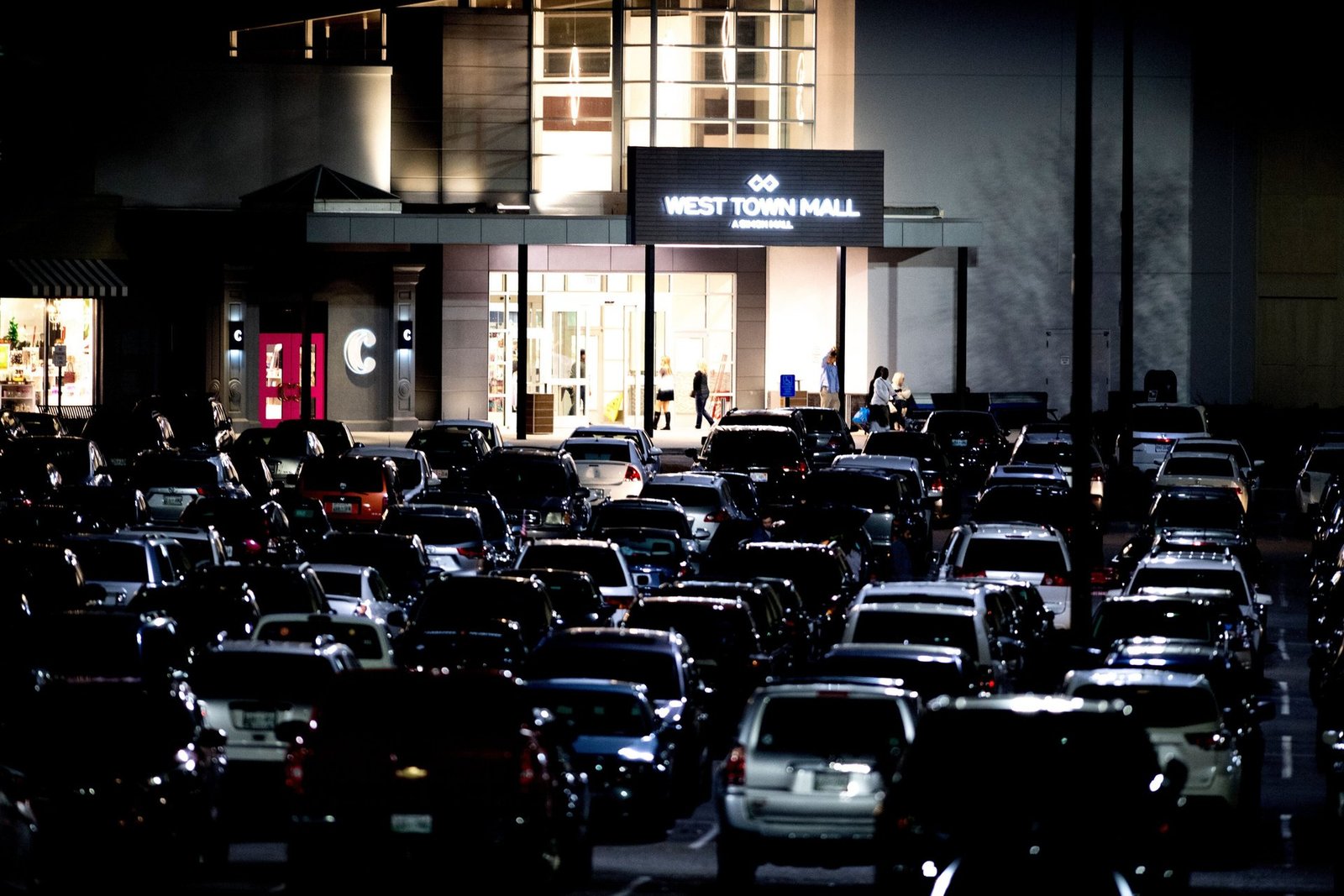
Shopping malls across the country are roping off parking spaces closest to main entrances and food courts to make a few extra bucks.
“Since when do you have to pay to park at the Willowbrook Mall?” asked one frustrated TikToker.
Most parking spaces at the Wayne, New Jersey, mall are free of charge. But parking in the “preferred” section — one of the coveted 119 spots at the front of the mall — now comes with a price tag.
Signs instruct shoppers to scan a QR code or send a text message to a five-digit number to pay $2.45 for the first hour and $2 for every hour after that. The cap is $10.45 a day.
Similar parking arrangements have rolled out at Mall St. Matthews in Louisville, Kentucky; the Valley Plaza Mall in Bakersfield, California; the Northridge Fashion Center in Los Angeles; and The Mall in Columbia in Maryland. Each is operated by GGP, a Chicago-based mall operator that says half of the U.S. population lives within an hour of one of its shopping centers.
In all, 23 malls out of more than 95 GGP properties offer “preferred” parking across the country, according to spokesperson Lindsay Kahn.
Kahn told USA TODAY the reserved spots offer convenience for those willing to pay for it and address the most common customer pain point: finding quick, convenient parking.
“Preferred Parking is intended for those who want the convenience to not look for a spot,” Kahn said in a statement. “Whether guests are making a quick shopping trip, looking to get in and get out, or parking for a restaurant reservation, the program is an amenity for convenience.”
Shoppers have plenty of options, she added. “The vast majority of parking at our malls remains free,” Kahn said.
Fewer Things in Life Are Free, Parking Included
They say the best things in life are free. These days, fewer are.
Upcharges, surcharges, supplemental charges, service fees, hidden fees and add-ons are everywhere, from airline baggage to extra condiments to gas station air. Even the chargers and earphones that used to come with a cell phone are now sold separately.
Free mall parking is the latest complimentary perk on the verge of extinction. For some budget-conscious consumers, it’s the final straw — like a cover charge just to spend more money. Or as one Redditor put it: “Pay us so we can take your money.”
Jay Reed captured the collective exasperation in a popular video on his YouTube channel: “They’re Now Charging to Park at Malls and People Are Losing It.”
“In today’s economy, when you talk about people being pushed and tipped over the edge for everything right now, this is yet another level of capitalism,” Reed said. “People want to grow their business. But there should be a line somewhere in the sand.”
‘It’s the World We’re in These Days’
Though consumers adjust, paying for something that used to be on the house often meets early resistance.
“They are getting real crazy with milking every dime they can get out of you, even to park at the mall,” commented another TikToker while walking with his son across the parking lot of the Christiana Mall in Newark, Delaware, after refusing to pay to park there. “It’s the world we’re in these days.”
At the Perimeter Mall in Dunwoody, Georgia, another shopper refused to fork over a few dollars to park closer. “I looked up the price and it’s only $5 for two hours, but that’s not the point,” she said. “Y’all trying to cheat me.”
“All these darn parking spots,” said a TikToker surveying a vast expanse of vacant “preferred” spaces at the front of the Cumberland Mall in Atlanta. “I had to park at the back of the mall because you have to pay to park at the mall now?”
Some shoppers don’t mind. Crista Ardito, on her way to eat with a friend at a Willowbrook Mall restaurant, told CBS News New York the $4.45 was worth it.
“We’re both lazy and we’re both hungry,” she said.
Why Shopping Malls Charge for Parking
Malls have long used parking as a competitive advantage, building massive asphalt grids to lure car-bound shoppers away from downtown city centers with metered street parking.
Mall culture was so celebrated in the 1980s that it was featured in major Hollywood movies like “Mallrats” and “Fast Times at Ridgemont High.” After falling on hard times, particularly during the COVID-19 pandemic, malls today are in a renaissance as teens mob them once more.
Most mall parking is still free, especially in suburbia. Economic studies show that many operators dangle free parking — or parking priced below what it actually costs — to entice more shoppers. But the loss leader can add up for American institutions, and not just malls.
The Chronicle of Higher Education reported that cheap or free campus parking is a major financial drain. Annually, the median college loses nearly $400,000 on surface lots and over $1.2 million on garages per 1,000 spaces.
So shopping malls have begun to experiment with paid parking to recoup some of those losses or make a little extra cash. Others — especially in congested urban areas — have been doing it for a long time.
Why Paid Mall Parking Is So Controversial
Take Kings Plaza Mall in Brooklyn, New York, which opened in 1970. It caused a ruckus in the 1980s when it started charging 50 cents for parking to cover security and improvements. But the pushback and protests gradually dissipated, and today shoppers pay up to $11 a day to park there.
Westfield Valley Fair Mall in Santa Clara, California, began charging in 2022 to discourage commuters, travelers and others who were not parking there to shop from commandeering all the spots.
Paying to upgrade your parking spot is a newer twist. At Mills at Jersey Gardens in Elizabeth, New Jersey, there’s ample free parking, but the mall recently introduced paid “upfront parking” for those who want to be a short stride from the entrances.
“From a mall owner’s perspective, charging for prime parking is a way of generating a bit of incremental revenue. It’s also arguably offering a service to those who want maximum convenience,” Neil Saunders, managing director of GlobalData Retail, told USA TODAY. “However, the policy polarizes opinion. Some consumers value such a service; others think it’s a bit of cheek and that all parking should be free.”
‘Cash Grab’ Protests Foil Parking Plans
Some annoyed shoppers say they will just spend their money elsewhere. Others have a simpler solution: “Amazon,” one Facebook commenter said. “Free parking.”
Still, noisy boycotts to protest what shoppers say is a “cash grab” have foiled some parking schemes.
Deptford Mall in New Jersey, just southeast of Philadelphia, for example, canceled its $10 “premier parking” program in 2025 after shopper backlash and local pressure.
The Deptford Mall set aside about 40 to 50 spaces closest to the main doors and next to spots for disabled drivers, expectant mothers and combat-wounded veterans, designating them as premium spots. But shoppers complained, as did the township’s mayor, and the mall operator agreed to phase out the program.
In February, the Fashion Outlets of Chicago in Rosemont, Illinois, instituted parking fees to stop people from using the garage for Chicago O’Hare International Airport or nearby event parking.
Under the new policy, shoppers received one hour of complimentary parking before rates jumped to $13 for one to three hours, $20 for three to 12 hours and a $50 daily maximum. Shoppers who spent at least $100 at the mall received a parking validation for up to three hours.
Foot traffic fell and retail tenants complained. The mall reversed course in August.
“We listened to feedback from the community and our retailers,” a spokesperson for the mall’s owner Macerich told NBC 5 Chicago.
This article originally appeared on USA TODAY: Shopping malls are charging for prime parking. It’s not going well
Reporting by Jessica Guynn, USA TODAY / USA TODAY
USA TODAY Network via Reuters Connect
Read the full article here