






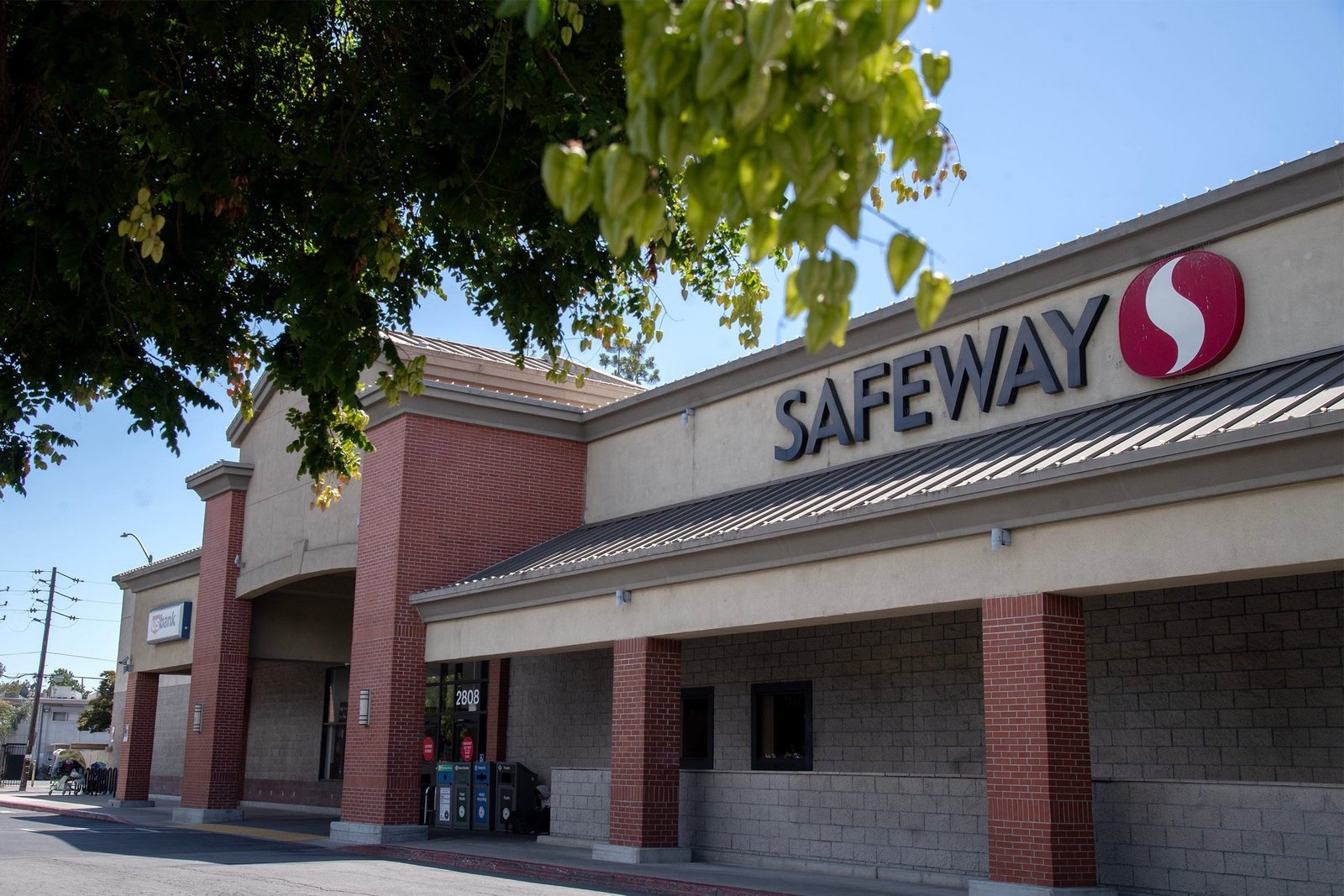


Nearly two years after a failed merger with Kroger, Safeway is closing more stores, according to a statement from the chain’s parent company.
Albertsons, which owns Safeway, said in a statement on Friday, Aug. 14, that the closures are part of the company’s attempts to evaluate its store network. The decision comes after Kroger’s failed attempt to buy Albertsons for $24.6 billion.
“Albertsons Companies, which includes Safeway, continually evaluates its store network to ensure we are best positioned for the future,” Albertsons said in the Aug. 14 statement.
Which Safeway Stores Are Closing?
When USA TODAY asked Albertsons and Safeway on Aug. 14 for a list of stores that have already closed or are slated to close, the companies declined to do so.
According to news outlets Inc. Magazine and the Independent, the following Safeway locations have closed in 2026:
- Hayward, Calif. – 231 W. Jackson St.
- Newport, Ore. – 2220 N. Coast Highway
- Washington, D.C. – 1601 Maryland Ave.
Albertsons told USA TODAY on Aug. 14 that it is trying to find jobs at other stores for as many affected associates as it can.
Why Was Kroger Blocked From Buying Albertsons?
Albertsons, which also runs Vons, Jewel-Osco, Acme and other brands, bought Safeway in January 2015. In October 2022, the companies announced that Kroger would buy Albertsons’ portfolio. That deal fell through in December 2024 in federal court and at the state level in Washington.
During negotiations for the merger, Albertsons said it “slowed potential portfolio optimization.” Once the deal fell through, the company began opening new stores in high-demand areas and “making the difficult decision to close some locations.”
Albertsons said in its 2022 announcement that the merger would create a combined company with more than 710,000 associates, 4,996 stores, 66 distribution centers, 52 manufacturing plants, 3,972 pharmacies and 2,015 fuel centers. The sale would provide “customers with a best-in-class shopping experience across both stores and digital channels,” the announcement said.
The following year, Kroger said it agreed to a deal with C&S Wholesale Grocers to comply with the Federal Trade Commission’s antitrust policies. But just over a year after the initial merger was announced, the FTC filed a lawsuit in the U.S. District Court for the District of Oregon, alleging that the merger would eliminate competition, increase grocery costs for millions of Americans and negatively impact employees.
“Essential grocery store workers would also suffer under this deal, facing the threat of their wages dwindling, benefits diminishing, and their working conditions deteriorating,” said Henry Liu, former director of the commission’s Bureau of Competition, in a news release.
The court blocked Kroger from buying Albertsons in December 2024, prompting Albertsons to sue Kroger for breach of their agreement. Albertsons claimed Kroger ignored the FTC’s feedback and failed to cooperate, causing the deal to fall through. Officials in Washington state also filed a lawsuit to block the merger, resulting in a King County judge blocking the merger there as well.
Albertsons demanded a $600 million termination fee and funds to make up for hundreds of millions of dollars the company spent toward the merger. C&S also sued Kroger and demanded a $125 million termination fee, reported the Wall Street Journal, although the companies reached a “friendly settlement” last summer.
Kroger Alleges Albertsons Was Involved in a ‘Secret and Misguided Campaign’
Kroger said in May that it filed a response pointing the finger at Albertsons.
“While Kroger was working diligently to seek regulatory approval and close the merger, Albertsons was engaging in a secret and misguided campaign, together with C&S Wholesale Grocers, the divestiture buyer, to pursue its own regulatory strategy, which ultimately undermined Kroger’s efforts,” Kroger said in a news release.
Calling Albertsons’ behavior “misconduct,” Kroger said it learned about the company’s plans when Albertsons CEO Susan Morris was being cross-examined during antitrust trials.
“The misconduct included Ms. Morris’s secret communications with C&S’s CEO and others, utilizing personal emails and cell phones to advance Albertsons’s strategy,” Kroger wrote.
These communications, Kroger said, led C&S to second-guess the initial agreement, creating a domino effect and prompting the Washington court to block the sale. Kroger insisted the company does not owe Albertsons money for termination or other fees.
This article originally appeared on USA TODAY: Safeway closing more locations for this reason, parent company says. Reporting by Saleen Martin, USA TODAY / USA TODAY. USA TODAY Network via Reuters Connect.
Read the full article here