










After a slew of pandemic-induced aid ran its course, older Americans are falling back into poverty — and even younger would-be retirees are struggling.
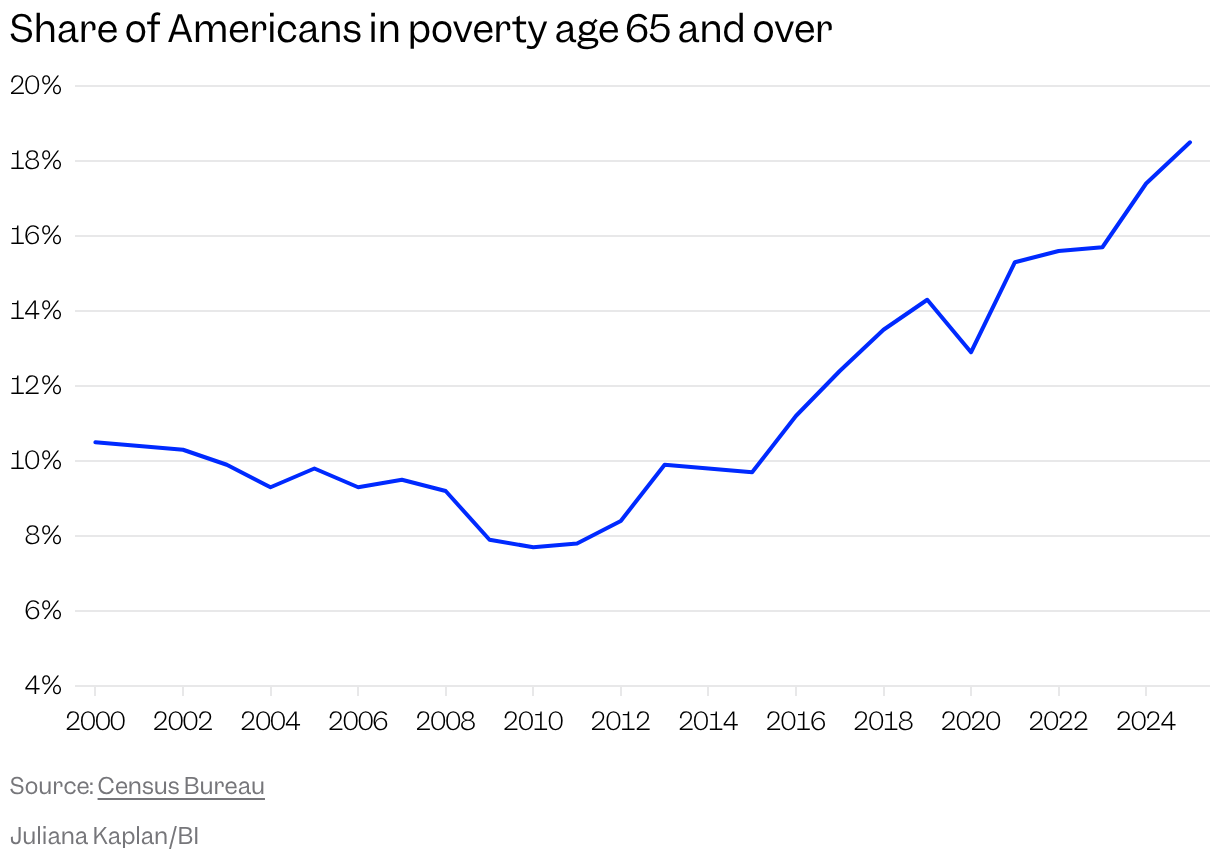
After the Great Recession, the trendline for older Americans had been improving, and 2020 pandemic relief measures helped buttress the aging population from falling into poverty in the wake of Covid.
New census data shows that now, the poverty rate has increased the most for Americans 65 and older, after adjusting for things like tax credits and government programs. The share of all Americans living below that adjusted poverty measure grew from 9.1% in 2020 to 13.1% in 2025. For Americans 65 and older, that rate grew from 9.4% to 15.4%.
Millions of older Americans live solely off Social Security benefits, which often don’t cover all daily costs, let alone Medicare premiums or caregiving expenses. Social Security kept 28.8 million Americans out of poverty in 2025, the new Census report found, including nearly 21 million Americans 65 and older. As the boomer generation ages into retirement, those benefits look shaky, a worrying sign as lifespans stretch longer.
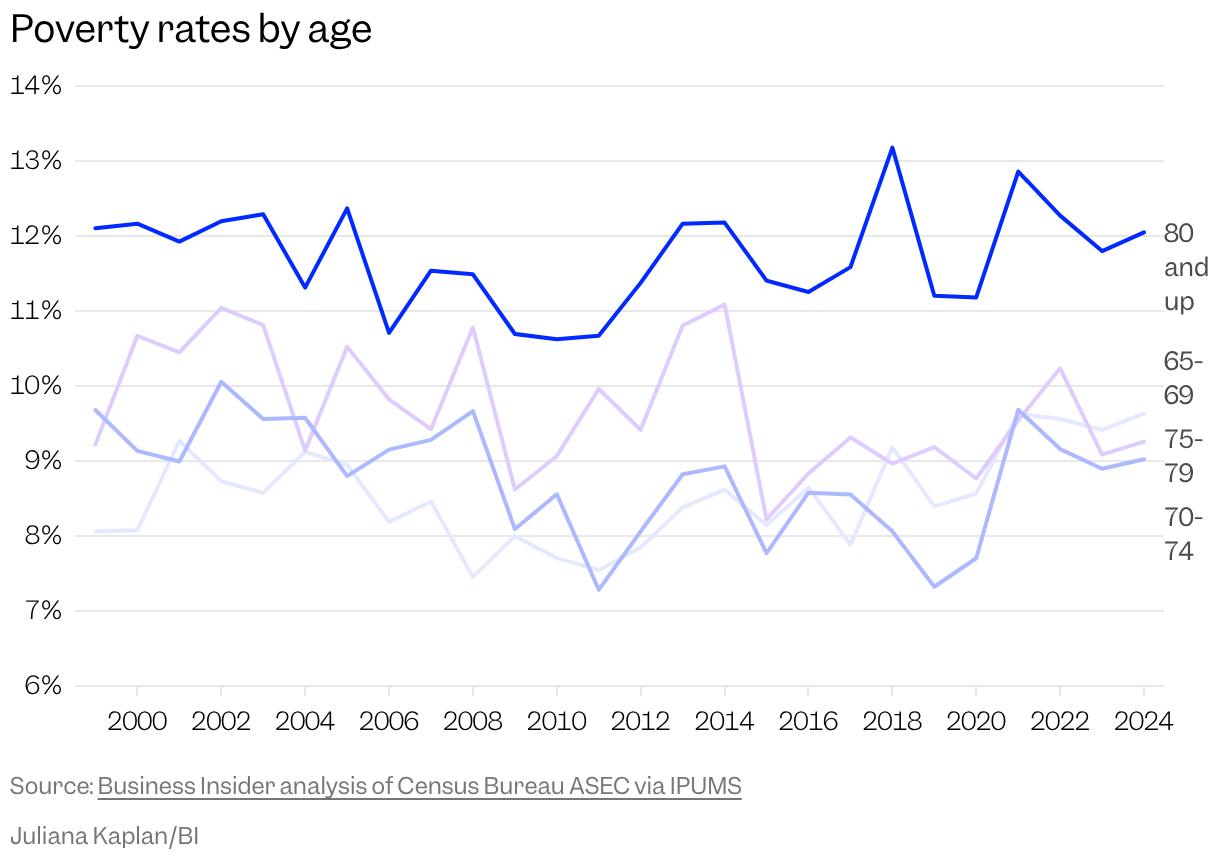
Historically, poverty among older Americans rises with age, although younger retirement-aged Americans started falling into harder times as of 2024. Last year, Business Insider spoke with dozens of Americans 80 and older who were below or slightly above the poverty line, most of whom worked at least part time to make ends meet. Many said the only jobs they could find were minimum wage, menial jobs, paying them enough to put food on the table and heat their homes. Some said they had much more saved earlier in life, but were hit hard by medical treatments.
“We should get tax breaks after a certain age because prices are so high for food,” said Rebecca Reed, 88, who works two lower-paying jobs in New Orleans. “And maybe some discounts at the grocery store.”
While the oldest Americans are still the most impoverished group, their younger counterparts have been seeing poverty rates tick up. The official poverty rate for Americans ages 70 to 74 saw the largest percentage-point increase from 2020 to 2024, according to a Business Insider analysis of Census microdata, followed by the younger cohort of 65- to 69-year-olds, indicating a more widely felt poverty landscape.

Older Americans are often more prone to sudden and costly medical disruptions, which contribute to malnutrition or poor living conditions. Indeed, 7.7 million Americans fell into poverty due to medical expenses, per the Census report, and around 2.5 million of them were 65 and older. That’s up from around 2.36 million in 2024.
In interviews, dozens of families said they have spent six figures on care for their loved ones, as the median cost of a private nursing home room rose from $111,000 to $130,000 annually between 2022 and 2025, according to data from the care navigation platform CareScout. Some families said their older loved ones had exhausted all of their savings on home health aides or assisted living facilities, leaving them in the hands of their financially pressed children.
Want more Business Insider in your news feed?
Add BI in Google so our reporting is easier to find when you’re searching for what matters.
Housing costs have also hurt many older Americans who don’t own homes, or who have substantial home repairs. More than one in three older American households puts 30% or more of their income toward housing, per a 2025 study from Harvard University’s Joint Center for Housing Studies. Older Americans are also the fastest-growing demographic experiencing homelessness, with about 20% of all people experiencing homelessness 55 and older as of 2024.
Some are doing what they can to make the most of it. Sharon Albrecht, 85, works for a home healthcare agency and as a part-time Uber driver in Virginia to make ends meet. Though above the poverty line, Albrecht said her income goes a long way toward supplementing Social Security and her retirement savings, adding that she’s “very wealthy in time and freedom to create my own schedule.”
“If an 80+ person has the attitude that ‘Now, I have time to create,’ the sky is the limit,” Albrecht said. “It totally depends on the person and whether or not they have a victim mentality.”
Read the full article here